

Jewellery made from silver and wood needs two different kinds of care. Silver can tarnish; wood can react to water, solvents, heat and changing humidity. The safest routine is therefore simple: reduce avoidable exposure, clean gently, and do not use a product on one material without considering the other.
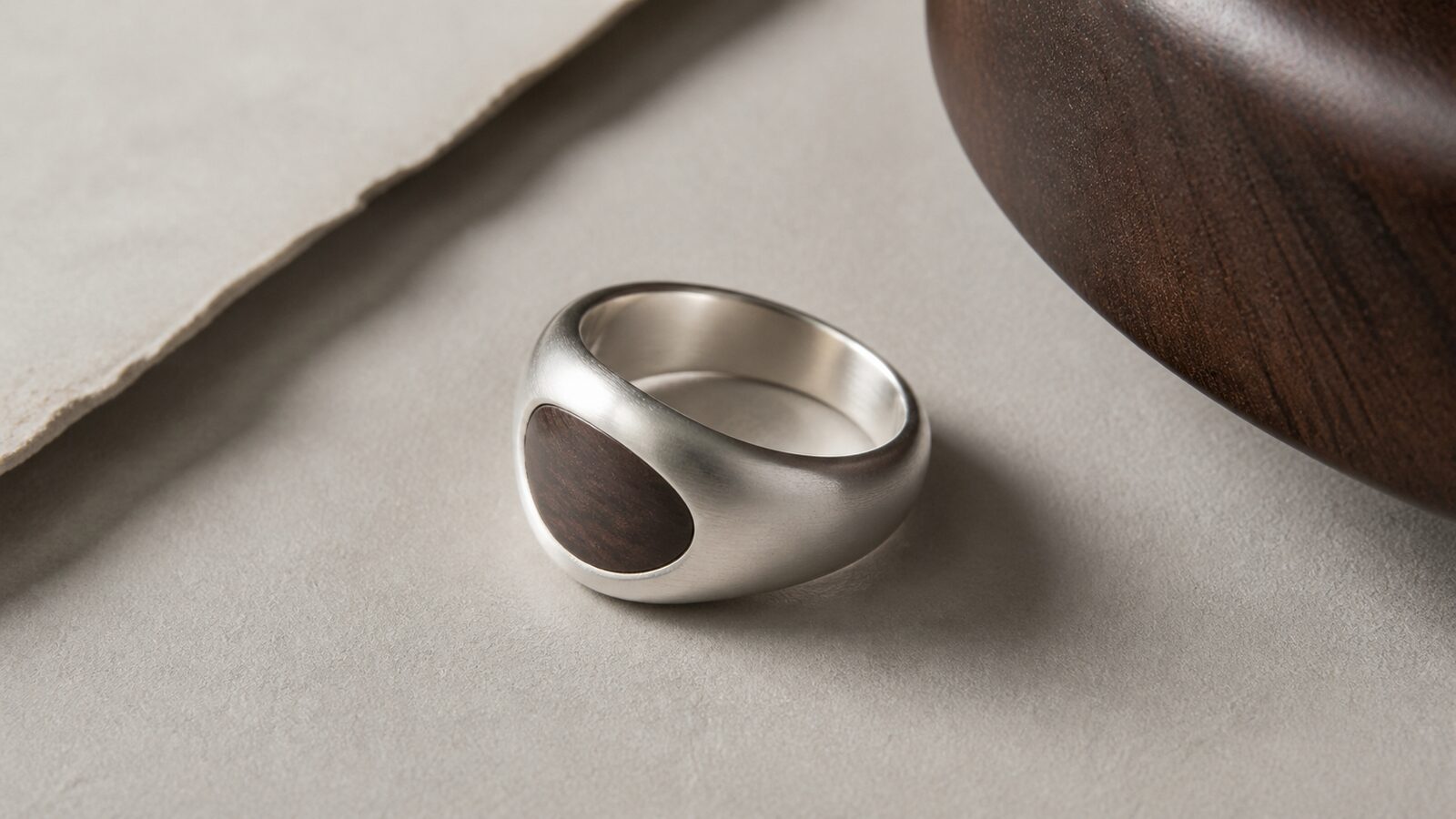
After wearing: the small routine that matters
Wipe the piece with a clean, soft dry cloth before putting it away. This removes ordinary skin oils and residues without turning care into polishing. Store it separately enough that hard jewellery does not rub against softer surfaces. Keep it away from a damp bathroom, direct sunlight, radiators and a car dashboard.
Remove mixed-material jewellery before swimming, bathing, applying household cleaners, using fragrance or lotion heavily, and any work likely to soak or knock it. If it becomes wet, blot rather than rub and let it dry naturally at room temperature.
How to treat silver without erasing the finish
Silver darkens when it reacts with sulphur-containing compounds in the air. A soft darkening in textured or recessed areas may be compatible with an oxidized or matte design. Start with a dry cloth. Avoid abrasive pastes, ultrasonic cleaners and chemical dips unless the maker or a qualified jeweller confirms they are suitable for the exact piece. Polishing removes tarnish by abrasion and can also remove surface metal or soften a matte finish.
If the issue is a loose setting, a sharp edge, a bent component or a spreading discoloration around a join, do not try to solve it with more cleaning. Ask a jeweller to inspect it.
Keep moisture from becoming a storage problem
Moisture is most troublesome when it stays in contact with the piece. After rain or accidental splashing, dry the jewellery before it goes into a pouch or box. A sealed container can be useful for silver that tarnishes quickly, but it must be used only with a completely dry piece; condensation is a warning that the storage arrangement needs more ventilation or a different location.
Do not use a hairdryer, radiator or oven to speed the process. Fast, direct heat is hard on wood and can affect glues, finishes or stones. Room-temperature air and patience are safer. This advice is intentionally uneventful because mixed-material jewellery benefits from avoiding extremes.
How to treat wood with less intervention
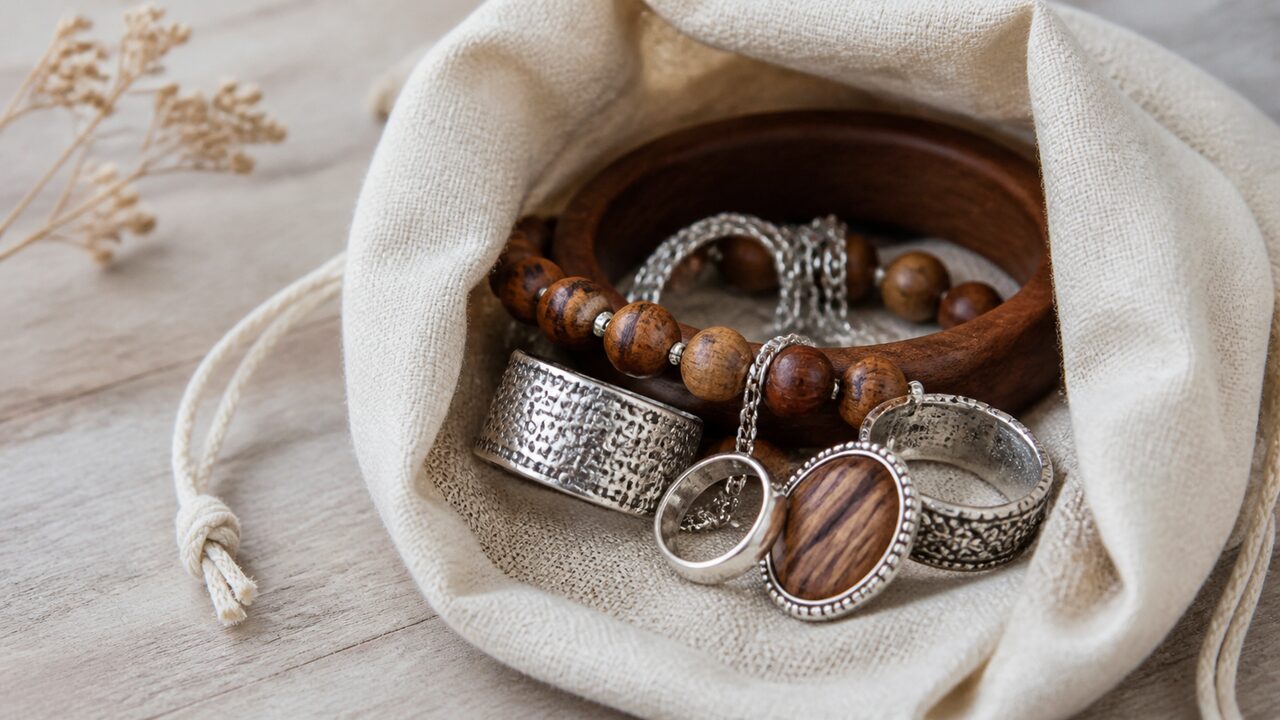
Wood is not waterproof. Bare or lightly finished wood can absorb water; water and solvents may swell fibres, raise the grain or draw dirt into the surface. For normal maintenance, a dry cloth is enough. Do not assume that oil is needed every month: the correct product and interval depend on the wood, the existing finish and how the component is constructed.
If wood looks dry, rough or stained, pause before applying wax, oil or a household furniture product. These can darken the piece, leave residue near silver, or complicate later repair. A maker’s specific instruction takes priority over general advice.
Cleaning around joins and details
Use a dry, soft brush only if it will not catch on a setting or rough grain, and avoid forcing fibres into a crevice. Cotton swabs, abrasive cloths and improvised metal tools can leave scratches or lodge residue near the join. When dust is persistent, a jeweller can clean the piece while checking whether the boundary between materials remains secure.
This is also a reason to avoid ultrasonic cleaning. Vibration, heat and cleaning solution may be appropriate for some all-metal jewellery, but they are not a default choice for wood, porous stone, glued elements or an intentionally oxidized finish. The construction, not the convenience of a cleaning method, decides what is suitable.
When change is normal—and when it is not
A softened matte highlight, mild tarnish in a recess or a subtle deepening of wood colour can be ordinary signs of use. Cracks, lifting finish, persistent stickiness, movement at a join or sudden distortion are different: stop wearing the piece until it can be assessed. Care is not about freezing an object in time. It is about keeping its materials and construction sound while allowing their surface character to remain legible.
A short decision guide
- Dry and dusty: wipe gently with a clean soft cloth.
- Wet: blot, air-dry at room temperature, then store only when fully dry.
- Darkened silver: decide whether it is intended finish or unwanted tarnish before polishing.
- Rough, cracked or loose: stop home treatment and seek a jeweller’s advice.
References
- Canadian Conservation Institute: Basic care—recognizing metals and corrosion products — supports tarnish prevention and restrained cleaning.
- Canadian Conservation Institute: Care and Cleaning of Unfinished Wood — supports dry, cautious care for unfinished wood.
Frequently Asked Questions
Wipe the piece with a soft dry cloth, keep it dry, and store it away from hard jewellery, heat and humidity.
Not by default for mixed-material jewelry. They can affect wood, finishes, porous materials and intentional oxidation.
Blot it dry and allow it to air-dry at room temperature. Do not use direct heat or store it while damp.