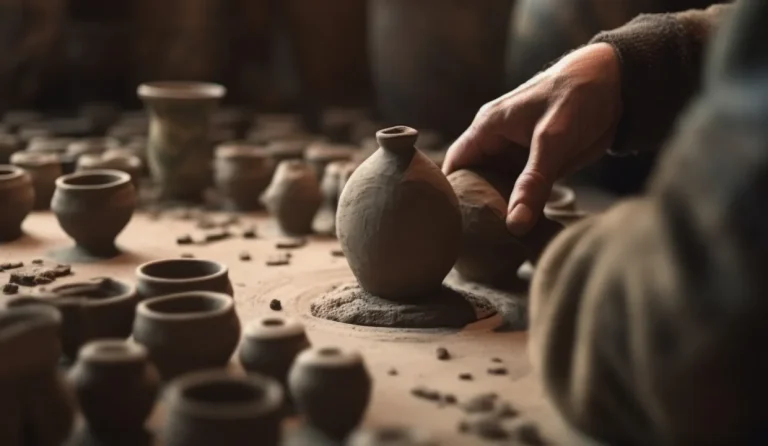
When my hand leaves the keyboard and rests on the wooden tray, the first thing I notice is not the wood. It is the cold line of the metal inlay under my thumb. That brief change in temperature interrupts the screen’s noise more quickly than another reminder or timer ever could.
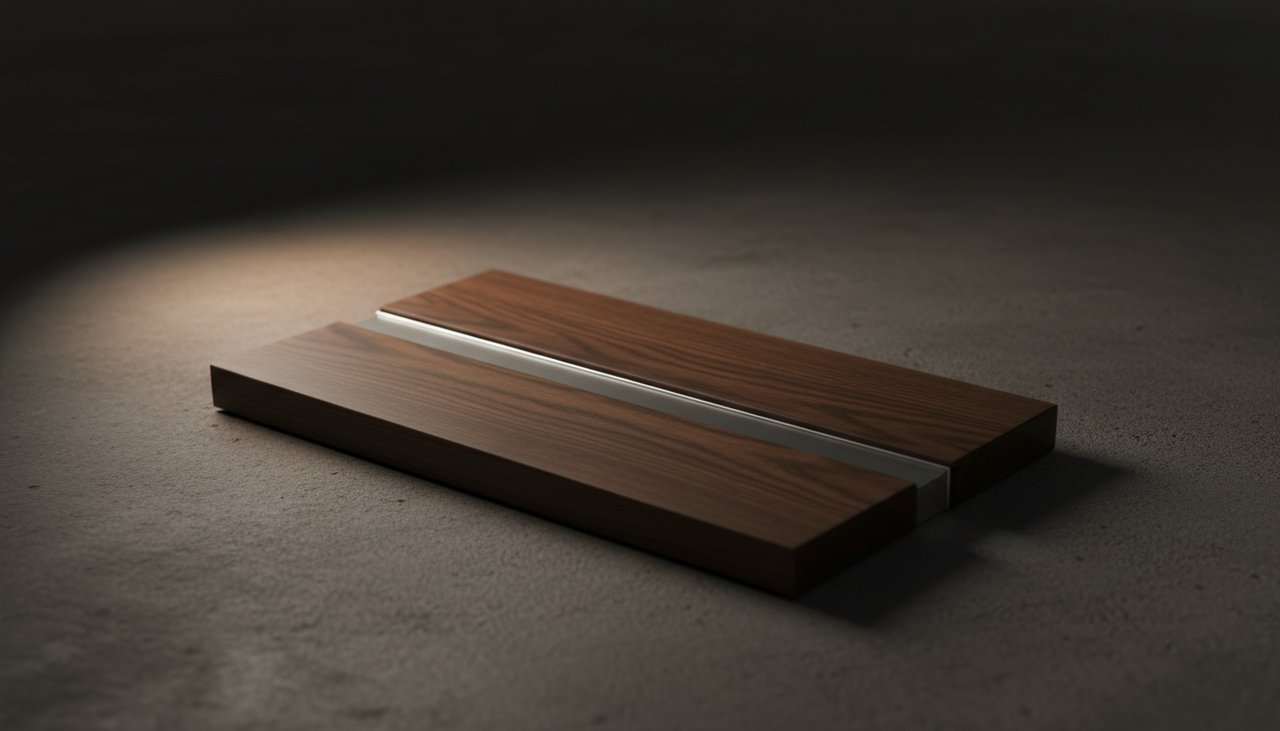
We use the physical environment as a tool for the mind. Attention Restoration Theory suggests that too many visual distractions create a state of clutter that drains our energy. By the end of the day, the constant processing of irrelevant data leaves us cognitively exhausted.
Modern workspaces often introduce specific physical stressors that fatigue the eye:
- Reflective surfaces that bounce harsh light into our field of vision
- Overly saturated colors that require constant visual processing
- Extra decorative elements that disrupt our sense of rest
When these factors dominate, our brains must make continuous micro-adjustments. This constant adaptation can lead to low-level anxiety. Choosing materials that are restrained and calculated helps physically interrupt this cognitive drain. The answer is not more decoration, but a quieter surface, a calmer edge, and a material that refuses to glare back.
If you look closely at the joint where wood meets metal, you will not find any chemical adhesives. Instead, the maker relies on friction and precise measurements to hold these opposing forces together. This method is based on “tong huo”, a structural technique used in traditional Ming dynasty furniture.
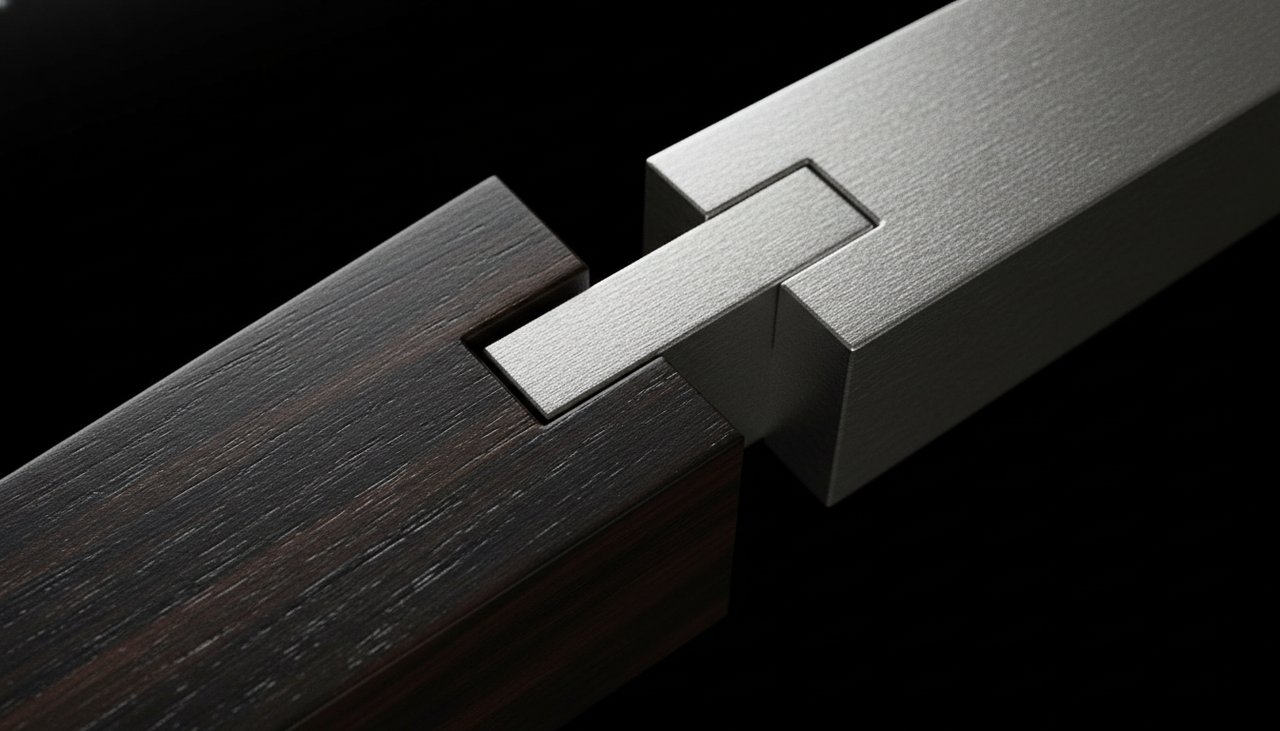
This joint creates a physical conversation between two different states of matter. The metal contracts when temperatures drop; the wood expands as humidity rises. They press against each other with calibrated force, and neither gives way.
The five-element framework names this dynamic directly: metal as contraction and logic, wood as organic expansion. The philosophy did not invent the behavior—it described what makers had already observed across centuries of friction and seasonal movement. Because wood reacts to the seasons, the maker cuts the metal slot with enough tolerance for this natural breath, allowing the joint to tighten and relax without splitting the surrounding grain. This pairing is a matter of engineering balance rather than a purely decorative choice.
Highland hardwood comes from altitudes above 1,500 meters, where the air is thin and the soil is sparse. In this harsh climate, trees grow slowly, depositing material with great density. You can see this in the annual growth rings, which often sit less than 2mm apart.
Among the species that reach this density, the relevant group is not generic “southwestern China” timber, but slow-grown plateau hardwood selected for mortise-and-tenon furniture because it resists warping and splitting. These boards show cellular structures that lowland timber rarely achieves. The density is not a processing outcome; it is a record of where the tree spent its decades.
This tight cellular structure results in a heavy block of material with almost no internal air pockets. When worked with a chisel, this wood shows a Janka Hardness rating up to 25% higher than lowland species. It requires the maker to sharpen their tools twice as often to maintain a clean edge.
This physical toughness makes the object remarkably steadfast. It does not yield under pressure, providing a reliable surface that feels permanent and grounded.
To achieve a truly calm surface, a silver blank is sandblasted with a fine abrasive. This process turns a shiny metal into an opaque, flat plane. The goal is to follow the principle of Shibui, which values an understated and unobtrusive presence.
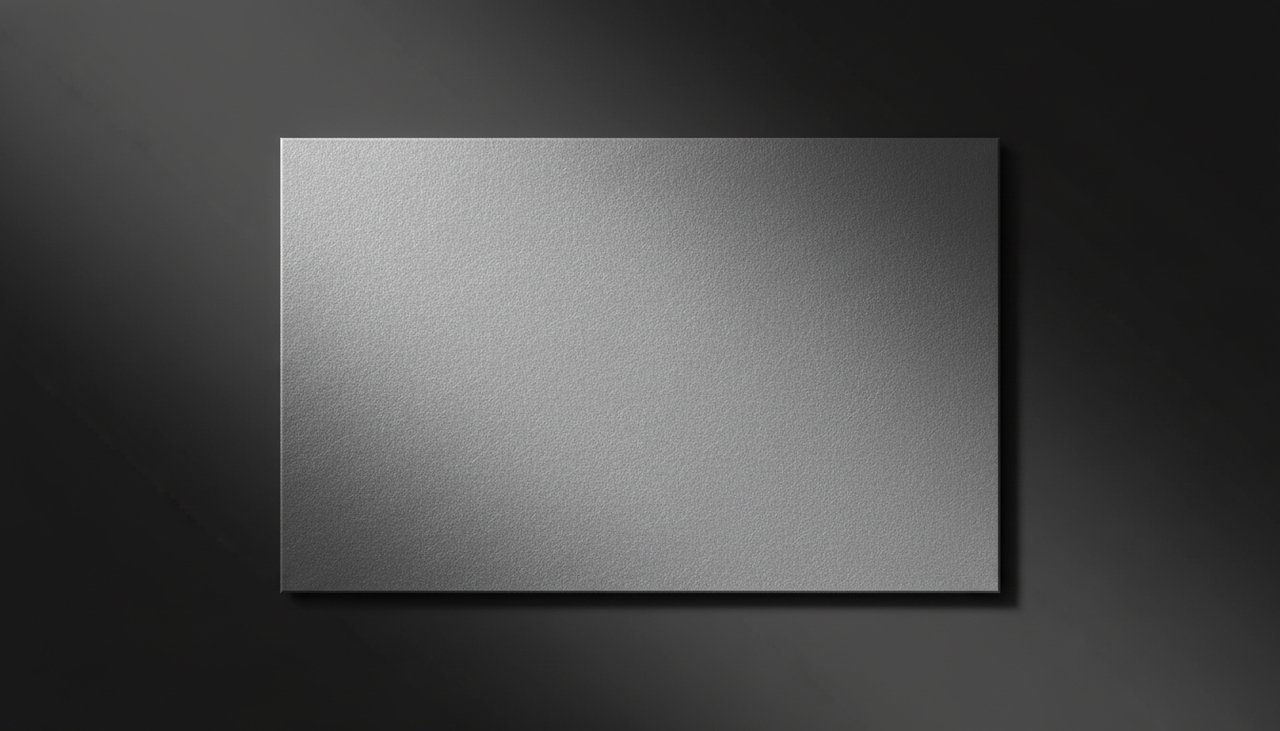
The workshop carefully controls how light reflects off the metal by calibrating the surface roughness. We keep this texture between Ra 0.8μm and 1.6μm. This specific range creates a state of controlled microscopic diffusion.
Light hits the metal and scatters evenly across microscopic peaks and valleys. The reflective stress from the workspace is answered here at the surface itself: instead of bouncing glare back into your eyes, the metal breaks it apart. In this design, the silver serves as a quiet supporter that defines the object’s perimeter without demanding attention.
Placing an object on a desk is a calculation of space. The maker treats the void around an object as a material, drawing on Ma, or meaningful emptiness. An object that supports focus must leave room around itself.
Guidelines suggest that Ma should make up over 60% of your active workspace. This spacing keeps the eye from catching on overlapping lines or messy silhouettes. It lets the mind move across the desk without snagging.
A strict visual hierarchy also governs the object itself. We use a 1:9 ratio where metal components occupy only 10% of the visual weight. This ensures that the organic warmth of the wood remains the dominant sensation when you touch it.
When the object is first placed on your desk, its surface is just a starting point. Over months, friction and the natural oils from your hands will change the materials. This use creates a unique, asymmetrical balance as the components age.
Tannins in the hardwood react to light and oxygen, pulling a deep red-brown hue to the surface. At the same time, the matte silver undergoes a slow oxidation. It gradually develops a cool, grey-black tarnish in the corners that records the history of your touch.
Caring for this kind of surface is simple. A dry cloth removes dust. A barely damp cloth, used once a month, handles the rest. No solvents, no polish—the goal is not to return the object to its original state, but to keep the surface clean enough that the aging continues on its own terms.
The marks stay small: a softer edge where the thumb returns, a darker corner where silver has met air and skin, a warmer tone in the wood beside it.
The object keeps a quiet record of use, without asking to be restored.