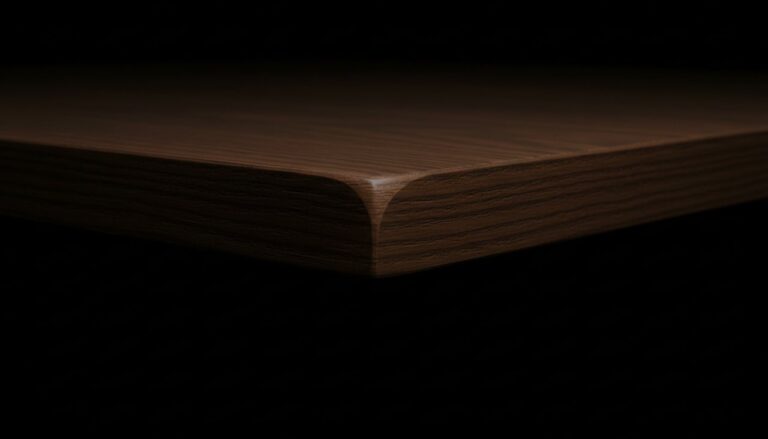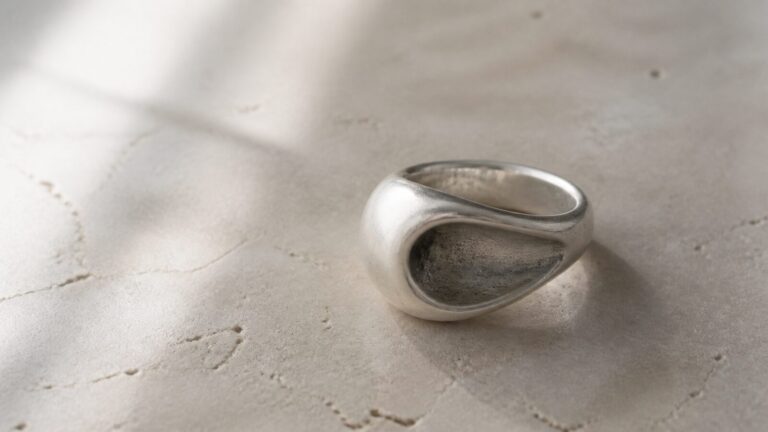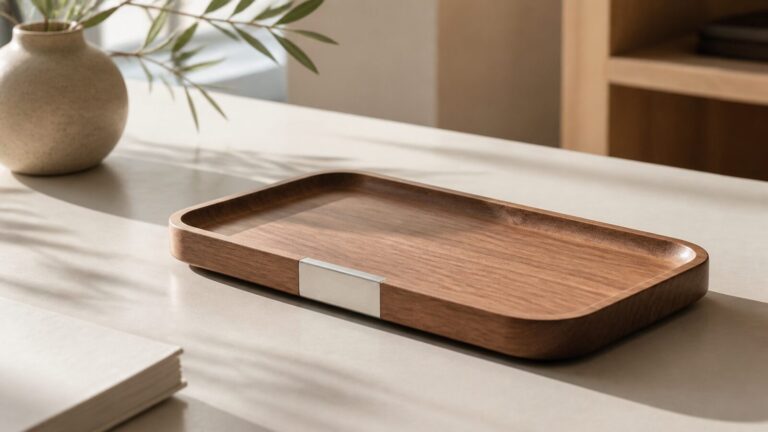
Set two materials side by side on a desk and the differences announce themselves before you’ve thought about it. One is cool and firm under the thumb. The other holds a little more give, a little more warmth. A small object that pairs matte silver with wood makes that contrast part of its everyday use, not just its design.
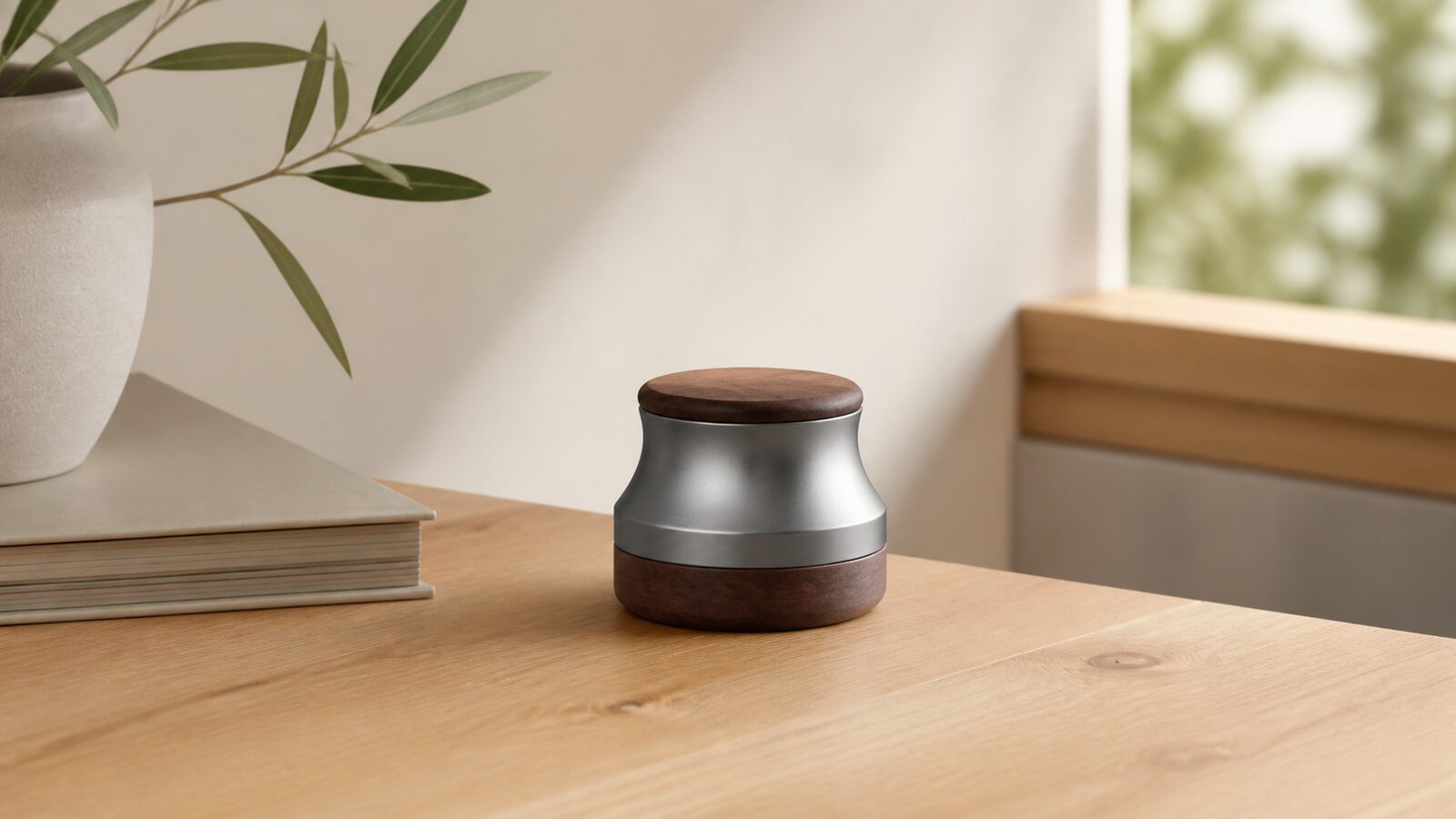
Most objects we handle during the day are built to be smooth and forgettable — glass, plastic, the brushed aluminum of a laptop. A piece that mixes a matte metal finish with a natural wood grain works differently: it invites you to notice the surface rather than pass over it.
The Feel of Matte Silver
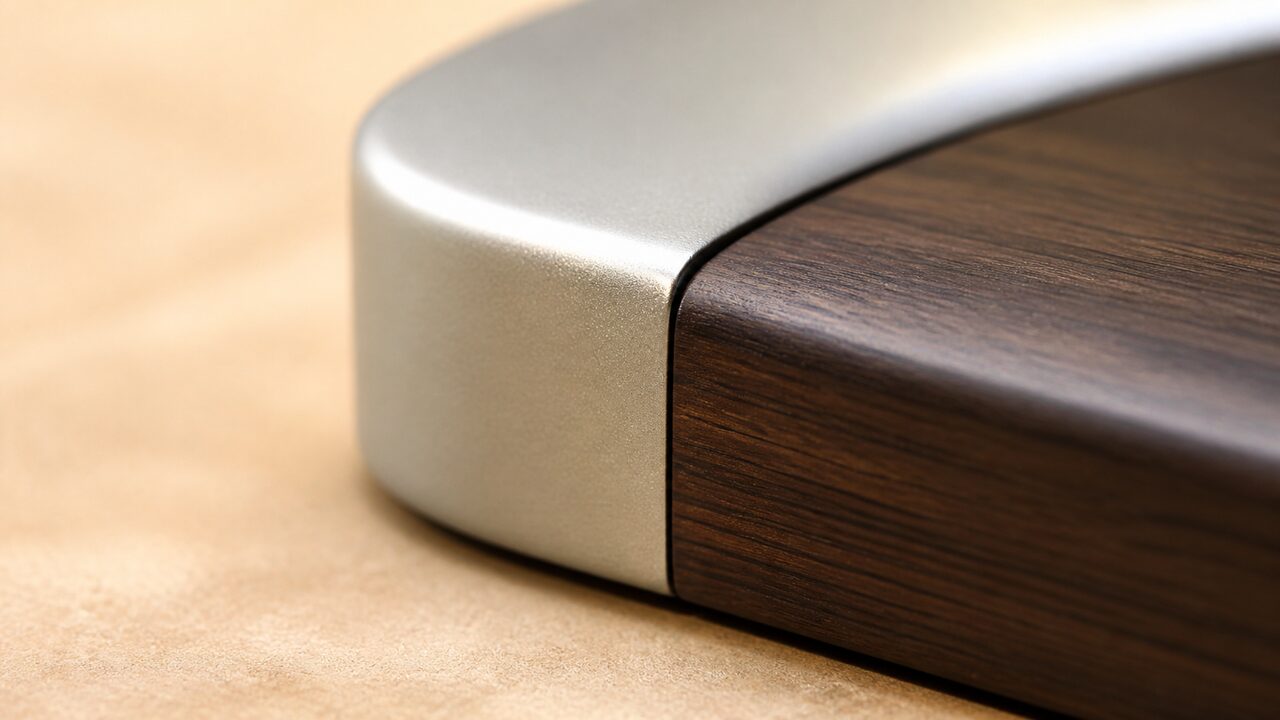
Matte silver starts as a polished sheet and is deliberately roughened, usually by brushing the surface with a fine abrasive so it no longer reflects light in a single direction. Instead of a mirror finish, you get thousands of tiny, uneven facets that scatter light and give the metal a soft, even glow rather than a shine.
That texture also changes how the silver feels. Rather than the slick, almost frictionless surface of polished metal, a matte finish has a slight tooth to it — enough that your thumb registers the surface rather than sliding across it. Because metal conducts heat quickly, it also reads as noticeably cool the moment you touch it, a sensation that fades within a few seconds as it picks up warmth from your skin.
The Feel of the Wood
The wood half of the object is chosen for a tight, consistent grain and a surface that holds up to daily handling. It’s planed and sanded through a series of progressively finer grits, then finished with a light coat of oil that’s worked into the grain and left to cure. The result is smooth to the touch without feeling artificially slick — you can still feel the faint texture of the grain beneath the finish.
Unlike metal, wood is a poor conductor of heat, so it feels close to room temperature almost immediately and stays that way. Where the silver announces itself with a quick change in temperature, the wood simply sits there, steady and a little softer under the hand.
Where the Two Meet
The seam between the metal and the wood is left visible rather than disguised. The two pieces are fitted together with tight tolerances so the join reads as clean and deliberate — a straight line where cold, dense metal gives way to warmer, more forgiving timber. There’s no attempt to blend the materials into one another; the contrast is the point.
That meeting also asks for restraint in construction. Wood moves with changes in moisture and metal responds differently to temperature, so the details of a mixed-material object matter more than a dramatic claim about a pressure fit or an invisible joint. A well-made piece gives both materials enough room to remain sound, and the exact solution depends on scale, finish and the way the object will be used.
Handled daily, the object offers two distinct sensations in one small footprint: the brief, bright note of the silver and the steadier, quieter presence of the wood. Which one you notice first tends to depend on the day.
Keeping It in Condition
The matte silver isn’t meant to stay pristine. A dry cloth is enough for routine dusting. If the surface starts to look uneven or picks up light scratches, a light pass with a fine abrasive pad, worked in the same direction as the original finish, can restore the texture without stripping away the soft darkening that builds up in the recesses over time. Silver polish is best avoided here, since it’s designed to remove exactly the kind of muted, slightly oxidized look this finish relies on.
The wood asks for even less. An occasional light application of oil, rubbed in by hand and left to absorb, keeps the grain from drying out. Between those occasional touch-ups, the surface should feel neither slick nor rough — just steady, the way well-kept wood tends to feel.
Care becomes more conservative when the materials are combined. Avoid soaking, strong cleaning products and abrasive silver polishes near the wood. A clean dry cloth is the default. If the wood feels rough, the metal finish changes abruptly, or the join begins to move, it is better to ask a maker or jeweller about the construction than to apply household oil or polish without knowing what finish is present.
Objects like this earn their keep less through function than through the small, repeated contact of hand against material. The two surfaces don’t compete for attention; they simply offer two different things to notice.