I often find myself resting my hand on the edge of a solid oak desk. My thumb naturally gravitates toward a small, softened dent near the corner. Years ago, a mark like this on a flawless, engineered surface would have triggered a spike of quiet frustration, signaling a failure in a perfectly managed space.
We usually build our environments as fortresses against the messiness of life, relying on rigid geometry to signal order. Yet, this approach often creates a subtle, lingering tension. The alternative is a physical environment that acts as a silent partner to time.
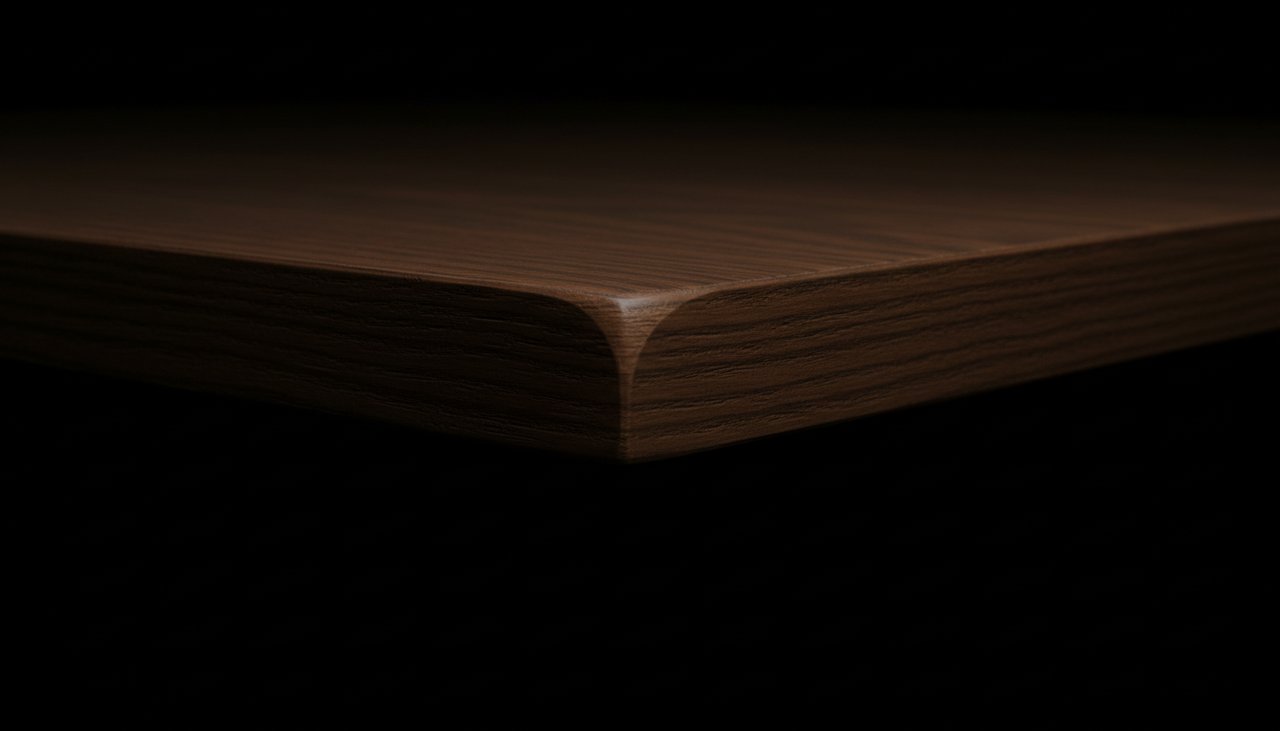
The resilience of an environment is not measured by its ability to repel daily life, but by its capacity to absorb physical wear and convert it into character.
Quiet Burnout of a Perfect Surface
The pressure to keep a room completely spotless carries a heavy psychological weight. In online communities dedicated to minimalism, a shift is taking place as people discuss the exhaustion that comes from maintaining a flawless facade. The pristine environment, initially meant to bring peace, often turns into a source of daily anxiety.
This fatigue typically shows up in a few distinct ways:
- The constant need to wipe fingerprints off glass and metal furniture.
- A feeling of unease when a single object is left slightly out of alignment.
- The realization that the space feels more like a clinical laboratory than a home.
The physical details of these spaces often make the stress worse. Many are now swapping the harsh glare of 5000K cold lighting for the softer, more forgiving glow of 2700K bulbs—a shift that does more than change the mood. Lower color temperatures allow the eye muscles to release tension faster, reducing the low-grade physiological fatigue that accumulates during hours spent inside a high-contrast room. High-gloss finishes are also being rejected in favor of matte alternatives that don’t demand constant vigilance.
Perfection Versus Patina
That fatigue has a material root. The objects in a minimalist space often resist the very process that makes things better with time—they are designed to stay fixed at the moment of purchase, which means any deviation registers as loss.
A stark, modern object is often fragile because its value depends on a static state of perfection. The moment a matte black smartphone or a white table takes a scratch, its aesthetic value drops. It requires a constant, expensive effort to return it to a factory state.
Think about the objects around you using a thirty-year standard. A mass-produced chair from a showroom often looks exhausted after a decade of use. In contrast, a wooden bench built on the principles of Shibui gathers a rich patina over the same period.
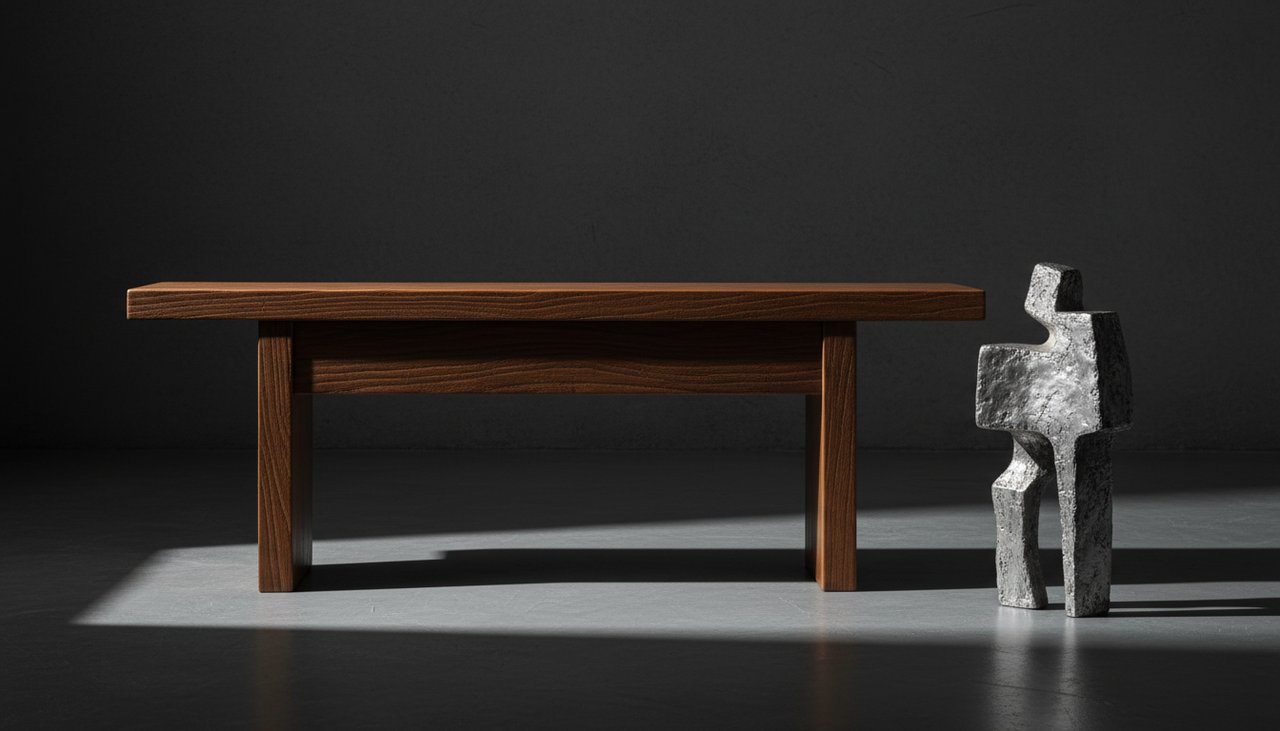
The friction of clothing and the oils from human hands actually deepen the wood grain, making it feel more substantial. The thinker Soetsu Yanagi argued that choosing materials and forms that age well preserves the Liveliness of an object. This allows our possessions to grow alongside us rather than deteriorating against us.
Shibui is sometimes conflated with Wabi-sabi, but the distinction matters. Wabi-sabi accepts impermanence and incompleteness—it finds beauty in what is transient and broken. Shibui is quieter and more specific: it describes a depth of character that reveals itself slowly, through restraint and material quality, without ever announcing itself. A Wabi-sabi object wears its imperfection openly. A Shibui object simply becomes more itself over time.
Materials That Absorb Life Not Damage
The weight and temperature of the objects we touch shape our daily reality. When your hand brushes against a high-gloss acrylic cabinet, it leaves an immediate smudge. These engineered surfaces record every minor impact as permanent damage because the material offers no grace.
Consider the rough, slightly porous surface of a raw cast iron kettle instead. Over time, the iron reacts to moisture and heat to develop a protective layer known as Sabi. This process creates a shield that deepens its color and strengthens its structure against the elements. The one thing that will undo it: chemical detergent. A single wash with dish soap strips the Sabi layer back to raw iron and forces the whole process to start over. Rinse with hot water, dry immediately, and oil lightly with food-grade mineral oil. The layer builds through use, not despite it.
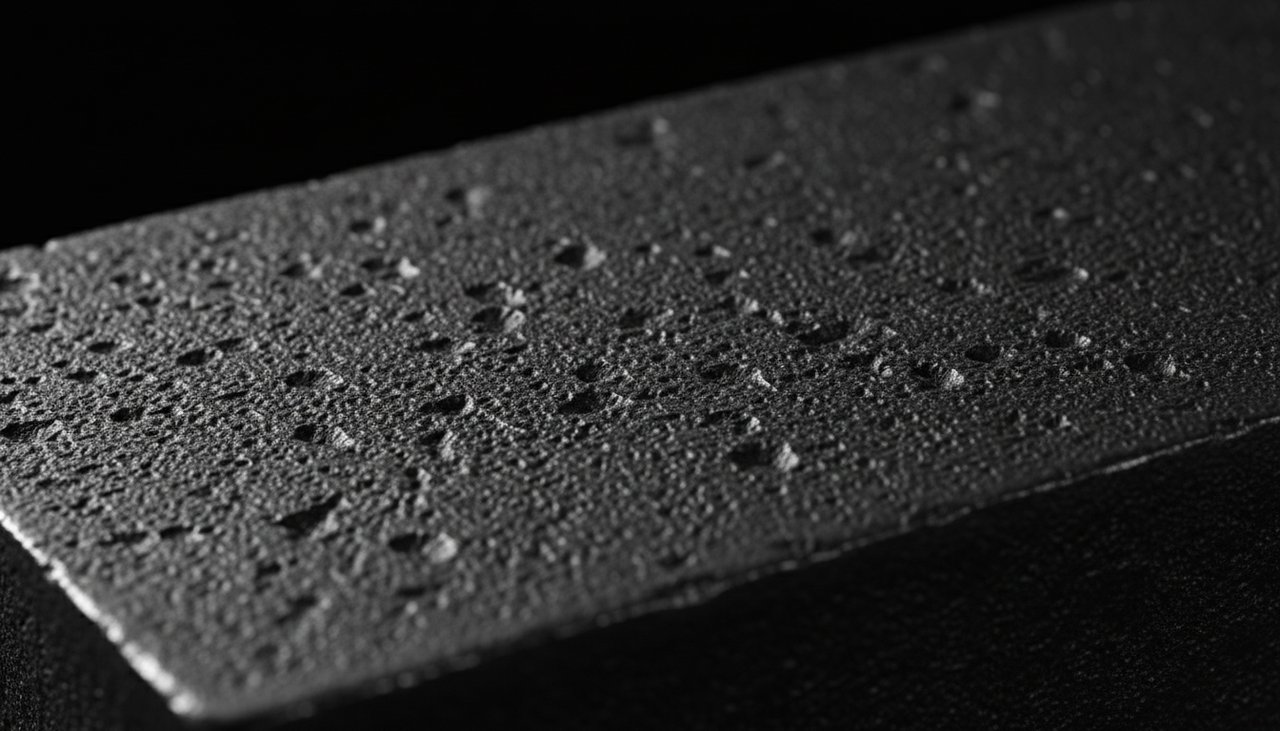
The same principle applies to the walls of a room. Standard painted drywall shows every scuff or bump from a chair. Handmade Washi paper, however, uses its fibrous irregularity to hide minor marks within its woven texture. When a mark appears, do not scrub or apply cleaning solution—a dry cloth pressed lightly is enough. The fiber structure absorbs minor contact without breaking down. Treating it like painted plaster is what causes damage.
Economics of Nurture Over Restore
Maintaining a clinical space is an act of expensive restoration where you spend energy to erase the evidence of time. High-end modern decor often loses nearly half its value in three years simply because its worth relies on looking brand new. It is a battle against the inevitable.
A grounded space operates on a cycle of nurturing rather than restoring. Raw wood furniture actually retains a higher percentage of its value over time. Accumulated sun exposure and daily use add physical depth to the material, turning potential damage into a localized history.
The ultimate example of this philosophy is Kintsugi. When a ceramic bowl cracks, the fracture is rejoined with lacquer and metallic powder rather than being discarded. This proves that true stability lies in adapting to impact rather than pretending it never happened.
Refuge from Visual Hunger
A completely flat, white room can easily create a cognitive vacuum. When the mind searches for texture and finds only a smooth, unyielding plane, it often leads to a subtle restlessness. We require a certain degree of material friction to anchor our attention.
Jun’ichirō Tanizaki explored this need for visual depth in In Praise of Shadows. He noted that when light levels drop, the inherent texture of stone or woven fabric becomes more visible. The shadows cast by the material grain create a complexity that naturally calms the environment.
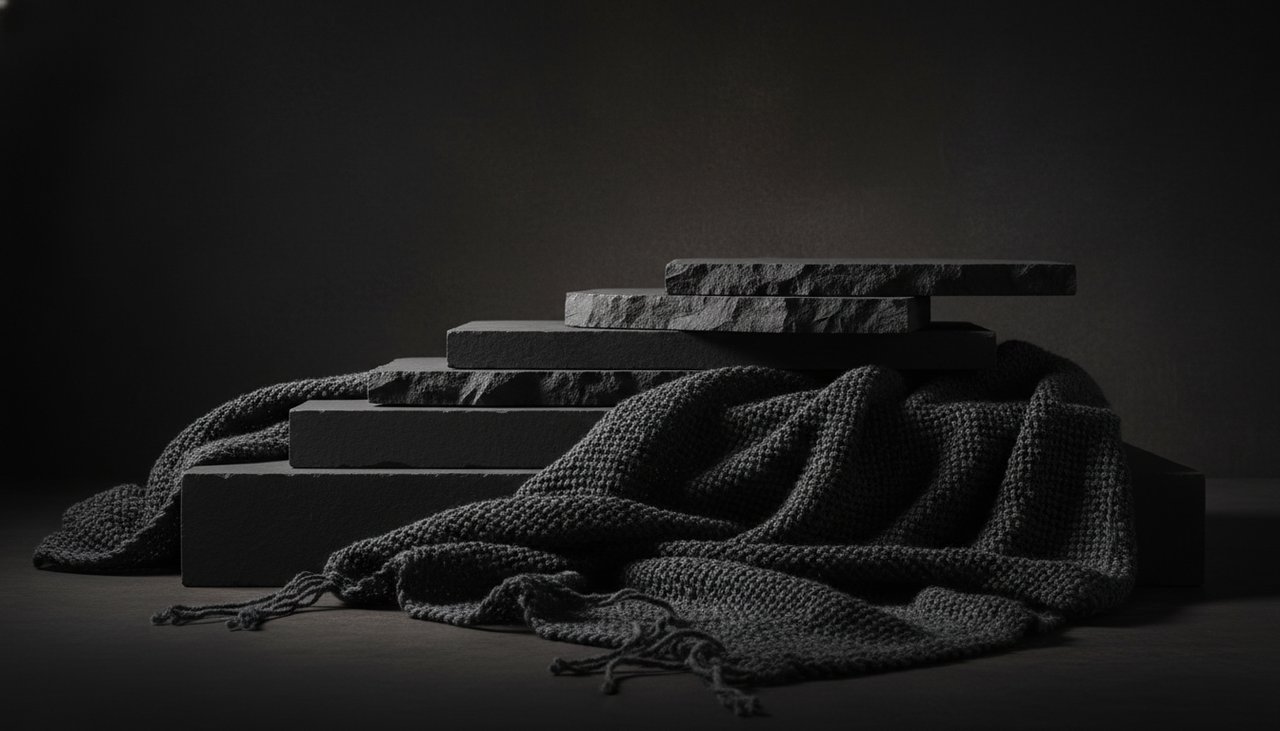
Low-gloss surfaces provide measurable relief to the nervous system. Looking at these surfaces allows our eye muscles to relax faster than when staring at highly reflective, plain walls. Tonight, try turning off the overhead light and working by a single lamp set to 2700K. Notice where the shadows fall across whatever object sits on your desk—the grain of the wood, the edge of a stone, the matte surface of a piece of silver. That is Shibui at work. Not as a concept, but as something the eye actually settles into.
Frequently Asked Questions
The constant need to maintain a flawless environment creates significant psychological weight. This pursuit of perfection often leads to daily anxiety, making a space feel more clinical than calming. It becomes a source of quiet burnout rather than peace.
Shibui aesthetics favor natural materials that gain character with age, such as solid oak, cast iron, and woven paper. These materials absorb wear, developing a rich patina rather than showing damage. They tell a story through their evolving texture and depth.
Kintsugi, the art of mending broken ceramics with lacquer and metallic powder, perfectly embodies Shibui's philosophy. It celebrates an object's history and imperfections, showing that true stability comes from adapting to impact. This process nurtures an object's journey rather than trying to restore it to a factory state.
Low-gloss and matte surfaces provide essential visual friction, which helps anchor our attention and relaxes eye muscles. Unlike highly reflective surfaces that can create cognitive restlessness, they offer a quiet, steady backdrop. This helps the nervous system settle and fosters a sense of self-possession.
Shibui is a Japanese aesthetic concept describing a subtle, understated beauty that deepens over time. It values inherent qualities, quiet elegance, and an unforced authenticity. The beauty of Shibui is often discovered rather than immediately apparent.
Both aesthetics appreciate natural aging and imperfection, but Shibui emphasizes understated, functional beauty that evolves gracefully. Wabi-Sabi often leans towards a more transient, melancholic beauty found in decay and impermanence. Shibui seeks a quiet resilience within daily life.
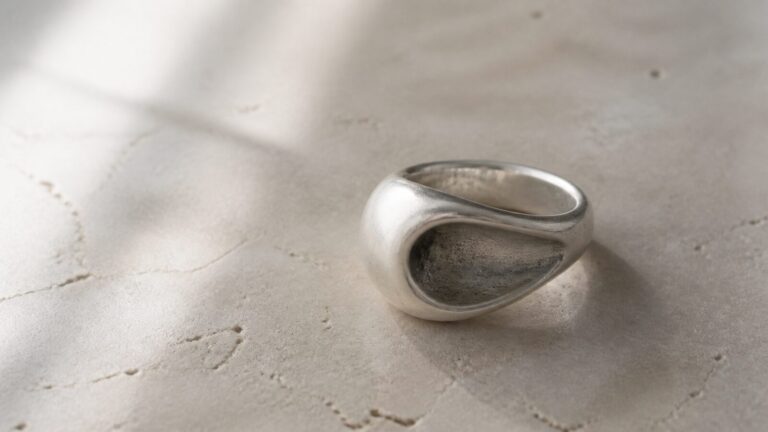
Absolutely. Shibui principles favor jewelry crafted from materials that gain character with wear, such as oxidized silver or natural, patinated hardwoods. It emphasizes restrained forms and tactile textures that become a personal anchor for focus and resilience. The design is meant to deepen its story with the wearer.
Begin by choosing objects made from natural materials that age gracefully, like solid wood furniture or raw metal accents. Prioritize quiet textures, soft, indirect lighting, and a sense of calm over stark perfection. Allow your space to accumulate character over time, reflecting your own journey.
Shibui embraces a palette of muted, earthy, and natural tones—deep grays, charcoals, indigo, and rich wood shades. The focus is on the inherent color and texture of the materials themselves, rather than bright or dominant hues. This creates a deep, tranquil, and restrained visual environment.