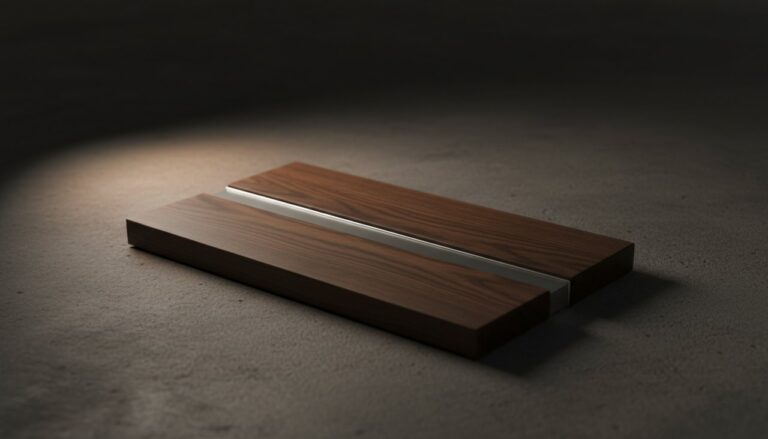

The first thing I notice when I pick up a piece of silver is the cold. Not an unpleasant cold—a precise one. It resists the hand for a few seconds before it begins to take on the temperature of the skin, and in that interval something shifts. The digital noise that was filling the room a moment ago no longer has the same grip. This is not a metaphor. It is a physical fact about thermal conductivity, and it is where the study of weight and emptiness begins.
Weight is rarely a fixed number on a scale when it concerns the objects we carry. It is a physical dialogue. A silver ring may feel startlingly cool against the skin for the first three seconds before it begins to mirror your body heat, yet its perceived density remains constant. This presence is a tool for the mind, an anchor that tethers a wandering thought back to the immediate, physical present.
The Ratio of Restraint
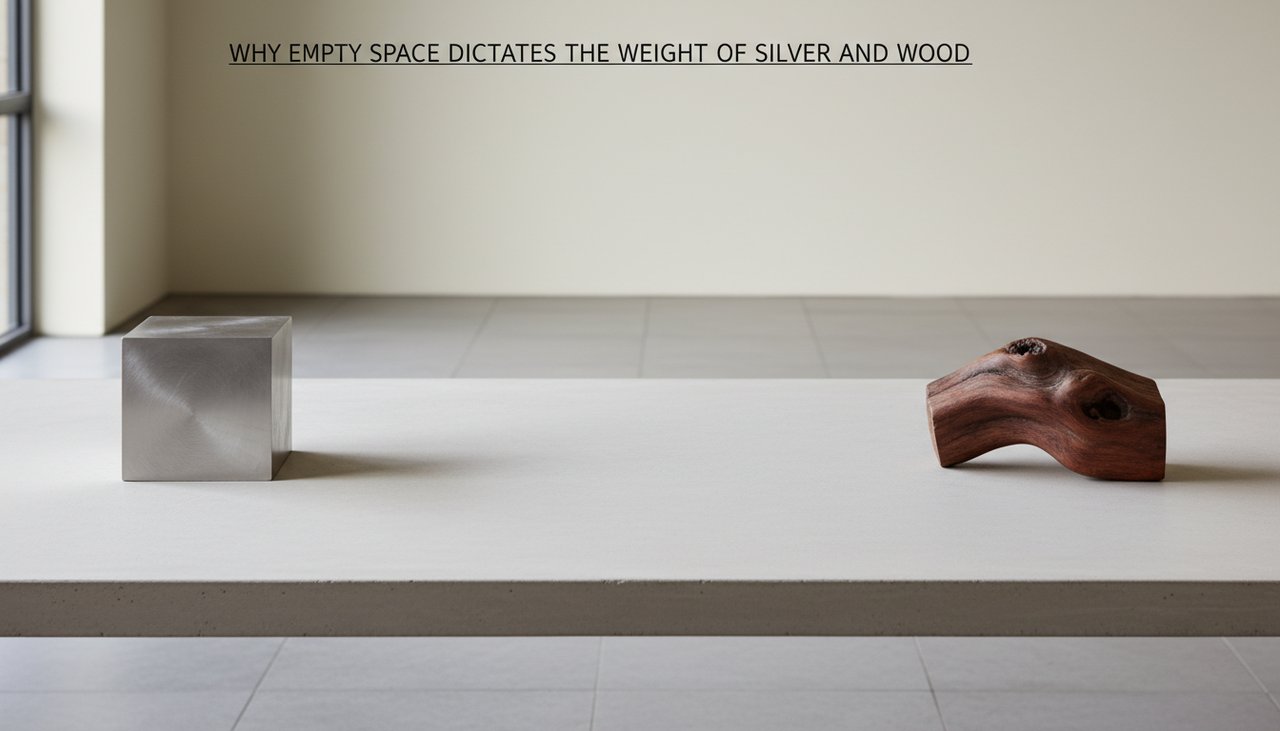
Visual weight is defined by the boundaries of the surrounding emptiness. When I place a heavy silver vessel upon a dark wooden surface, the silence around the object performs the essential work of anchoring the room. If the space is too crowded, the object loses its authority and becomes mere clutter.
To maintain this quiet focus, I follow specific spatial principles during the composition of a piece:
- The projection area of the metal element must not exceed 15% of the visible wood grain to prevent a feeling of structural oppression.
- A spatial ratio of 1 to 1.618 between the object and the edge of its boundary establishes a deliberate, balanced repose. This ratio—the golden ratio, documented across centuries of architecture and object design from Japanese lacquerware to Bauhaus furniture—is not an aesthetic preference but a perceptual constant: the human eye reads it as resolved rather than arbitrary.
- Placement requires a minimum of three inches of cleared surface area to allow the eye to rest before meeting the material.
These gaps are not merely leftover areas. They are structured boundaries that require a quiet, disciplined focus from the observer. This restraint forces us to slow down and acknowledge the intentionality required to leave a surface bare.
The same logic that governs visible space also operates at a smaller scale—inside the surface of the material itself, in the microscopic texture of metal and grain.
Density Through Texture
The surface of metal holds emptiness within its very texture. Controlled sulfidation creates a microscopic film of silver sulfide that transforms the metal’s character: instead of repelling the eye with flashes of reflected light, a treated matte surface draws light inward, trapping it within tiny structural voids and removing the distraction of reflections.
In my practice, I submerge the silver in a sulfur solution heated precisely to 70 degrees Celsius. This specific temperature ensures the oxidation is even and deep, rather than a superficial stain. The resulting darkness adds a psychological weight to the touch, making the object feel grounded in the palm.
Wood follows a parallel logic through a different process. Using the Fuki-urushi technique on Japanese Zelkova—a hardwood whose open, ring-porous cell structure makes it particularly receptive to urushi penetration—I rub raw urushi sap into the grain and wipe it away repeatedly. This is performed at least seven times, with each layer cured in a high-humidity environment for 24 hours.
Each iteration fills the microscopic pores while preserving the tactile voids of the natural grain. Your fingers catch slightly on these ridges, creating a dialogue between the solid material and the empty pockets left behind. This texture serves as a reminder that resilience comes from absorbing our surroundings rather than reflecting them away.
The Architecture of the Unseen Void
The most significant weight often comes from the voids we cannot see. When a vessel rests in your hand, its stability is engineered by the precise removal of material from the interior. The Tsuiki hammering technique allows for this control, shifting the center of gravity through manual displacement.
The internal architecture follows strict technical parameters to ensure a sense of permanence:
- The base of the vessel is maintained at a thickness of 1.5mm to 2.0mm to provide a low, heavy anchor point.
- The walls are hammered progressively thinner, reaching a delicate 0.3mm at the rim.
- The transition between these two thicknesses must be a smooth gradient to prevent structural stress points.
This invisible transition drives the physical weight toward the base, ensuring the object stands firm. Woodwork employs a similar strategy through Kigumi joinery, where core material is removed to allow pieces to interlock without glue. These hidden cavities alter the acoustic feedback of the wood.
When you set a piece of joined wood on a table, the hollowed joint produces a dull, solid sound that feels more substantial than a solid block. Understanding that stability relies on an unseen void provides a sense of quiet strength. An object stands firm because intention has shaped the emptiness inside it. It is a small, silent acknowledgement that what we leave out is just as vital as what we keep.
Frequently Asked Questions
Emptiness around an object defines its boundaries and anchors its presence. Deliberate use of surrounding space, like the 1:1.618 ratio, creates a balanced repose. This restraint encourages a quiet focus from the observer.
A matte finish, achieved through sulfidation, traps light within microscopic voids. This removes reflections, adding psychological density to the touch. It makes the object feel more grounded in your palm.
This traditional technique involves rubbing raw sap into wood grain and repeatedly wiping it away. It fills microscopic pores while preserving tactile voids. Your fingers catch slightly on the ridges, grounding the observer in the present moment.
Removing material from the inside, as in Tsuiki hammering, lowers the center of gravity. A thick base (1.5-2.0mm) and thin rim (0.3-0.5mm) drive physical weight downward. This unseen void provides substantial stability and alters acoustic feedback.
Matte silver benefits from occasional gentle cleaning with a soft cloth. Avoid harsh chemicals or abrasive materials, which can alter the unique sulfidated finish. Over time, its patina will deepen, reflecting your personal journey.
It emphasizes clean lines, essential forms, and a profound respect for natural materials. The focus is on understated elegance, structural beauty, and a quiet strength, rather than overt ornamentation. It often reinterprets traditional techniques for contemporary life.
Hardwood jewelry benefits from occasional oiling, especially if it appears dry. Avoid prolonged water exposure and extreme temperature changes to maintain its integrity. This care deepens its natural character over time.
Essentialism in jewelry focuses on inherent material qualities and structural integrity. It means removing excess to reveal core beauty, promoting pieces that act as anchors for mindset. Each element serves a deliberate purpose, fostering focus and resilience.
Oxidized silver develops a rich, dark patina that adds depth and character. It offers a muted, sophisticated aesthetic distinct from polished finishes. This finish often enhances the tactile experience, grounding the wearer's attention.
Look for brands that prioritize craftsmanship, natural materials, and timeless design over fleeting trends. Seek pieces that emphasize structural beauty and quiet presence. Estovio offers selections crafted with these very principles.