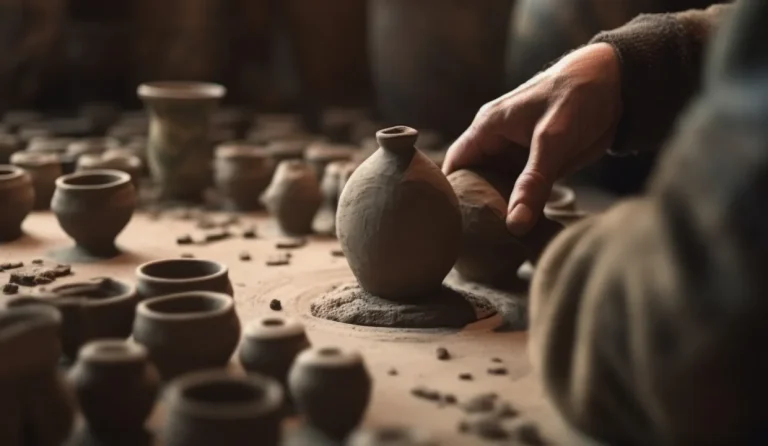
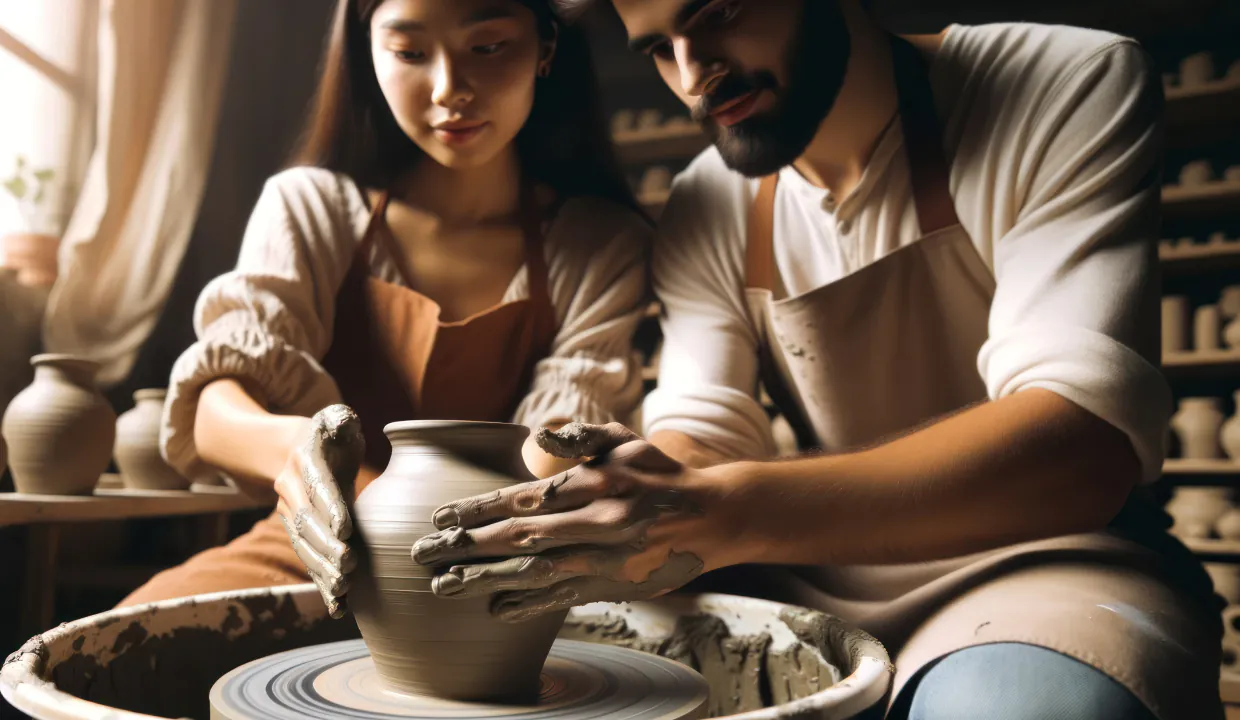
The cursor flickers on the seventh open browser tab. Beneath the desk, a heel taps out a rapid-fire code of low-grade anxiety. Attention becomes a handful of dry sand caught in a wind tunnel—scattered and impossible to grasp.
Most surfaces we touch are variations of the same digital theme. Frictionless glass, warm plastic, and the brushed finish of a trackpad are designed to be unnoticed. There is no resistance. We tend to assume that zero friction means efficiency. The opposite is closer to the truth: a surface that offers no resistance gives the nervous system nothing to register, nothing to return to. The internal state mirrors the hardware—fast, fleeting, and easily swept away.
The Shock of Cold Silver
The silver portion of a desk anchor begins in the heat. A flat plate of sterling silver is placed in the furnace until it reaches a dull cherry red—approximately 650°C, the point at which the metal’s crystalline structure loosens enough to accept deformation without cracking. This is the annealing process. It is not merely preparation; it is what makes the subsequent brushing possible at all. A silver plate worked cold would resist the steel bristles and produce an uneven, torn surface rather than the consistent matte the finish requires.
Once the silver has cooled, the artisan uses a short-bristled steel brush. The process follows a specific sequence:
- The silver is held firmly against a leather-covered peg.
- The brush is pulled in a single, steady direction across the surface.
- Each stroke must overlap the previous one by exactly two millimeters.
- The pressure is constant, ensuring the depth of the matte finish is uniform.
This creates thousands of microscopic valleys. When your thumb finds the silver, it doesn’t meet a mirror-smooth surface. It meets a physical fact. The metal carries the deep, stored chill of the room. That jolt of cold acts as a circuit breaker, demanding that the nervous system acknowledge the present moment.
The Slow Warmth of Highland Hardwood
If the silver is a wake-up call, the wood is the conversation that follows. We select Highland hardwood—specifically Highland Walnut, a dense-grained species that grows slowly at altitude and develops a cellular structure that lowland timber rarely matches—for the tightness of its growth rings and the firm resistance it offers under the hand.
The preparation of the wood is a matter of subtraction. An artisan uses a block plane, sharpened to a razor edge, to take off shavings as thin as tissue paper. This isn’t about shaping; it is about opening the pores of the timber. After the planing, the surface undergoes a specific sanding progression:
- Initial smoothing with 400-grit paper to level the surface.
- Intermediate sanding at 800-grit to remove the scratch marks of the first pass.
- Final polishing at 2000-grit, which produces a surface that feels like skin.
- A single coat of cold-pressed linseed oil is rubbed in by hand and left to cure for forty-eight hours.
Unlike the silver, the wood has low thermal conductivity. It takes several seconds for the grain to match the warmth of your skin. This slowness is the point. As you move your thumb across the surface, you feel the minute ridges of the grain—the physical record of the tree’s life. It absorbs the restless energy of the hand.
The Result of the Joinery
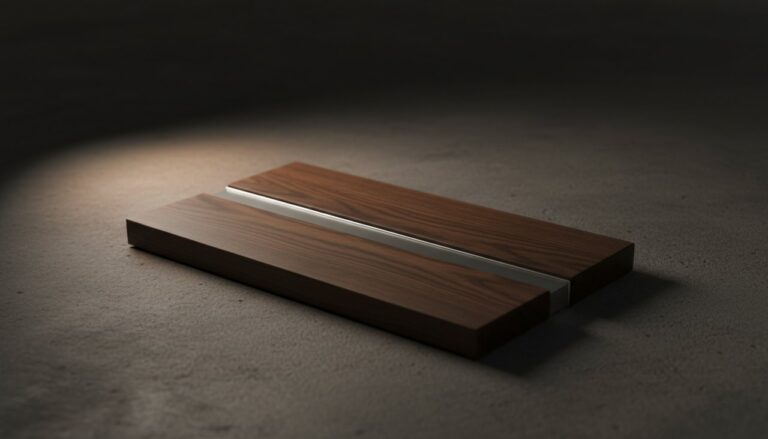
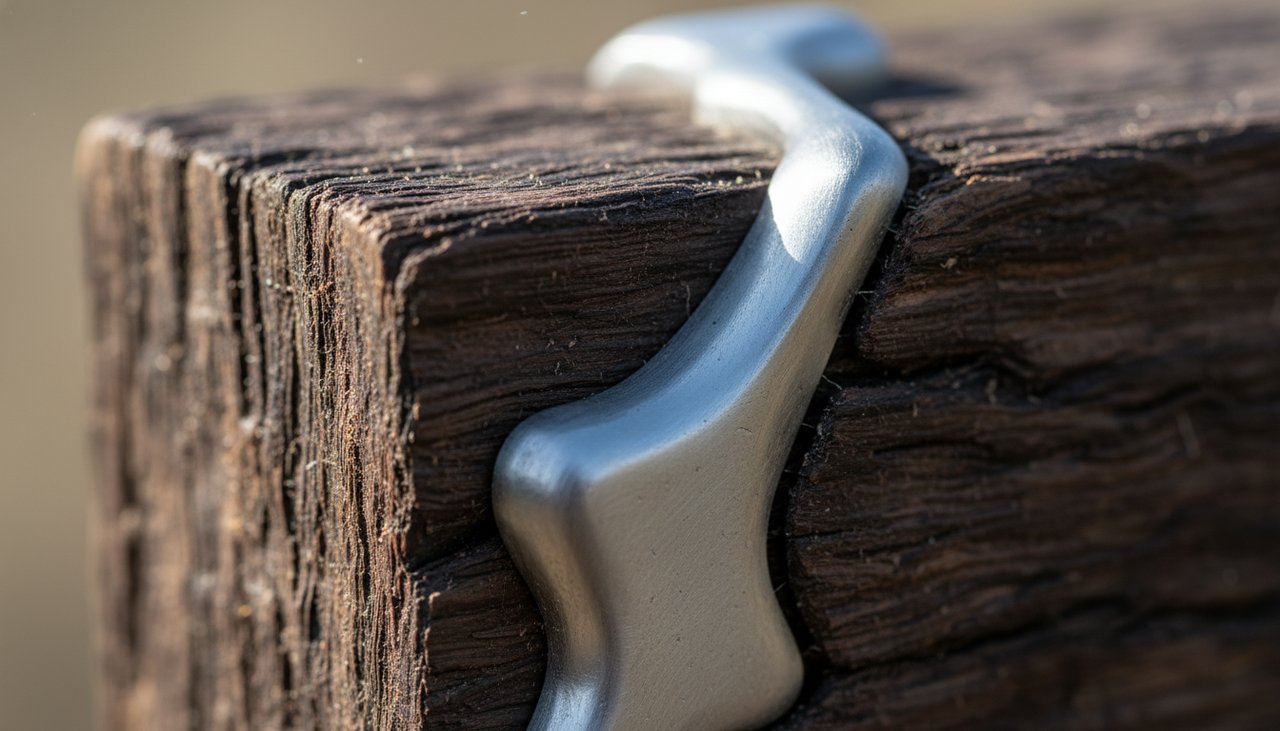
The intersection where the silver meets the wood is not hidden. It is a clean, structural seam. The two materials are joined using a traditional pressure fit, requiring the tolerances to be within a fraction of a millimeter. There is no glue to muffle the sensation; just the direct contact of metal against timber.
This object sits on the desk as a reliable anchor. The sudden shock of silver snaps the mind out of a distraction loop. The steady, rising warmth of the wood helps the body sit patiently with a problem that has no immediate answer.
Keeping It in Condition
The matte silver is designed to accumulate a record of use, not to stay factory-new. A dry cloth removes surface dust. If the finish begins to feel uneven, a single pass with a 600-grit abrasive pad—following the direction of the original brush strokes—restores the texture without erasing the patina that has built up in the deeper valleys. Avoid polish. It removes the oxidation that gives the surface its depth.
The wood requires even less intervention. Once a year, a small amount of cold-pressed linseed oil rubbed in by hand and left overnight is enough to keep the grain from drying out. The surface should feel slightly resistant under the thumb—never slick, never parched. That resistance is what the object is for.
We often try to fix scattered thoughts by thinking harder. Sometimes, the shortest path back to focus is through the sense of touch. When you set the object back down, the breathing has slowed. The feet feel a little more firmly planted on the floor.