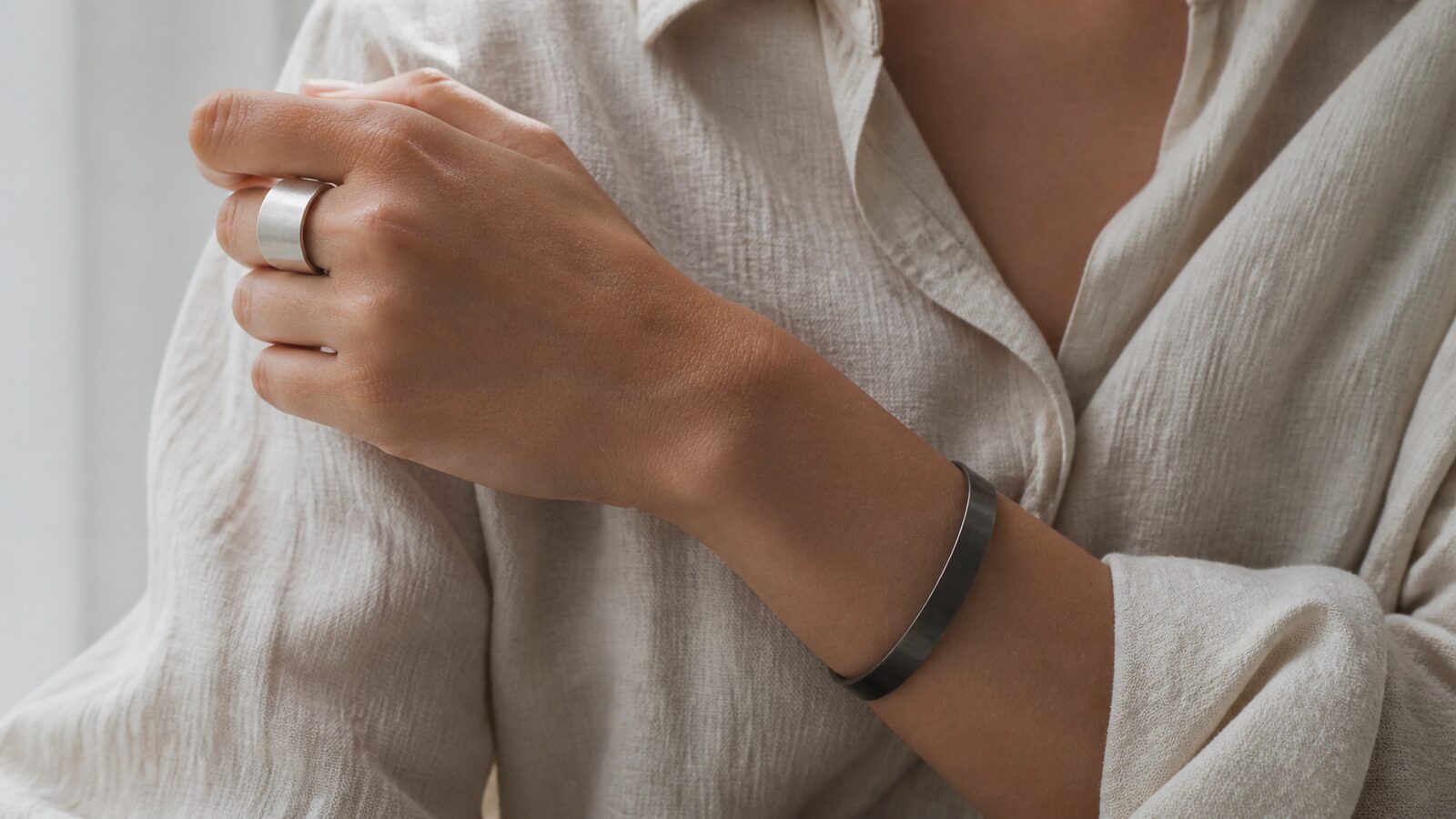
A thick silver cuff does not simply sit on the wrist. It claims it. It is a cold, heavy presence that draws attention to your own movements. When you wear a piece of substantial metal, you are engaging in a constant physical relationship with weight and gravity.
Styling these pieces well is less about following a fleeting trend and more about understanding how substantial metal behaves against fabric, light, and the body. With a bit of attention to proportion and finish, chunky silver pieces can become a natural, comfortable part of your routine.
Scaling Metal to Fabric
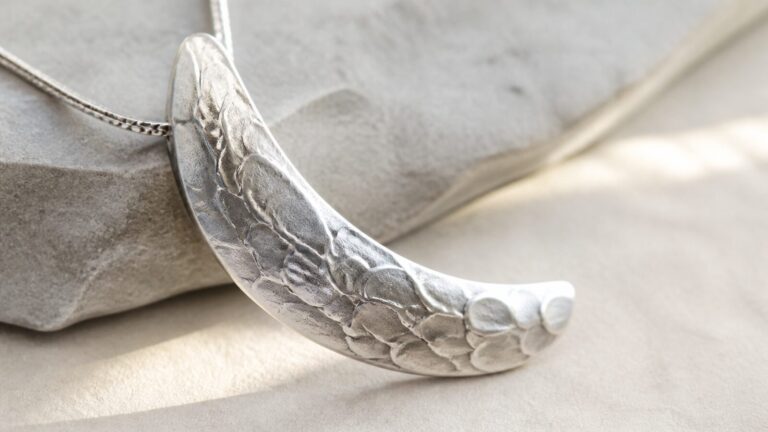
The relationship between metal and fabric is largely physical. When a heavy silver pendant rests against different textiles, it changes how the fabric drapes and moves.
Consider a solid silver collar against a delicate silk blouse. The weight of the metal can pull at thin fabric, altering its natural fall. Leaving a small visual buffer — a few centimeters of space between the edge of the necklace and the neckline — gives both the metal and the fabric room to hold their own shape.
The finish of the metal also changes how it reads against different weaves. A matte or brushed surface, produced by mechanically abrading the top layer of the metal, scatters light rather than reflecting it directly. Against heavy wool knits and other textured fabrics, this matters: a matte surface tends to hold its own against a busy weave, while high-polish silver can get visually lost against textured yarn.
When pairing different metals, mismatched finishes can create visual conflict. Polished gold reflects light in a sharp, directional way, while matte silver scatters it more broadly. Worn together, each surface can distract from the other. Keeping metals within the same finish family — both matte, or both polished — tends to read more cohesively.
Negative Space
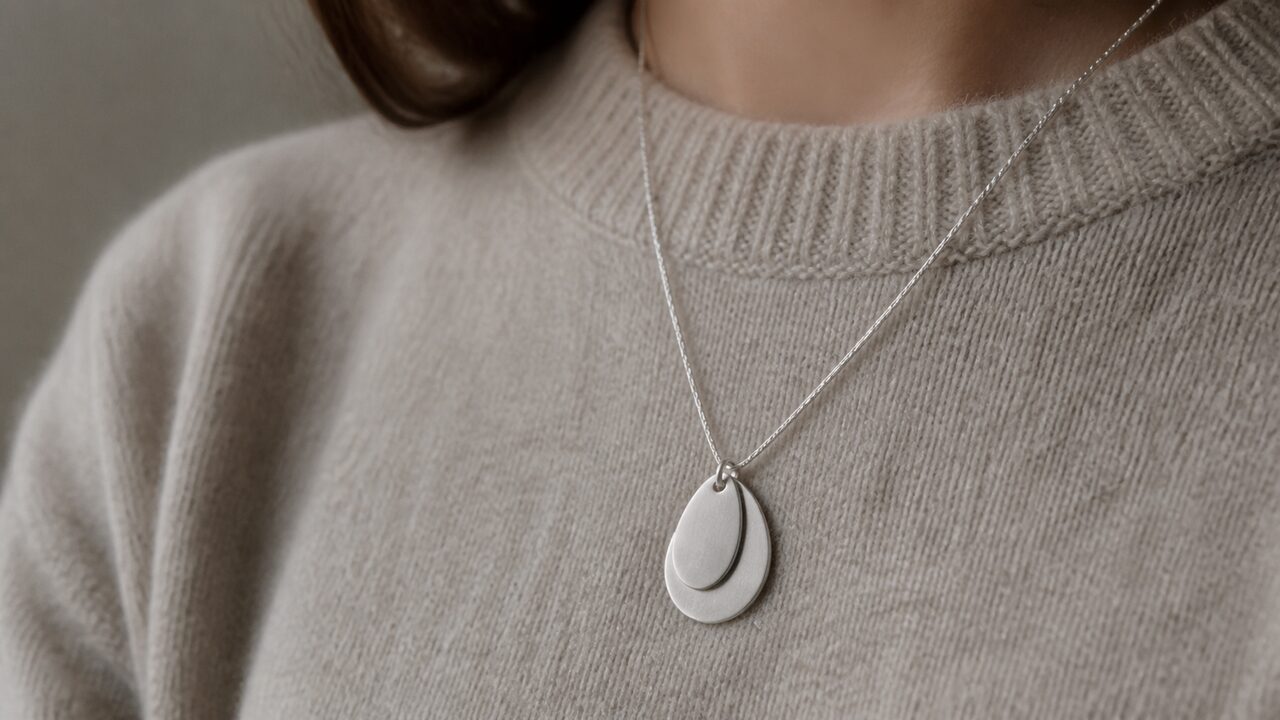
Layering heavy jewelry works best when there is enough room between elements. Without spacing, a collection of chunky silver can start to look cluttered rather than intentional. The goal is to give each piece enough visual room to read clearly.
When stacking multiple necklaces, letting the arrangement flow from light to heavy and short to long tends to look most natural. A thinner chain sits closer to the collarbone, while denser pendants fall lower. Leaving a visible gap between cascading pieces — rather than letting them overlap and tangle — keeps the arrangement from looking crowded.
The same principle applies to individual pieces. The bare skin around a thick collar necklace acts as a kind of visual pause that keeps a heavy-gauge piece from feeling squeezed. Wearing a wide, hammered cuff on the wrist while leaving the fingers bare draws attention to that single point rather than spreading it across multiple pieces.
In more formal or professional settings, this kind of restraint tends to read as put-together rather than sparse. One deliberate, substantial piece is often more effective than several smaller ones layered together.
Shape and Silhouette
The overall silhouette of a piece changes how it reads in an outfit. Angular, architectural silver — hard edges, sharp geometric lines — tends to feel more structured and pairs naturally with tailored, formal clothing.
Organic, flowing silver forms read differently. Pieces that mimic curves or molten shapes tend to feel softer and pair well with looser, more relaxed silhouettes. Mixing an organic cuff or ring with structured tailoring can soften an otherwise formal look, while a sharply angled piece can add definition to something more casual.
Sound and Light

In quiet or professional environments, the physical footprint of jewelry — specifically its sound and light — is worth managing alongside its visual style.
A stack of loose silver bangles can create a persistent clanking that becomes distracting during a conversation or meeting. A single, fixed cuff avoids this. The same logic applies to glare: high-polish silver reflects overhead lighting more aggressively, while matte, brushed, or oxidized surfaces absorb more of it.
- Choose one substantial ring or one heavy necklace to act as an anchor piece.
- Prioritize matte or brushed finishes to reduce light reflection.
- Opt for fixed pieces over loose, moving ones to reduce noise.
Metallic Balance
Mixing silver with gold or brass can feel disjointed, and the issue is usually proportion rather than the combination itself. An even split between metals tends to look accidental, while a clear imbalance reads as intentional.
A roughly 70/30 ratio is a useful starting point: let one metal dominate and treat the second as an accent. The table below shows a few practical pairings.
| Dominant (70%) | Accent (30%) | Result |
|---|---|---|
| Heavy silver chain | Gold watch clasp, thin gold rings | Silver reads clearly; gold adds warmth without competing |
| Wide silver cuff | Single gold stud earring | Cuff remains the focal point; earring provides balance |
| Gold collar necklace | Matte silver ring | Gold leads; silver grounds without competing for light |
Beyond proportion, a few combinations tend to fall flat regardless of ratio:
- Heavy silver layered over busy prints can get lost in the pattern.
- Stacking several large-scale pieces together often reads as a cluster without a clear focal point.
Comfort Over a Full Day
The real test of substantial jewelry is how it feels after a full day of wear. Heavy pieces demand a bit more physical tolerance than delicate ones, and comfort varies from person to person.
Statement earrings can start to feel like a strain on the earlobe well before the end of the day if they’re on the heavier side — a lighter design, or clip and screw-back styles that redistribute weight, can help. If a piece feels noticeably heavy within the first hour, it’s likely to become uncomfortable by evening.
Necklaces follow a similar logic: a heavier chain distributes its weight across the neck and shoulders, and what feels fine for an afternoon can feel different after a full workday. Trying a piece on and wearing it around the house for an hour or two before a long day out is a practical way to gauge comfort.
For rings, width tends to matter more than raw weight. A wide band that spans an entire finger joint can restrict movement and start to feel cumbersome by midday, while a narrower band of solid silver can offer real heft without getting in the way. Trying a ring on and making a fist, typing, or holding a bag is a quick way to test whether the width works for daily use.
The Aging Process
The inside of a well-worn silver ring often tells its own story. Dark oxidation tends to gather in deep crevices, while a bright polish develops on the high points where the metal frequently rubs against skin. This gradual change is simply a record of daily use.
Mechanical polishing removes this history and returns the metal to a uniform shine. For a gentler option that cleans tarnish while leaving fine detail intact, an electrochemical method offers an alternative to abrasive polishing.
The chemistry behind it is straightforward: silver tarnish is silver sulfide, formed when the metal reacts with trace sulfur in the air. An electrochemical cleaning process reverses this by giving the sulfur a more willing host — aluminum — through a conductive solution that helps transfer it away from the silver.
To try this at home:
- Line a container with aluminum foil, shiny side facing up.
- Fill the container with hot water and dissolve a spoonful of baking soda per liter.
- Submerge the silver so it touches the foil directly, and let it sit for a few minutes.
- Remove the piece, rinse under cold water, and dry with a soft cloth.
Over time, a piece worn regularly develops its own character — a mix of polish and shadow that reflects how it’s actually been used.