Dragon-scale texture in silver is most convincing when it reads as movement rather than as a grid stamped onto a surface. This article describes chasing as one traditional way silversmiths can develop that depth: it uses small tools and light hammering from the front of the metal to press and refine detail without cutting material away. Textured jewelry can also be made by other methods.
Chasing is not engraving
Engraving removes material to make a line. Chasing works the surface by pressing and tapping it, often alongside repoussé, in which relief is raised from the reverse. The distinction matters because the finished texture is shaped by displaced metal and changing planes, not simply drawn into the surface.
On a jewelry-scale form, the maker decides how much relief the metal and the design can support. The aim is not maximum depth. A shallow ridge may create a stronger effect than a dramatic one when it catches light cleanly and remains comfortable against skin or fabric.
How a scale pattern gains rhythm
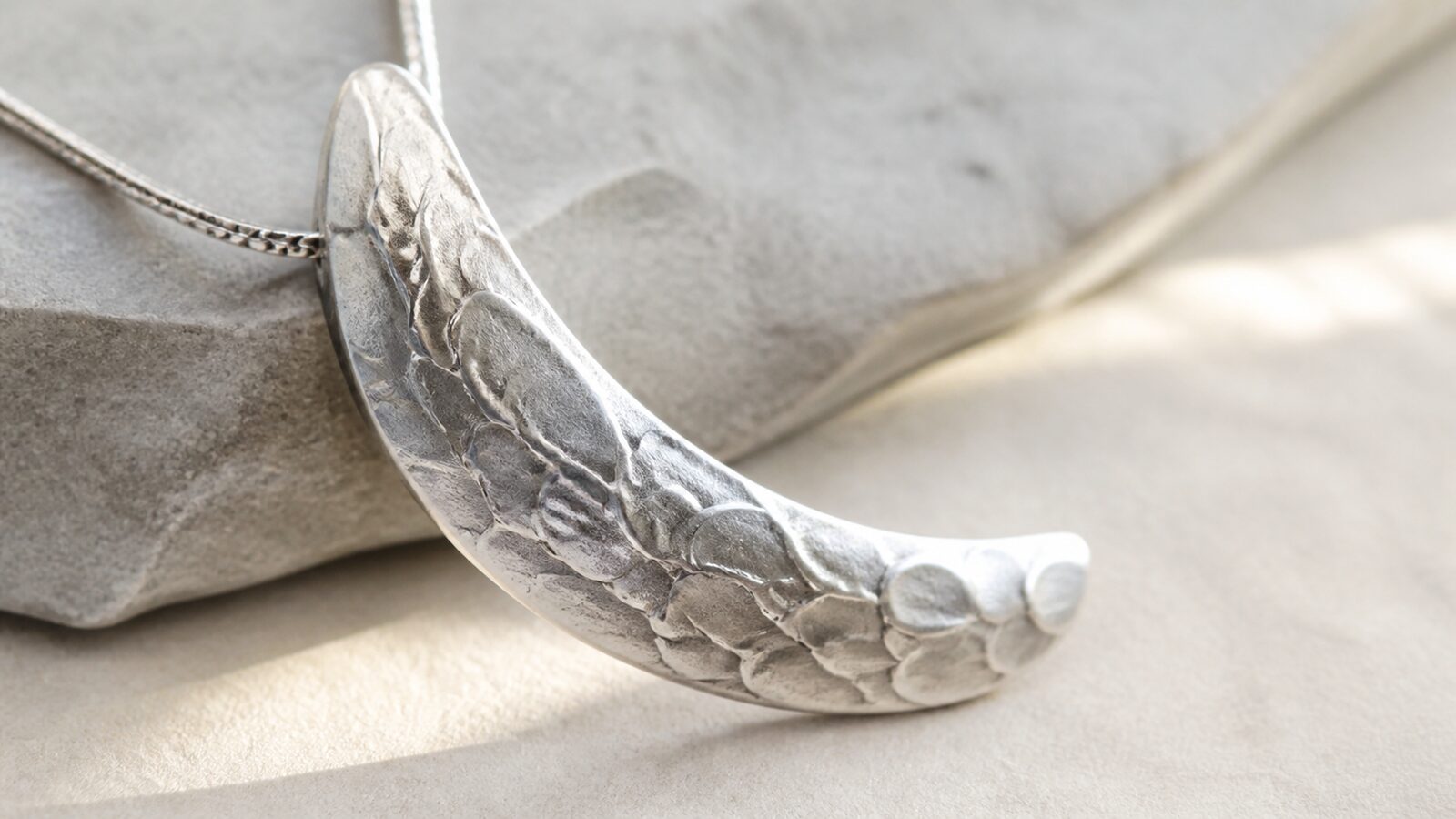
A repeated pattern needs variation to avoid looking mechanical. The scales may overlap, widen along a curve, or become more closely spaced near a transition. Small shifts in angle make adjacent planes catch the light differently, which is what gives the surface a sense of flow.
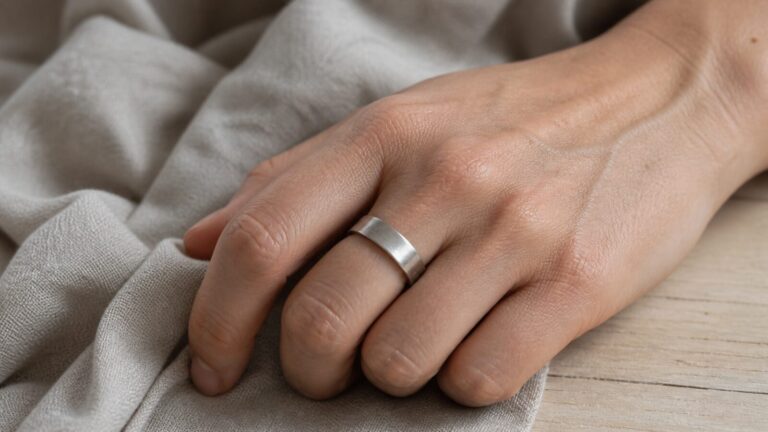
The pattern should also follow the object. On a ring, the sequence has to work around a continuous band. On a pendant, it can lead the eye toward a curve, a bail, or a quiet area of negative space. Texture that ignores the overall silhouette can make even careful handwork feel heavy.
Planning relief for a wearable object
Before any detail is chased, the maker has to decide where the texture begins and ends. A border, a smoother underside, or an uninterrupted edge can make a patterned surface more comfortable and visually controlled. On a small object, restraint is useful: deeply separated “scales” may look dramatic in a macro image but can gather residue, feel rough, or overwhelm the overall form.
Metal also responds to repeated working, so relief is built with attention to the thickness and condition of the material. That is why the visual language of chasing is often more nuanced than a stamped repeat. The surface may carry shallow transitions, shifting density, and slight evidence of pressure rather than a single, uniform depth.
For the wearer, this matters because texture is seen at more than one distance. From across a room, the pattern should support the silhouette. At hand distance, it can reveal individual ridges and changes in light. Up close, the finish can show the softness of the transitions. When every level works together, the object feels considered rather than overworked.
Finishing makes the relief readable
After texture is formed, finishing determines how clearly it appears. Polished high points and softer recesses produce a strong contrast; an all-matte surface gives a more subdued reading. Darkening selected recesses can add depth, but it should support the relief rather than imitate grime or obscure the form.
Comfort is part of finish quality. A patterned edge should feel smooth when a fingertip moves across it, and the piece should not catch on a knit or a shirt. A design can look forceful without feeling abrasive.
In everyday use, high points naturally receive more contact than recesses. Over time they may brighten a little, especially on an oxidized or matte piece. That is not a reason to polish the entire surface; it is a reason to clean gently and let the contrast remain coherent. If the original finish needs renewal, a jeweller can assess the relief and match the treatment more closely than a universal cleaner can.
Texture should be cleaned with a light hand. A soft cloth is appropriate for routine wiping, while harsh abrasives can reduce the crispness of raised detail. If residue has collected in a deep pattern, stop before forcing it out with a sharp tool: a professional clean is safer than damaging the edge that gives the relief its definition.
What to look for in textured silver jewelry
- Texture should follow the curve and proportion of the object rather than sit on it like a separate graphic.
- Relief should create light and shadow without leaving sharp, snagging edges.
- Repeated elements should have a coherent rhythm, not necessarily identical spacing.
- Avoid abrasive cleaners that can flatten high points or make one area noticeably brighter than another.
Texture as a way of seeing form
Chasing makes silver responsive to light without requiring a mirror polish or a heavy industrial treatment. In a dragon-scale pattern, the point is not to turn jewelry into armor. It is to give a small object a changing surface—one that becomes clearer as it moves with the wearer.
References
- Victoria and Albert Museum: A guide to metalworking techniques — definitions of repoussé and chasing, and the distinction from engraving.
- Victoria and Albert Museum: Pushing silver to its limits — Ndidi Ekubia — contemporary context for raised and chased silver surfaces.
Frequently Asked Questions
Chasing uses small tools and light hammering from the front to press and refine surface detail without removing metal.
No. Engraving cuts material away; chasing works the existing surface by pressing and shaping it.
Use gentle routine cleaning and avoid abrasive products that could flatten the texture or create uneven bright spots.