A desk is used with the eyes, but also with the hands, wrists and the small objects that land on it all day. A surface can sound hollow, show marks quickly, feel hard at its edge or make cables and equipment awkward to manage. Those are practical qualities, not proof that a material will improve concentration or change a person’s mental state. Still, they influence whether a workspace feels settled and easy to keep using.
Start with the kind of work the desk has to support
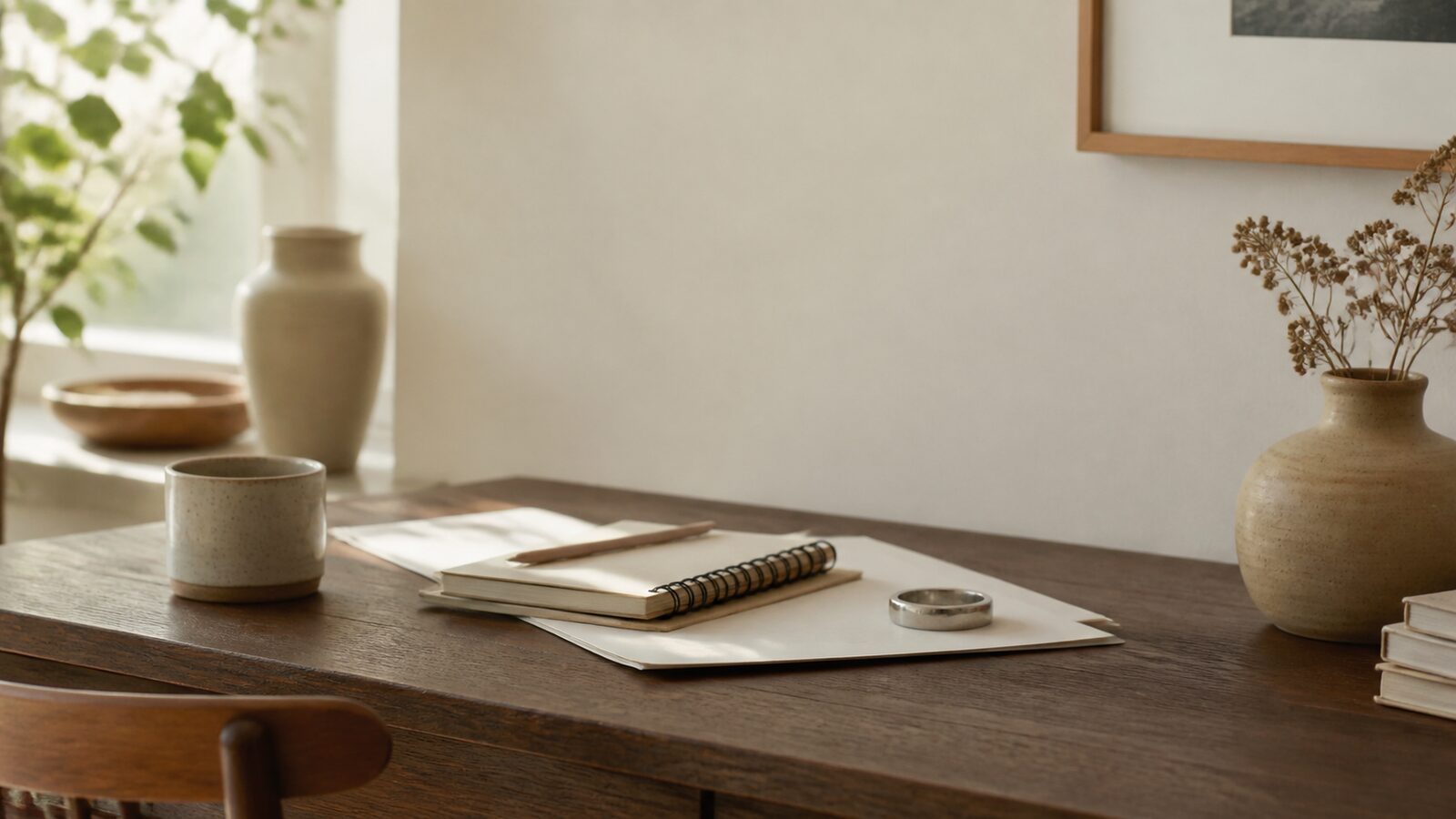
Minimalism is often reduced to an empty view. A more useful version starts with use: laptop work, drawing, writing, a monitor arm, a keyboard, a cup of water, and the need to clean up at the end of the day. A desk can be visually spare and still be poorly matched to those tasks if its top flexes, its finish stains easily or its edge is uncomfortable over long sessions.
Before choosing a material, list the stresses it will actually see. A fixed monitor arm creates a concentrated load. A dining-table desk needs resistance to meals and spills. A writing surface benefits from a firm, smooth plane. A small apartment may value a desk that can move easily more than one with maximum mass. This turns “quality” from an abstract mood into a set of trade-offs.
Touch is information, not a therapeutic claim
Different materials transfer heat at different rates, which is why metal, stone and wood can feel distinct at the same room temperature. That initial sensation is physical; it does not establish a universal emotional effect. What it can do is make a frequently touched object more or less pleasant for a particular person. A rounded wood edge, a cool stone paperweight and a brushed metal tray offer different kinds of feedback without needing to be described as cures for distraction.
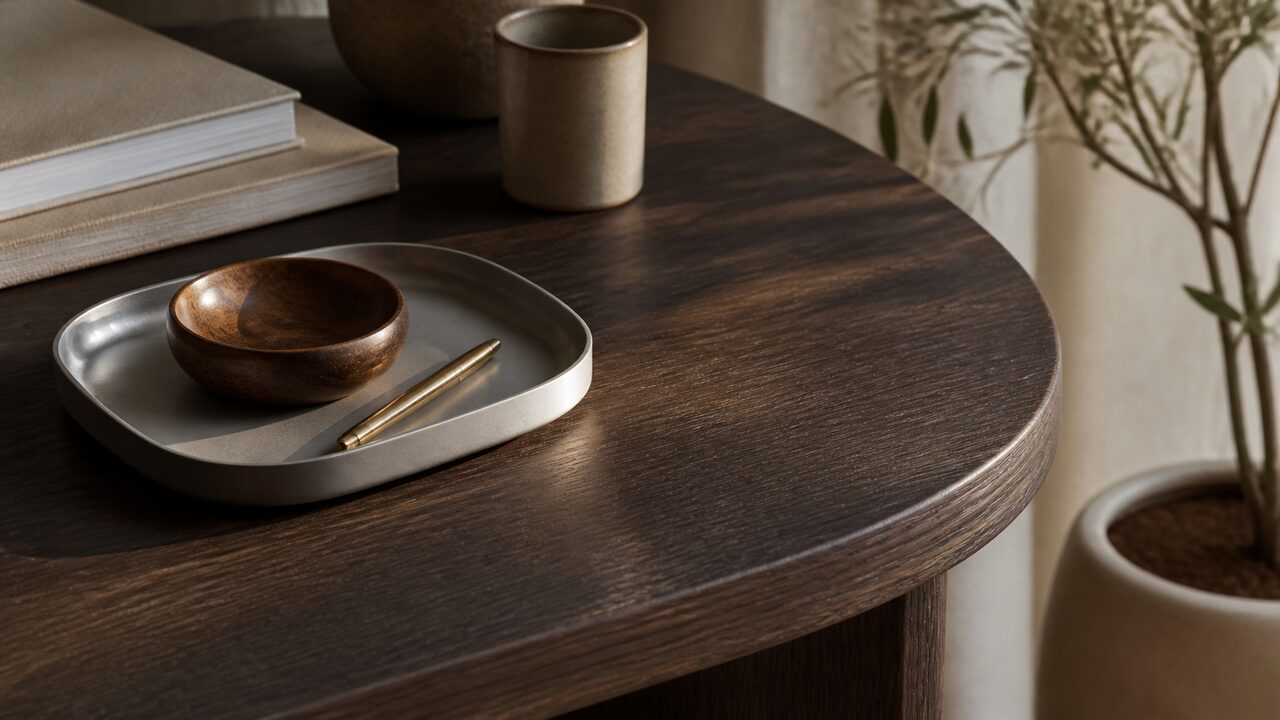
For a restrained workspace, choose a small number of surfaces with clear roles. A wood top can bring grain and visual warmth. Matte metal can define a lamp base, tray or hardware without dominating reflections. A ceramic cup or stone object can add visual and tactile variety. The point is not to fill the desk with “anchors,” but to make the few things that remain useful and coherent.
What material durability really depends on
Solid wood, veneer, laminate, metal and stone all last well in the right construction and the wrong conditions can damage any of them. Wood responds to surrounding humidity; a finish changes how it handles spills and cleaning. Veneer can be an excellent practical surface when properly made, but it should not be treated as identical to a thick solid-wood slab. Laminate can be durable and easy to maintain, though its edge treatment and substrate matter. A dramatic statement that one material is always honest and another always disposable misses the construction that sits underneath.
For wood, modest care does more than elaborate rituals. Use coasters for hot or wet cups, wipe spills promptly, avoid long exposure to direct sun and keep the desk away from repeated humidity extremes. The U.S. Forest Products Laboratory explains that wood moisture content moves toward equilibrium with surrounding humidity; abrupt shifts can contribute to movement and stress in a finished object.
Marks are not all the same
A softened edge, a slight change in colour and fine shallow wear can become part of a surface’s character. A water ring, deep gouge, lifting veneer or loose joint is different: it is a maintenance issue, not evidence that an object has “aged well.” The distinction is useful because it prevents two opposite mistakes—polishing away every trace of use, or excusing preventable damage as patina.
Take a simple approach. Protect a finish from heat and standing water. Clean with the mildest method appropriate to that finish. Repair movement or damage early. If a surface is already valued for its quiet texture, do not repeatedly abrade it in pursuit of a factory-new appearance.
Structure deserves a closer look than style language
A desk feels reliable when its base, top and connections suit the loads placed on it. Joinery is one way to achieve that, but it is not the only way. A well-designed bolted frame or engineered connection can be durable; a poorly executed traditional joint can fail. Mortise-and-tenon joinery remains a useful example because it makes the relationship between parts easy to see, not because every visible joint is automatically stronger than every screw.
Look for practical evidence: does the desk rack or wobble under normal pressure? Is the monitor arm being mounted where the maker permits it? Are the fasteners accessible for adjustment? Does the top have enough support across its span? These questions are more informative than a promise of absolute rigidity.
Keep the desk quiet by editing, not by adding symbolism
The best minimalist desk is not empty for its own sake. It holds the equipment needed for the task, then leaves enough clear area for hands and attention to move. A considered material palette can make that space feel calm, but it does not need to carry a claim about controlling the mind. Let the desk earn its place through stability, repairability, care and the ordinary comfort of using it every day.
References
- USDA Forest Products Laboratory: Wood Handbook, Chapter 13 — explains wood moisture content and equilibrium with relative humidity.
- Canadian Conservation Institute: Care and Cleaning of Unfinished Wood — supports cautious routine care for wood surfaces.
Frequently Asked Questions
Start with the work, loads, spills and maintenance the desk must handle; material alone does not determine durability.
Keep spills and heat from sitting on the surface, avoid major humidity swings, and follow the finish maker’s care guidance.
No. A durable desk depends on the full design, materials and construction; visible joinery is not a universal strength guarantee.