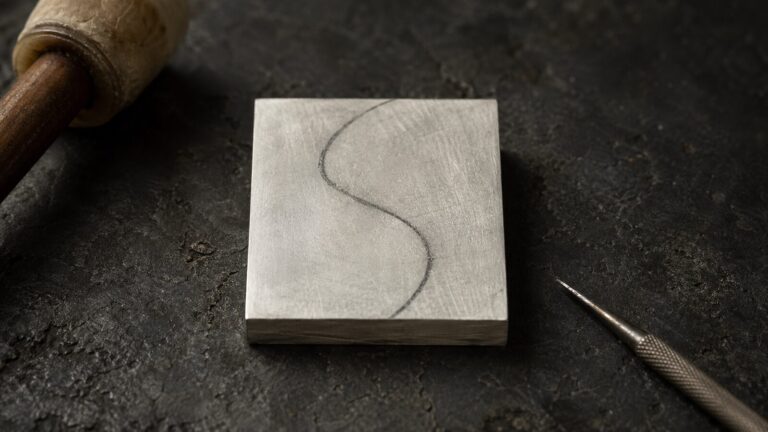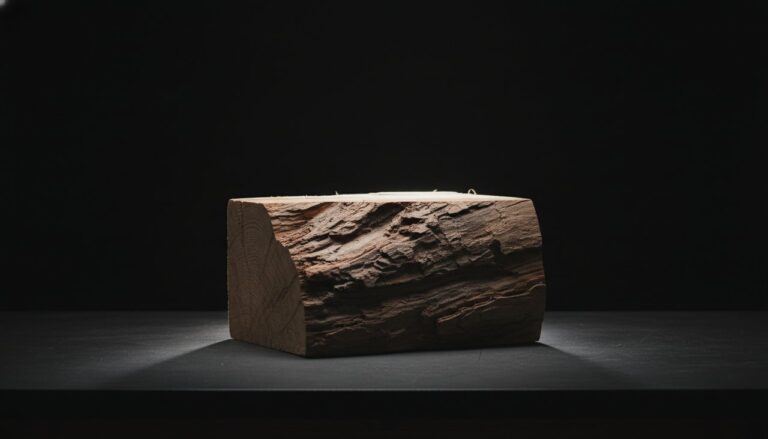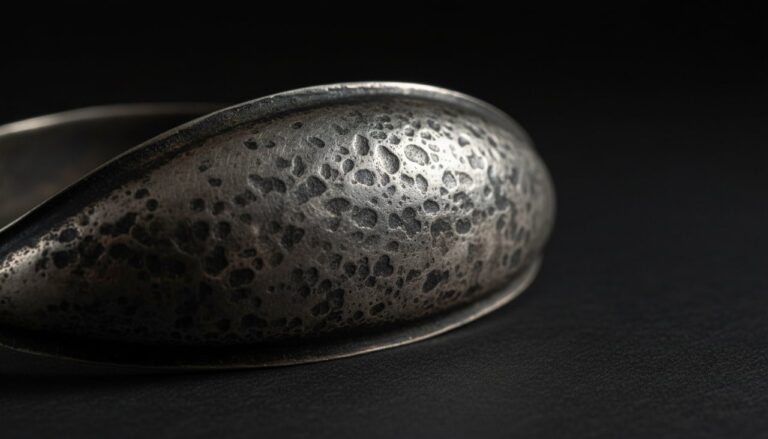
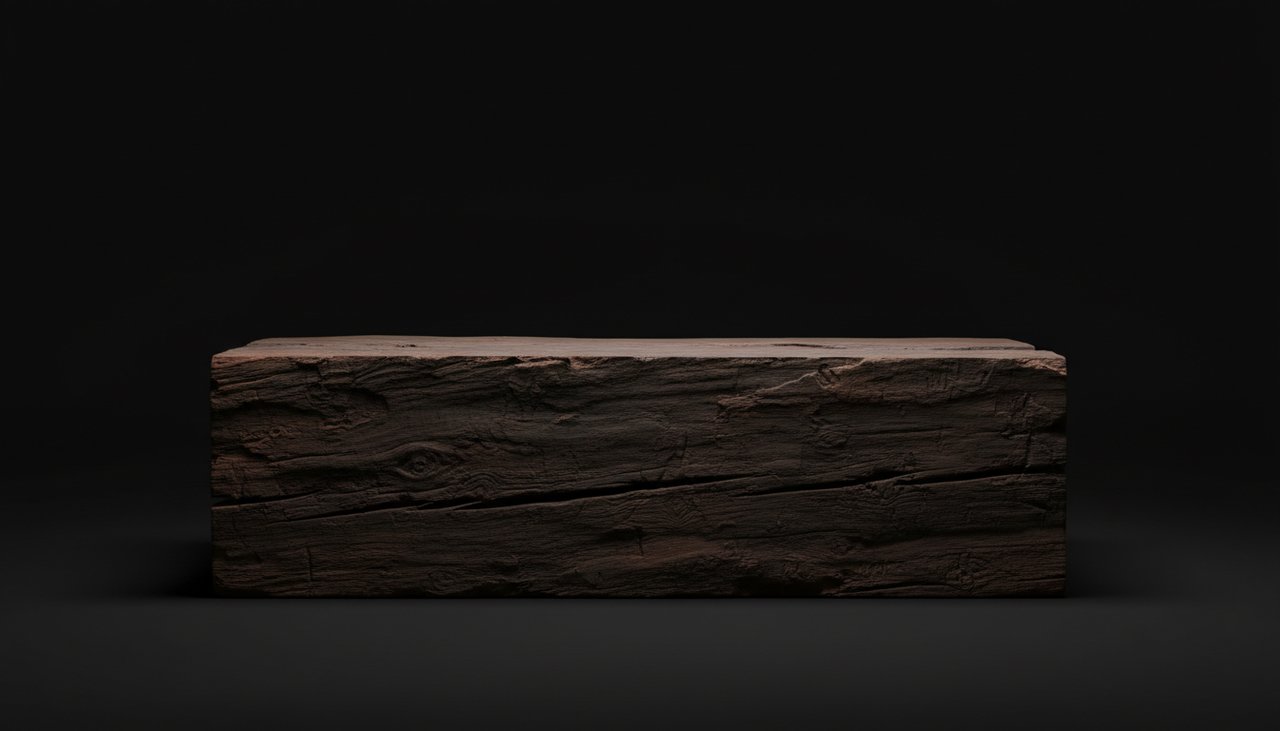
When you first touch a piece of high-density hardwood, a surprising coolness meets your skin. This isn’t the fleeting chill of metal, but a heavy, grounded presence. If you run your fingers along the grain, the surface feels so tightly packed that it almost mimics the texture of polished stone.
We often wonder why certain modest objects feel so significant in the hand. The secret isn’t found in the workshop, but on a frozen mountainside 1,500 meters above sea level. This is where survival is a daily negotiation with the elements.
Why Altitude Forges A Different Wood
Life at high altitude leaves no room for waste. The growing season is often less than 90 days before the frost returns. While lowland trees gorge on summer rain and grow quickly with porous tissue, a highland tree must ration every drop of water.
This slow pace creates a wood that is essentially time made physical. Because the tree grows so gradually, it develops a much lower internal sugar content. This biological thriftiness results in an incredibly stable foundation for any object.
The mechanical advantage here is quite clear. When properly cured, this timber shows a dry shrinkage deformation rate 30% lower than lowland varieties. It resists the warping that affects lesser materials, ensuring long-term stability is built into its very chemistry.
Reading The Story In 2mm Rings
You can read the environmental history of the mountain in the cross-section of the wood. Each line marks a year of endurance. In high-altitude climates, these growth rings are exceptionally tight, usually measuring less than 2mm across.
To look at the end grain is to see the compressed pages of a book, where each ring represents a chapter of a minimalist life.
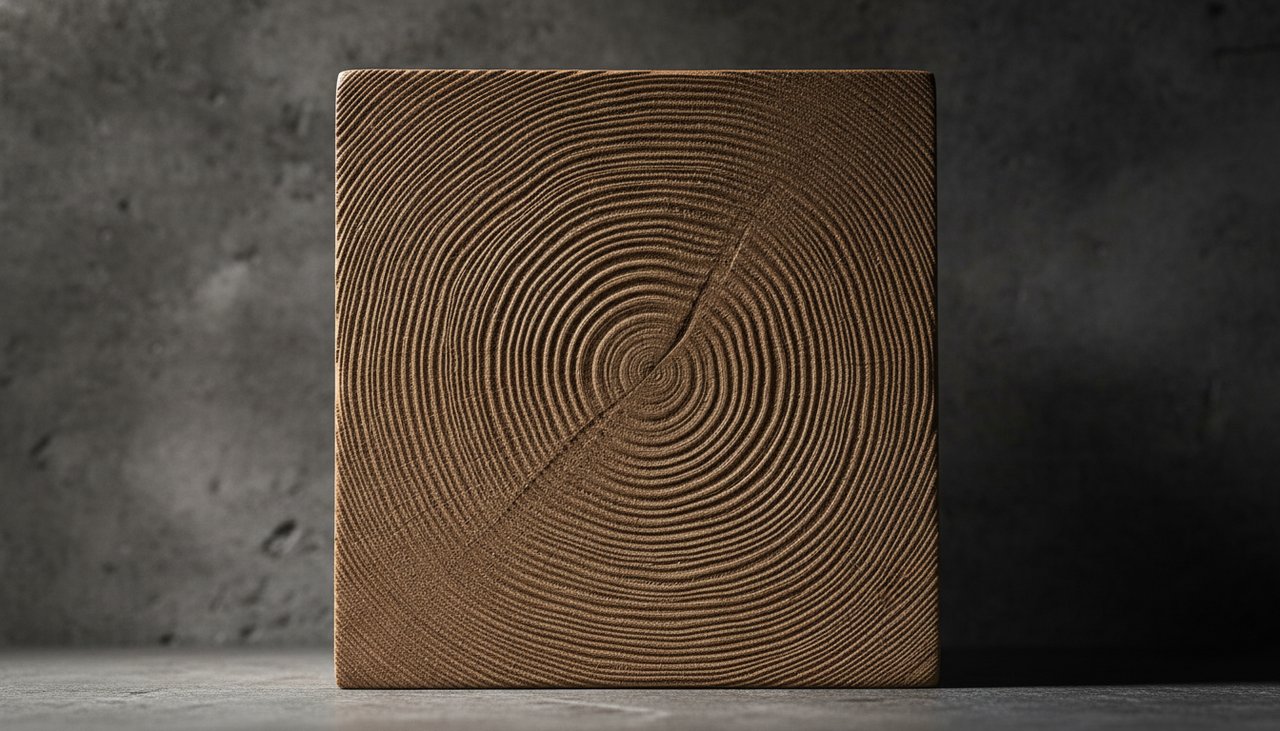
This density creates a visible difference in character. When we compare these materials, the structural distinctions become obvious.
| Feature | Highland Hardwood | Lowland Hardwood |
|---|---|---|
| Growth Ring Width | Less than 2mm | 5mm+ |
| Density | High | Low |
| Visual Texture | Silk-like | Porous |
When light hits the surface, the densely stacked fibers reflect it in a way that produces chatoyancy. This gives the wood a shifting luster that changes with your viewing angle. It is a visual richness born from the mathematical precision of a hard life.
How Density Demands A Different Craft
Shaping this material requires a specific kind of patience. The grueling growth cycle produces timber with a Janka hardness value up to 25% higher than the same species grown at sea level—typically falling in the 1,500 to 2,000 lbf range for highland walnut and highland white oak, the two species most commonly used in desk objects. Tools dull faster against these fibers, demanding a deliberate and steady hand.
However, this hardness is exactly what allows for unparalleled precision. The wood holds a microscopic edge without crumbling, allowing for joinery with incredibly tight tolerances. Master craftspeople have understood this quality for centuries.
Instrument makers, such as those in the lineage of Stradivari, specifically sought out high-altitude spruce and maple. They knew that the structural integrity of slow-grown wood translated into superior acoustic resonance. Today, that same material brings those structural virtues to the objects on your desk.
A Surface That Earns Its Story
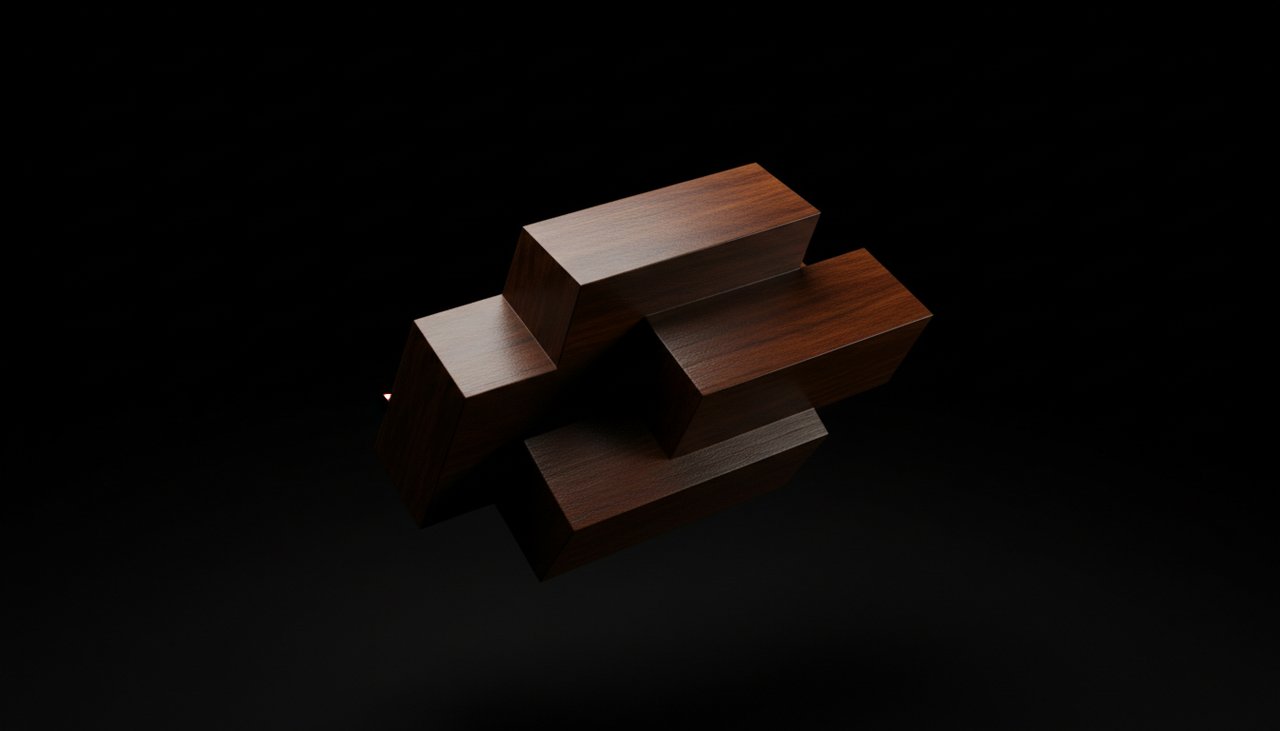
The physical density of highland wood changes how we interact with it. The fibers pull heat away from your skin more rapidly than air-filled, porous wood. This creates three distinct physical traits:
- A cool sensation upon contact due to thermal conductivity.
- A hyper-smooth tactile finish with very low surface roughness.
- An amber-like visual depth caused by the microscopic pore structure.
This foundation also determines how the wood ages. Over years of use, oils from your hands penetrate the tiny pores. Instead of the greasy film seen on fast-grown wood, it develops a pristine patina—a translucent layer that hardens and protects the surface from within.
That process can be guided. Once a month, rub a small amount of food-grade mineral oil into the grain with a dry cloth and leave it overnight. Wipe off the excess in the morning. This keeps the pores receptive and accelerates the even darkening that distinguishes a well-used piece from a neglected one. The patina builds faster where your hand rests most—at the edges, along the grip line—and that asymmetry is exactly what makes it yours.
Frequently Asked Questions
High-altitude trees grow slowly in harsh conditions, rationing water and nutrients. This slow process creates exceptionally dense wood with tightly packed fibers, unlike faster-growing lowland varieties.
Highland wood growth rings are annual layers formed as the tree grows. Due to harsh mountain conditions, these rings are remarkably tight, often less than 2mm wide, indicating a very slow growth rate.
Highland wood feels surprisingly cool and heavy due to its high thermal conductivity. Its dense, tightly packed fibers create a hyper-smooth, almost stone-like tactile finish.
Yes, over years of use, oils from your hands penetrate the tiny pores. This forms a pristine, translucent patina that hardens and protects the surface, telling a story of partnership with the material.
Yes, its exceptional density and high Janka hardness make it very durable. This timber resists warping and holds a precise edge, ensuring long-term stability in daily use.
Dense hardwoods like highland timber require minimal care. Simply wipe with a soft, dry cloth to remove dust, and avoid harsh chemicals or prolonged water exposure to preserve its natural finish.
Instrument makers sought high-altitude wood for its superior structural integrity and consistent density. These qualities translate into exceptional acoustic resonance and stability, crucial for sound quality.
Yes, the densely stacked fibers of highland wood reflect light in a unique way. This creates chatoyancy, a shifting luster that changes with your viewing angle, revealing a visual richness.