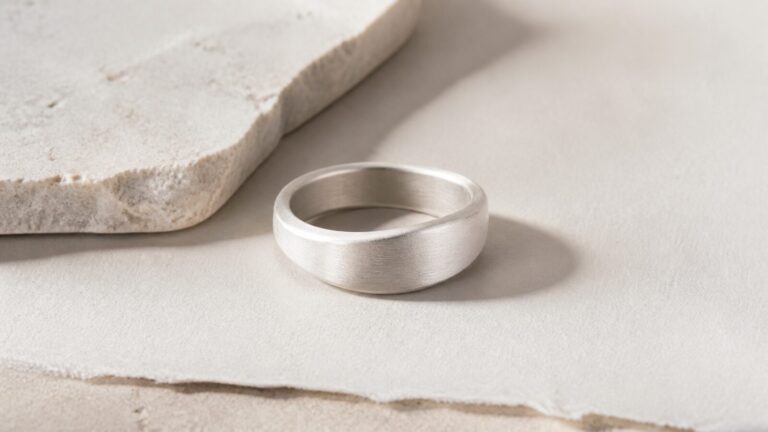
Silver does not keep one fixed appearance. A ring can arrive with a deliberately darkened recess, then become brighter where a thumb, sleeve or neighbouring ring repeatedly touches it. Elsewhere, the surface may deepen in tone. None of those changes has one single cause, and that is the useful place to begin: wear, tarnish and dirt are different things, even when they appear together.
Three changes that are easy to confuse
Wear is physical. High points become smoother when they meet skin, fabric and ordinary contact. A matte finish may develop a soft sheen at an edge or along the inner band. Tarnish is chemical: silver reacts with sulphur-containing compounds in the air and forms a dark surface layer. Surface soil is residue from handling, cosmetics or storage. It can make a piece look dull without being part of either its finish or its history.
This distinction matters because the response is different in each case. A smooth highlight is usually best left alone. Tarnish in a recessed texture may be part of the intended contrast. A greasy film, however, calls for gentle cleaning rather than more polishing.
What daily wear actually reveals
A piece worn often tends to show a map of contact. The underside of a ring can brighten where it meets the hand; raised edges can become more reflective; protected grooves may stay darker. That contrast is not a reliable diary of a person’s skin chemistry, mood, or routine. It is simply the combined result of friction, exposure, the alloy, care products and storage conditions.
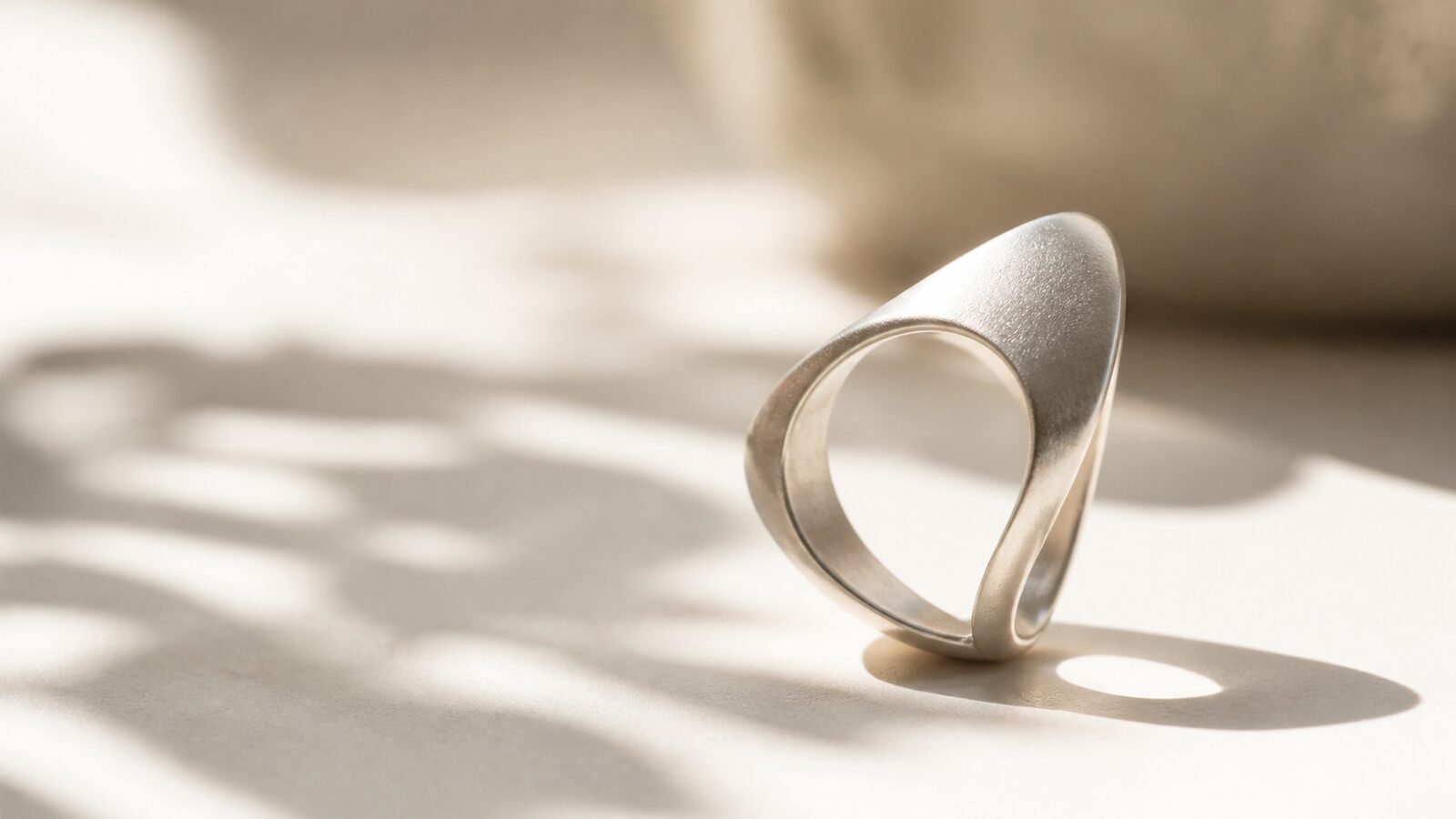
For design, that unevenness can be appealing. A matte or oxidized surface has more than one register of light: the raised area catches it softly while the lower plane holds shadow. As the finish changes, the object can become more legible rather than merely more worn.
Time alone is not a schedule. One ring may show a visible change quickly because it is worn beside another ring or handled often; another may remain close to its original tone for a long time. Humidity, air quality, storage and any residues left on the surface also matter. Claims that every wearer will produce a particular colour, or that a surface will settle after an exact number of months, simplify a variable process too far.
Patina is a choice, not an obligation
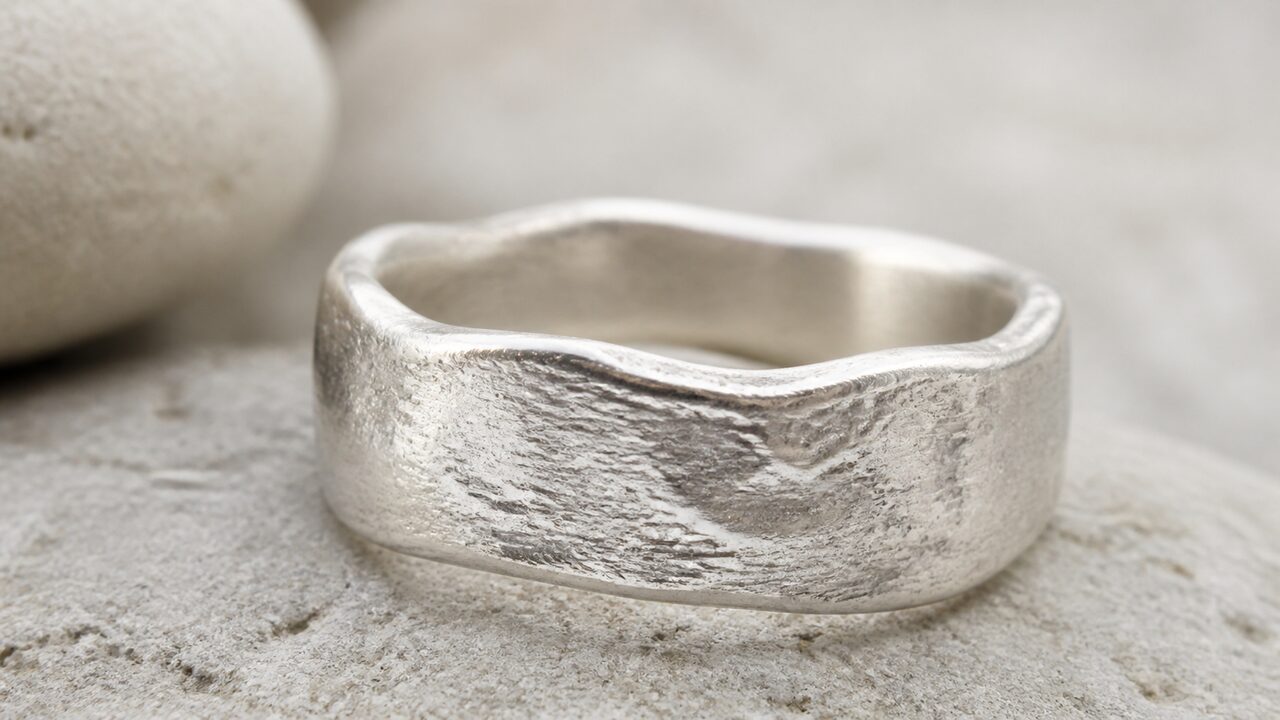
Some people want the quiet contrast that develops with use. Others prefer a more even, brighter surface. Neither preference is more authentic. The important question is whether the piece is sound and comfortable to wear. A stable darkened area and a minor scratch are normally visual changes; looseness, a bent clasp, a sharp edge or cracking around an inlay are reasons to stop and have the piece assessed.
Before cleaning, look at the piece in indirect daylight. If the darker area sits mainly in recesses and the raised areas remain clear, it may be doing exactly what the design allows. If residue feels sticky or obscures the whole surface, start with the least aggressive option: a soft dry cloth. For a piece combining silver with wood or stone, avoid soaking and avoid dip cleaners; different materials do not respond in the same way.
Let the diagnosis lead the decision
Polishing is abrasive, so it should answer a clear need rather than happen by habit. If a deeper reset is wanted, a jeweller can advise on the particular construction and finish—especially for oxidized silver, plating, porous materials and jewellery with glued or mechanical joins. Photographing an intentional finish before repair also gives the jeweller a useful reference.
A more useful way to read an aged surface
Instead of asking whether a mark is perfect, ask what it is. Is it a smooth contact highlight, a dark reaction layer, residue, or damage? That small pause prevents the common mistake of treating every change as a defect. It also leaves room for a piece to become individual without turning neglect into a virtue.
Silver is responsive, not fragile. With moderate handling and deliberate care, its surface can retain both the maker’s original decisions and the quieter evidence of being worn.
References
- Canadian Conservation Institute: Basic care—recognizing metals and corrosion products — explains silver tarnish, handling and the risks of abrasive cleaning.
- Canadian Conservation Institute: Care and Cleaning of Unfinished Wood — explains why water and solvents need caution around unfinished wood.
Frequently Asked Questions
Wear smooths high-contact areas; tarnish is a dark chemical surface layer. Both can be normal, but they call for different care.
Usually no. A smooth highlight may simply be ordinary contact wear; polish only when you have identified a clear need.
Stop wearing it if a setting is loose, an edge is sharp, a clasp is bent, or a join shows cracking.