Men’s ring styles are easier to understand when you stop treating rings as decoration first. A ring is a small object, but it changes the whole hand. It affects proportion, gesture, texture, and the way a watch, sleeve, or pendant reads beside it.
The best men’s ring is not always the largest or the most expensive. It is the one whose shape, scale, and finish make sense with the person wearing it. A quiet band can look stronger than an ornate ring if it fits the hand and belongs with the rest of the outfit.
Start With Shape
Shape decides the first impression. Round bands feel familiar and easy to wear. Flat bands look cleaner and more architectural. Signet-style rings create a larger face and more visual weight. Sculptural rings sit somewhere between jewelry and object: they make the hand look considered, not simply accessorized.
If you are new to rings, begin with a shape that does not fight your daily clothes. A simple band or low-profile sculptural ring works with denim, knitwear, work shirts, and jackets. A tall ring with a large face needs more restraint around it.
Match Scale to the Hand
Scale matters more than most people expect. A narrow ring can disappear on a large hand. A heavy ring can overwhelm a slim finger. The goal is not symmetry; it is balance.
- Narrow bands suit quiet styling and smaller hands.
- Medium bands work for most daily wear and pair well with watches.
- Wide bands need space around them and usually look better worn alone.
- Raised faces draw attention, so the rest of the hand should stay simple.
A useful test is to put the ring on and relax your hand at your side. If the ring still feels proportional when you are not posing it, the scale is probably right.
Choose Finish Before Detail
Finish controls mood. Polished silver reflects light and looks sharper. Matte silver feels quieter, more tactile, and less formal. Oxidized or darker details can give the ring depth, especially when the design has carved lines or relief.
For men who prefer understated jewelry, matte and brushed finishes are often easier than mirror polish. They show form without making the ring feel glossy. They also age in a more forgiving way, because small scratches become part of the surface rather than obvious flaws.
Think About Finger Placement
Ring placement changes the signal. The ring finger feels familiar and restrained. The index finger makes a ring more visible in gesture. The middle finger can carry weight but needs comfort. The pinky works for smaller signet styles, though it can look affected if the ring is too decorative.
Most men only need one ring at first. If you wear two, make one of them clearly quieter. Two strong rings on the same hand usually compete unless the rest of the outfit is very simple.
How to Wear Rings With Other Jewelry
A ring should not be judged alone. It sits in a system with watches, bracelets, cuffs, and pendants. Silver with silver is the easiest starting point. Mixed metals can work, but one metal should lead and the other should feel intentional rather than accidental.
If you wear a large pendant, keep the ring quieter. If the ring is the main object, use a plain watch or no bracelet. The eye needs one center of gravity.
When a Symbolic Ring Still Works as Style
Some rings include cultural or symbolic forms. That does not mean the ring has to be worn dramatically. The cleaner approach is to treat the symbol as part of the design language: geometry, contrast, relief, and proportion.
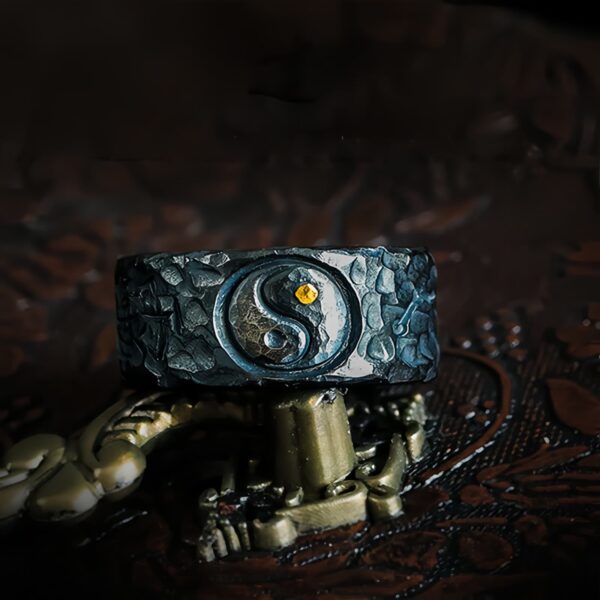
A ring like this works best when treated as a single focal object: one hand, clean clothing, and enough space for the shape to read.
A Ring Should Earn Its Place
The strongest men’s ring styles are not complicated. They fit the hand, respect proportion, and age well with use. Choose shape first, scale second, finish third, and symbolism only after the object already works on the body.