The brand-new smartphone felt less like a tool and more like a piece of wet soap. Its glass back was so devoid of friction that it would drift across a seemingly level table. For the first two weeks, carrying it felt like holding a fragile egg. I was hyper-aware of every metal zipper, every stray grain of sand, and every rough surface. The object was flawless, but that flawlessness brought nothing but a quiet, constant anxiety.
We surround ourselves with these pristine surfaces. Materials like high-gloss plastics, chemically sealed composites, and tempered glass are born perfect. From that moment on, their story is only one of degradation. A single accidental scuff becomes a permanent record of failure; a sharp impact turns a screen into a spiderweb of cracks. Living with these materials requires a low-grade vigilance that slowly drains the spirit. We aren’t just owners; we are unpaid bodyguards for our possessions.
The Burden of Perfection
The shift in how I view the world didn’t happen with a gadget, but at my workbench. My primary surface is a thick, three-inch slab of hard maple. When it was newly planed and white, I hesitated to bring heavy tools down on it. Even though it was wood, I treated it with the same nervous reverence I gave the glass phone.
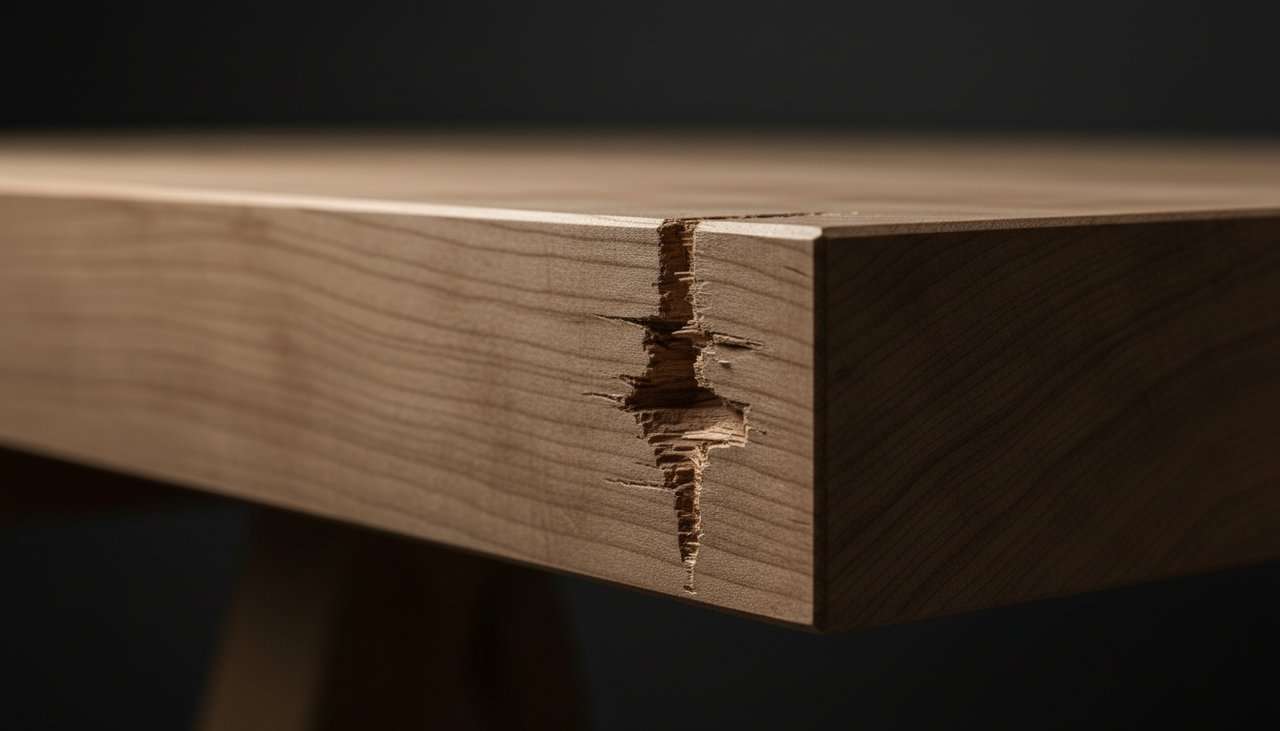
One Tuesday afternoon, a 1/2-inch bevel-edge chisel slipped from my hand. The heavy steel tool fell vertically, its corner biting deep into the grain near the edge of the bench. I froze, waiting for the familiar wave of regret. Instead, I felt a strange, physical release. the seal of perfection was finally broken. I ran my thumb over the jagged indentation. The worst had happened, and the bench was finally free to be a workspace. The anxiety of the immaculate vanished, replaced by the reality of the wood.
The First Mark
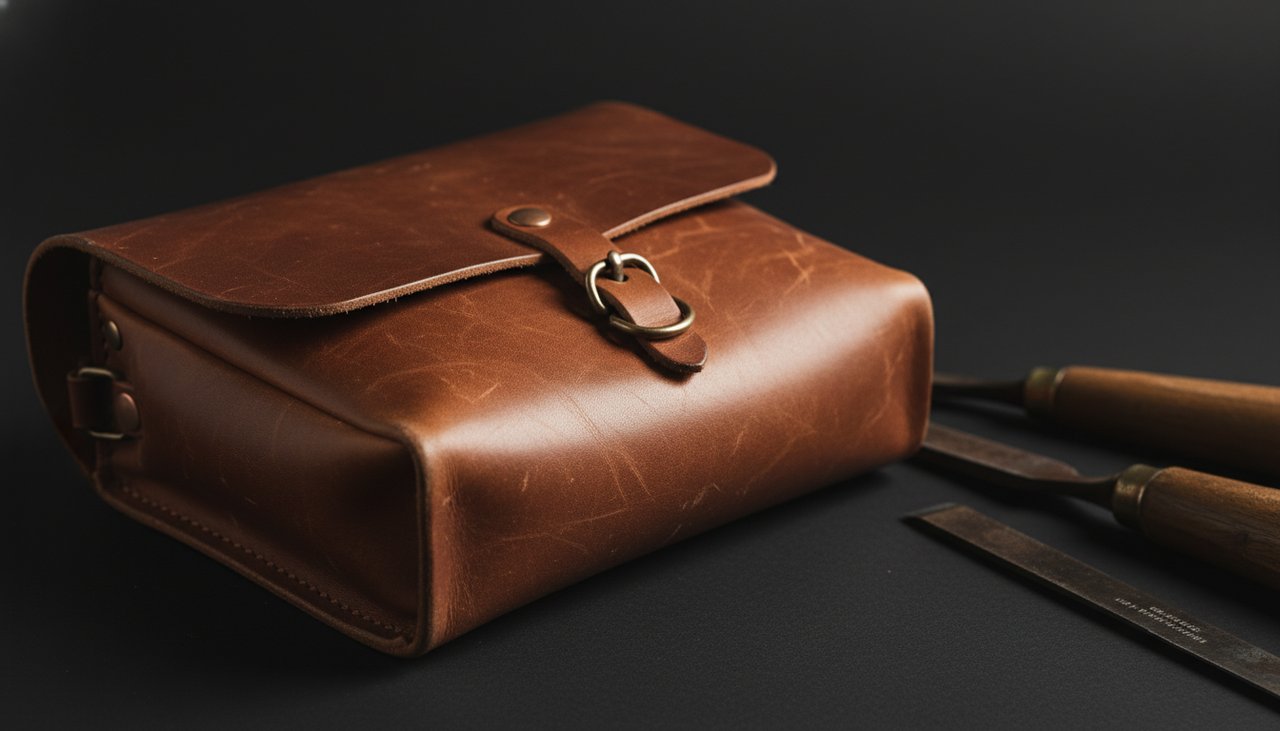
That gouge changed my appetite for materials. I began looking for things that respond to time rather than fighting it—what some call slow design: objects built not for a first impression, but for a long life. I brought home a tool roll made of raw, vegetable-tanned leather. Out of the box, it was stiff and a pale, unfinished pink. It resisted the bend of my hands, feeling awkward and stubborn.
A month later, it caught a splash of dark walnut stain. A week after that, a sharp awl poked a tiny hole near the seam. The leather didn’t break; it simply absorbed the incident.
The oils from my palms began to darken the areas I touched most often, turning the pink to a deep honey brown. The stiff fibers softened, molding themselves precisely around the handles of my files.
Handcrafted objects made from natural materials are not finished when they leave the shop. The friction of daily use completes them.
Vegetable-tanned leather is worth recognizing by touch before you commit to it. It feels warm and slightly porous—not the cool, faintly slick surface of coated leather. When wet, it darkens and stiffens temporarily, then recovers. The cut edge, if you can see it, shows a consistent fibrous cross-section with no plastic layer beneath. These are materials that age; the coated alternative only wears.
Written by Friction
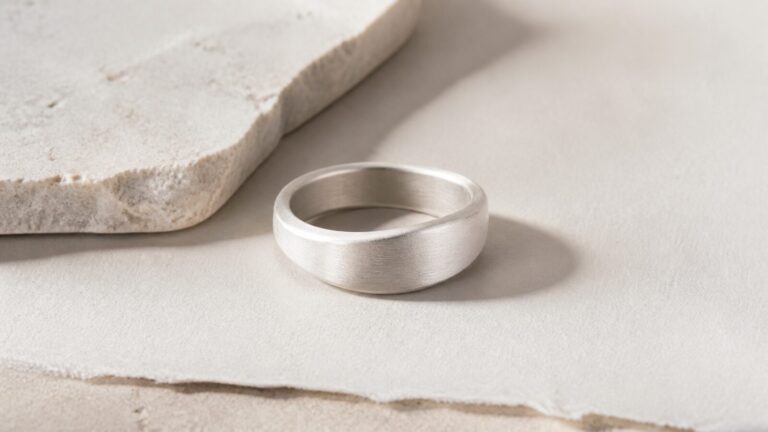
Consider the silver band I wear on my right hand. Silver is soft. At first, the mirror polish dulled into a cloudy haze, which bothered me. But as the months passed, thousands of micro-scratches from every door handle I turned and every rough board I carried began to merge. They formed a soft, satin patina that no machine can replicate.
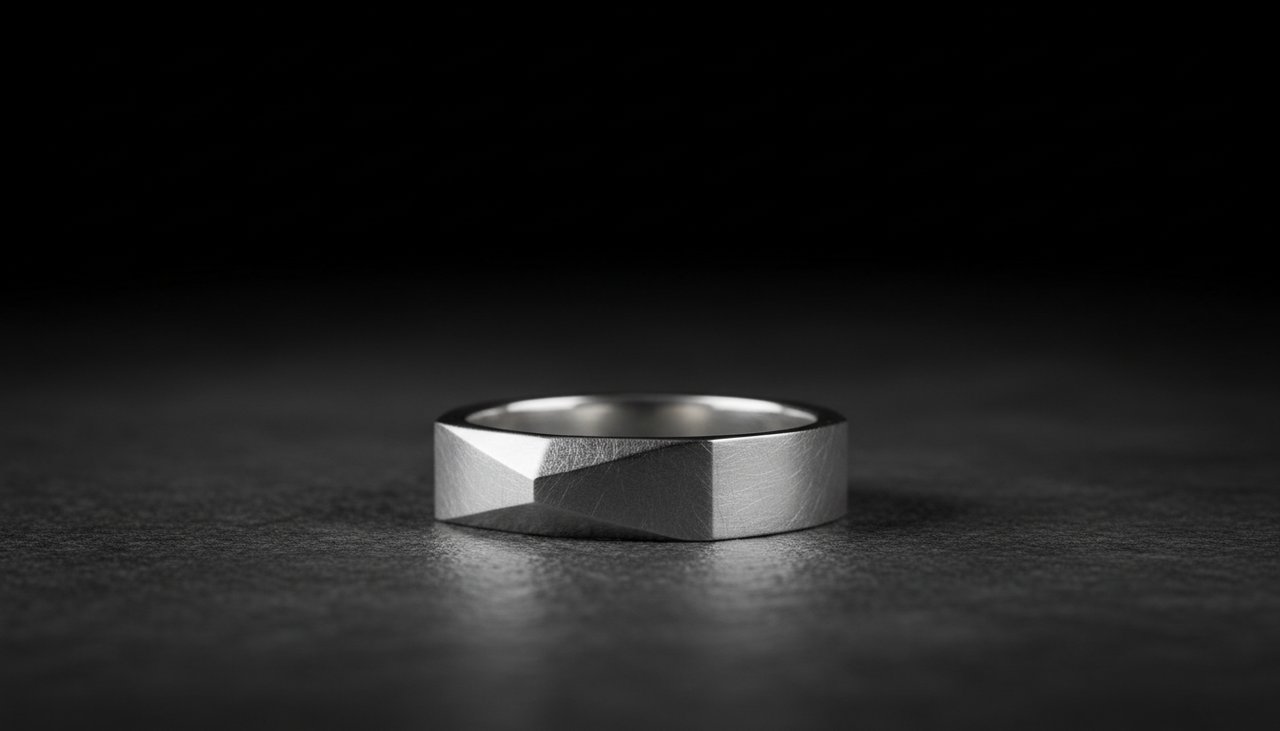
The ring has become a physical ledger of my movements. It is a quiet collaborator in my day. This is the logic behind kintsugi—the Japanese art of repairing broken pottery with gold. When a bowl shatters, the repair isn’t hidden. The mended seam is highlighted with gold powder, proving that the object survived. It argues that resilience is vastly more valuable than unbroken perfection. The break is not the end; it is the beginning of the object’s real history.
Stability in Breathing Wood
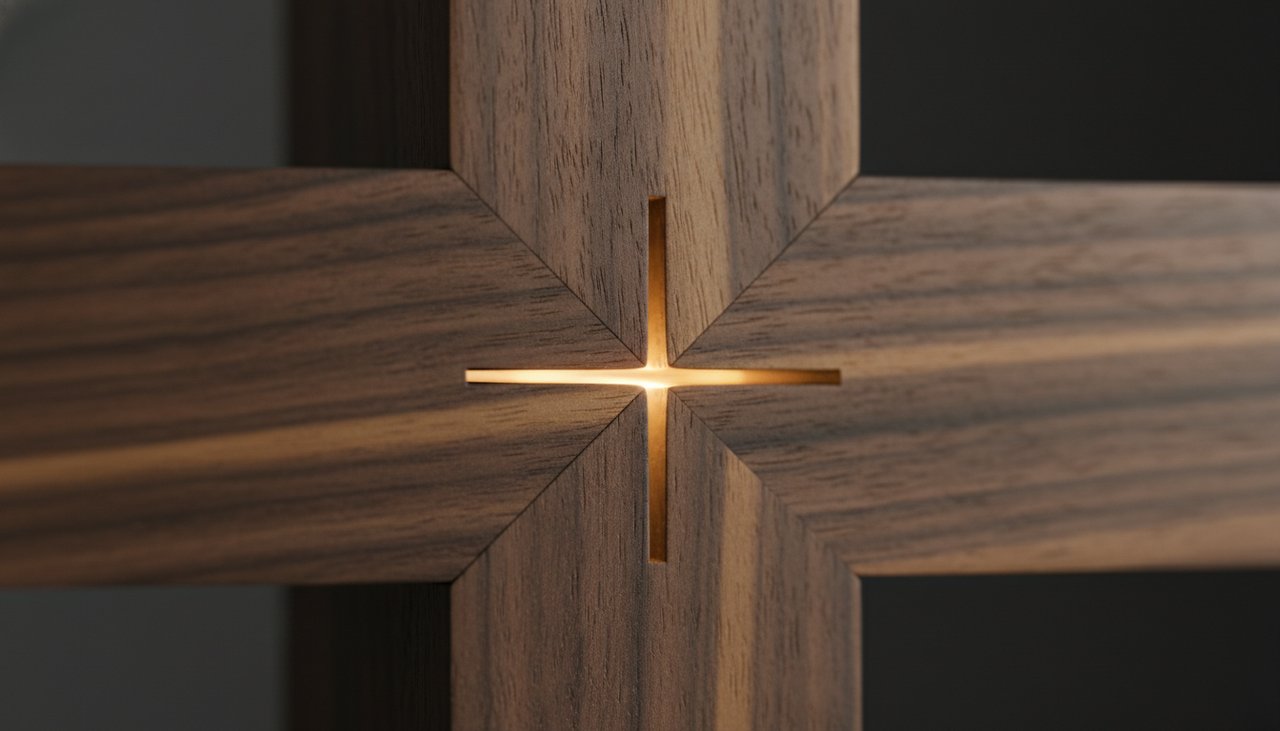
Does a structure have to be rigid to be strong? In woodworking, a well-cut mortise and tenon joint is never truly locked. When I seat a tenon into a mortise, I always leave a tiny, almost imperceptible gap—exactly 0.2 millimeters—at the very bottom of the hole. This isn’t a mistake. It is an intentional allowance for the seasons.
When summer humidity spikes, the wood fibers drink moisture and swell. If that joint were tight, the expanding wood would have nowhere to go but out, eventually splitting the entire frame. The 0.2mm gap allows the material to breathe. It accommodates a shifting environment without shattering. This physical flexibility provides a grounding sense of stability. You can trust the table because you know it knows how to move.
Holding an item that has aged well is a form of sensory proof. The smooth, worn corners of a wooden bowl or the softened edges of a leather bag remind us that passing time does not only erode; it also refines.
The next time you put a scratch on something new—a table, a piece of leather, a ring—try not to reach for the repair kit immediately. Run a finger over the mark. Note where it is, what made it. Give it a day. It might be the first line of something longer.
Frequently Asked Questions
Pristine surfaces and flawless gadgets demand constant vigilance, creating a quiet, draining anxiety. Their story is only one of degradation from the moment they are acquired. This burden of perfection prevents true engagement with the object.
Kintsugi highlights resilience over unbroken perfection by mending broken pottery with gold. It suggests that an object's real history begins after a break, not before. This art values survival and the story of overcoming damage.
Materials like wood, leather, and silver respond to time by absorbing incidents and developing a unique patina. Daily use completes them, refining their texture and character rather than degrading it. This process creates a physical ledger of interaction.
Initially, mirror-polished silver dulls into a cloudy haze. Over time, thousands of micro-scratches from daily friction merge, forming a soft, satin finish. This unique texture is a record of its interaction with the wearer and environment.
In woodworking, a tiny, intentional gap—like 0.2 millimeters—allows the wood to breathe. This accommodates seasonal swelling and shrinking due to humidity changes. It provides stability by preventing the structure from shattering under pressure.
Essentialism in jewelry focuses on core form, material integrity, and purpose, stripping away excess. It values structural beauty and objects that serve as anchors for one's mindset. This approach emphasizes enduring design and meaningful connection.
When objects age with us, collecting marks of time and use, they become physical reminders of our journey. Their enduring nature reflects our own resilience and provides a tangible point of focus. This deepens our personal connection to them.
Seek pieces made from natural materials like silver or hardwood that develop character over time. Look for designs that embrace imperfection and show the marks of their making. Estovio's designs embody this philosophy, valuing enduring strength.