A close grain can be beautiful, but it is not a certificate of origin, hardness or permanence. The earlier version of this article made very specific claims about altitude, ring width and performance that cannot be established from the finished object alone. A better question is simpler: what can the surface tell us, and what does it need from its owner?
Growth rings are evidence, not a shortcut
Wood grows in annual increments, but ring width varies by species, site, climate, age within the tree and the part of the board being viewed. Slow growth can produce narrow rings in some woods, yet narrow rings do not automatically mean harder, more stable or better jewellery material. The same species can behave differently from one piece of timber to another.
For a small object, the more useful qualities are sound material selection, thorough drying, grain orientation and a finish suited to use. They determine whether a wooden element stays comfortable and visually balanced through changes in humidity. There is no responsible universal “2 mm” rule, nor a general altitude figure that proves performance.
What a dense-looking surface can communicate
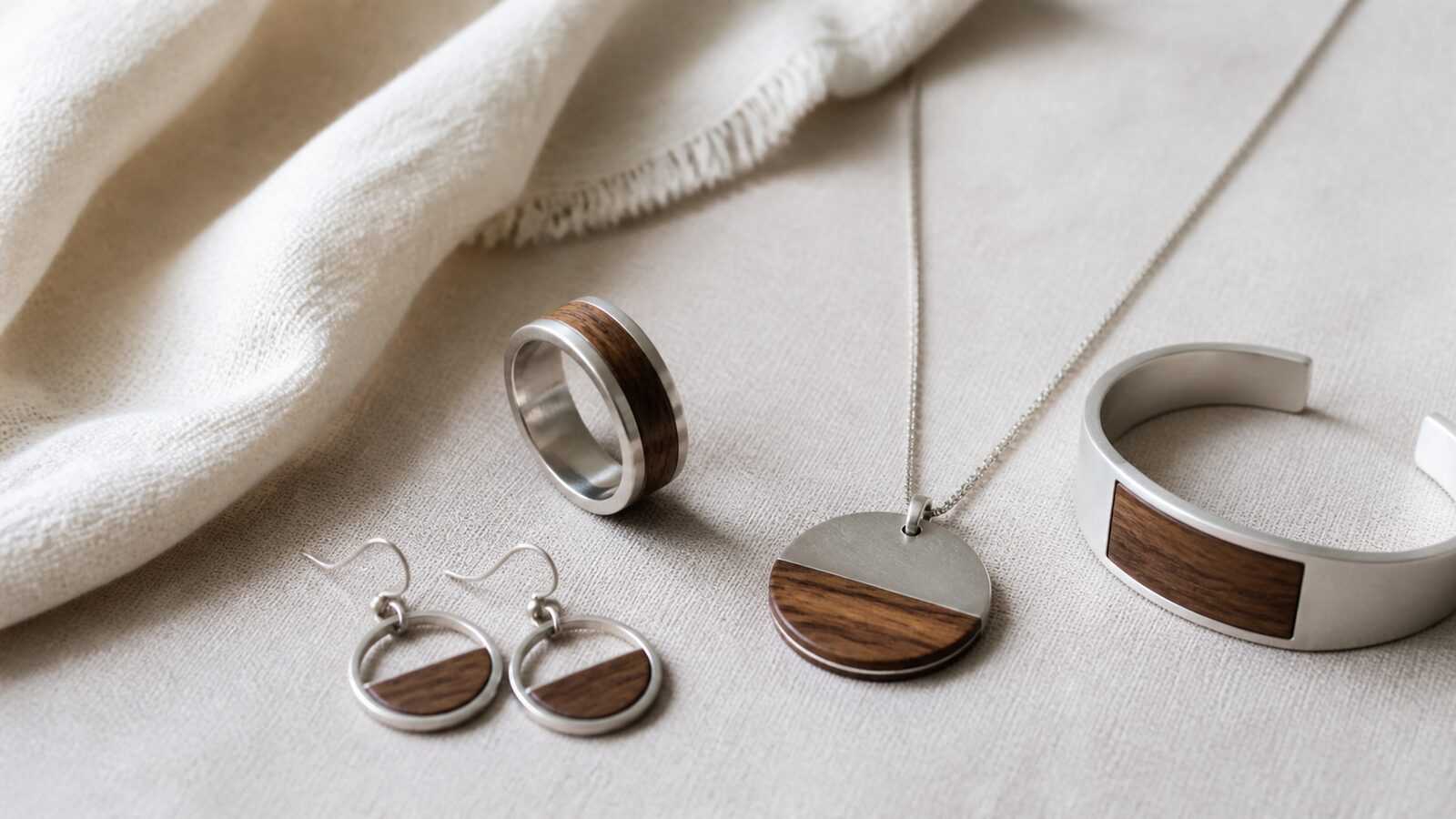
A tight, even grain often reads as calm because the pattern does not compete with the form. Fine pores can make a surface look more continuous; a more open grain can make it look more graphic. Neither is inherently superior. The choice changes how light moves across the object, how a hand reads the texture, and how much visual contrast the wood brings beside silver.
In jewellery, scale matters. A broad, dramatic grain can overwhelm a small setting. A quieter piece of wood can let a darkened silver edge or a curved silhouette carry the composition. This is a design judgement, not a claim that one landscape produced a morally better material.
Wood responds to its surroundings
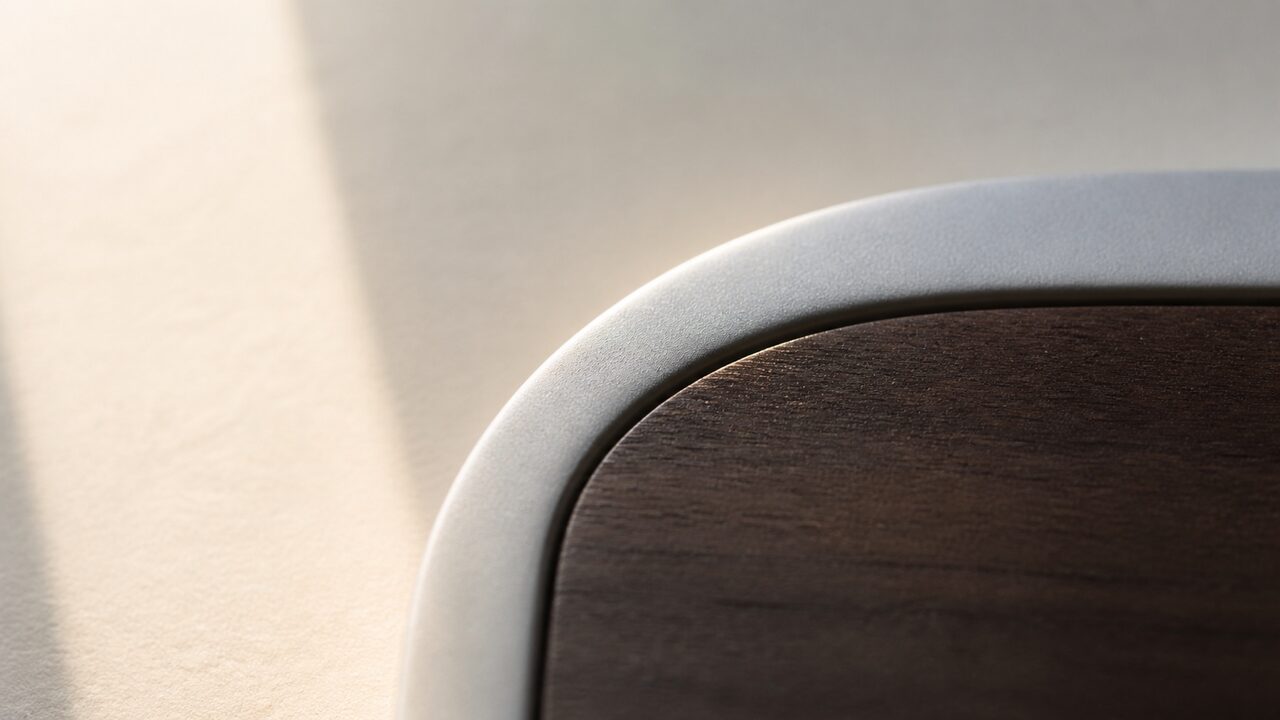
Wood is hygroscopic: it exchanges moisture with the surrounding air. As relative humidity changes, wood can change dimension. The U.S. Forest Products Laboratory notes that wood moisture content moves toward equilibrium with its environment. In a well-made small component these movements may be subtle, but sudden wetting, prolonged dryness, direct heat and repeated cycling can still put a finish or joint under stress.
That is why care guidance is intentionally modest. Take the piece off before swimming, bathing, heavy cleaning or work that leaves it wet. Do not leave it on a radiator, dashboard or sunlit windowsill. If it gets wet, pat it dry promptly and let it return to room conditions naturally. Do not force-dry it.
Finish changes the care advice
Some wooden jewellery is sealed; some has a waxed or oil-based finish; some is closer to bare wood. The right maintenance depends on that construction, so a universal monthly oil treatment is not good advice. Extra oil can darken a surface unpredictably, attract dust, interfere with an existing finish, or migrate to adjacent materials.
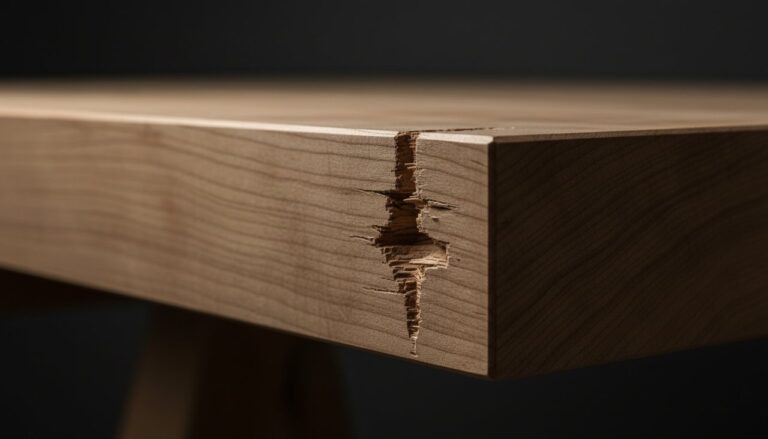
For routine care, use a soft dry cloth. If a particular maker provides a finish-specific instruction, follow that instruction over general advice. When a surface looks dry, rough, stained or cracked, ask before applying any product. The Canadian Conservation Institute similarly warns that water and solvents can swell bare wood fibres and move dirt into the surface.
The value of restraint
Wood does not need a story about hostile mountains to justify its place beside silver. Its value is immediate: a warm visual counterweight, a grain that is never mechanically repeated, and a material that rewards careful handling. Allow modest change, prevent avoidable stress, and let material truth do the work.
References
- USDA Forest Products Laboratory: Wood Handbook, Chapter 13 — describes wood moisture content and equilibrium with relative humidity.
- Canadian Conservation Institute: Care and Cleaning of Unfinished Wood — supports cautious, dry routine care.
Frequently Asked Questions
No. Ring width alone cannot prove hardness, stability or origin; species, drying and construction also matter.
Wood responds to moisture and temperature changes, which can affect fibres, finishes and joins.
Not as a general rule. Follow finish-specific maker guidance; extra oil can change colour or interfere with a finish.