A thick silver cuff does not simply sit on the wrist. It claims it. It is a cold, heavy presence that demands you acknowledge your own movements. When you wear a piece of substantial metal, you are engaging in a constant dialogue with weight and gravity.
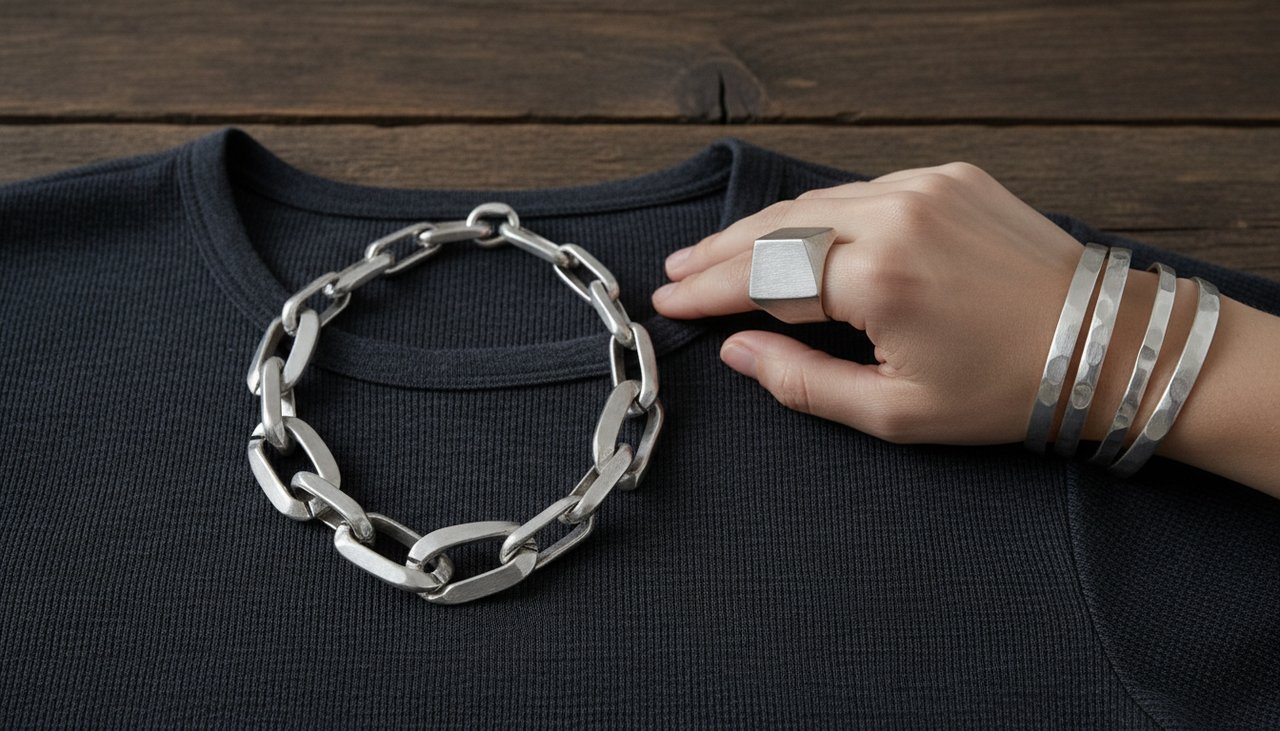
Styling these pieces is not about following a fleeting trend. It is about establishing a tangible anchor for your day. By understanding the physical nature of silver—how it interacts with fabric, light, and the body—you can integrate these objects into your routine with a sense of quiet purpose.
Scaling Metal to Fabric
The relationship between metal and fabric is entirely tactile. When a heavy silver pendant rests against different textiles, the physical response of the garment changes. Cold, dense metal against soft cloth creates a tension that requires careful spatial management.
Consider the weight of a solid silver collar on a delicate silk blouse. The disparity causes thin fabric to pull, altering its natural drape. Maintaining a visual buffer of about five centimeters between the edge of the necklace and the neckline gives both the metal and the fabric enough room to hold their structural integrity.
The finish of the metal determines how it reads against different weaves. A matte surface is created by rubbing the silver with a 600-grit abrasive pad in consistent, circular strokes. This breaks the flat plane of the metal and causes it to absorb light rather than reflect it. Against heavy wool knits, this matters: a matte surface holds its own against a deep, textured weave, while high-polish silver disappears into the visual noise of the yarn.
When pairing different metals, the optical conflict between finishes is worth understanding. High-polish gold returns light in a sharp, directional beam. Matte silver scatters it across a wide angle. Placed together, each surface undermines the other’s finish rather than allowing either to read clearly. Keeping metals in the same finish category—both matte, or both polished—eliminates this problem at the source.
Negative Space
Layering heavy jewelry is an exercise in managing silence. Without enough room between elements, a collection of chunky silver quickly turns into a cluttered mess. The goal is to give each piece enough space to assert its own presence.
When stacking multiple necklaces, the arrangement should flow downward from light to heavy and from short to long. A thinner chain naturally sits closer to the collarbone, while denser pendants should drop lower toward the sternum. The vertical gap between pieces is the most important measurement: maintaining a spacing of 2.5 to 3.5 centimeters between cascading elements prevents the arrangement from looking crowded.
The same principle governs individual pieces. The skin visible around a thick collar necklace acts as a functional gap in the design—a necessary pause that prevents a heavy gauge piece from appearing squeezed. Placing a wide, hammered cuff on the wrist while leaving the fingers bare concentrates the viewer’s attention on that single point. The weight of the silver is balanced by the absence of metal elsewhere.
In professional settings, this restraint becomes a tool for composure. The open skin around a single heavy piece does not read as emptiness—it reads as control. The metal is noticed through its physical presence, not through accumulation.
Postural Architecture
The physical shape of an object often mirrors our internal state. The silhouette of your jewelry actively influences how you carry your own weight. Different forms dictate different physical postures and psychological boundaries.
Architectural silver pieces carry an uncompromising visual weight. Their hard edges and sharp geometric lines establish a rigid perimeter. Wearing a sharply angled cuff can act as a subtle form of armor, aligning naturally with moments that require authority and clear boundaries.
Organic, liquid silver forms interact with the body differently. Pieces that mimic molten metal or natural curves suggest continuous movement and adaptability. A flowing, asymmetrical ring can soften your presentation, bringing a more approachable rhythm to structured tailoring.
The shape of the metal we wear is a silent instruction to our own posture, dictating whether we establish a firm boundary or move fluidly with the current.
Quiet Presence
In professional environments, the objects you wear should command attention through substance rather than disruption. Managing the physical footprint of your jewelry—specifically its sound and light—keeps your presence grounded rather than distracting.
The auditory impact of heavy metal is a frequent oversight. A stack of loose silver bangles creates a persistent clanking that pulls attention away from a conversation. A single, fixed cuff eliminates this entirely. Visual glare follows the same logic: high-polish silver reflects office lighting aggressively, while matte, brushed, or oxidized surfaces absorb it.
- Choose one substantial ring or one heavy necklace to act as an anchor.
- Prioritize matte or brushed finishes to reduce light reflection.
- Opt for fixed pieces to eliminate distracting noise.
Metallic Balance
Mixing silver with gold or brass often feels disjointed, but the problem is rarely the combination itself—it is the proportion. An equal split between different metals creates visual confusion. A deliberate imbalance feels intentional.
A strict 70/30 ratio resolves this. Designate one metal as the dominant force and let the second operate as a controlled accent. The table below shows how this works in practice:
| Dominant (70%) | Accent (30%) | Result |
|---|---|---|
| Heavy silver chain | Gold watch clasp, thin gold rings | Silver reads clearly; gold adds warmth without competing |
| Wide silver cuff | Single gold stud earring | Cuff remains the focal point; earring provides balance |
| Gold collar necklace | Matte silver ring | Gold leads; silver grounds without reflecting against it |
Beyond proportion, certain combinations fail regardless of ratio because the materials compete for light rather than sharing it:
- Heavy silver layered over complex prints forces the metal to disappear into the pattern.
- Stacking multiple items of the same large scale results in a cluster that lacks a clear center.
Physical Limits
The true test of heavy silver is how it feels after ten hours of wear. Substantial jewelry demands physical stamina, and the body has fixed thresholds that no design can override.
Earlobes are particularly sensitive to prolonged tension. The threshold for comfortable wear usually peaks at seven to eight grams per earring. Beyond twelve grams, the pull becomes visible—the lobe stretches, the piece tilts forward, and skin irritation begins within a few hours.
Necklaces follow a similar ceiling. Technical testing places the fatigue threshold for an eight-hour period at around seventy grams. Above this, the weight of the chain distributes unevenly across the neck and shoulders, creating low-level muscular strain that compounds over time.
For rings, the relevant measurement is width rather than weight. A solid block of silver that spans an entire finger joint restricts movement and becomes a physical hindrance by midday. The ergonomic sweet spot lies between five and eight millimeters. To check where your own rings fall, measure the band width at its widest point with a ruler laid flat across the outer face of the ring. Anything inside that five-to-eight-millimeter range will provide the satisfying heft of solid metal while allowing full hand movement.
The Aging Process
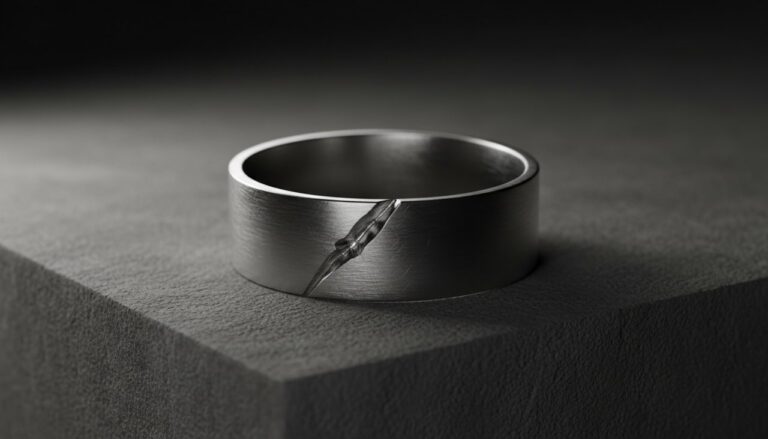
The inside of a silver ring records the wearer’s movements through its surface. Dark oxidation gathers in the deep crevices, while a bright polish develops on the high edges where the metal frequently rubs against the skin. This wear is a mechanical log of daily use.
Mechanical polishing removes this history to create a uniform, industrial shine. To clean the silver without losing its character, an electrochemical process targets surface tarnish while leaving the deep shadows and fine scratches intact.
The chemistry is straightforward: silver tarnish is silver sulfide, a compound that forms when the metal reacts with trace sulfur in the air. The electrochemical process reverses this by providing a more willing host for the sulfur—aluminum—and a conductive solution to complete the transfer.
To clean solid silver at home without stripping its history:
- Line a container with aluminum foil, shiny side facing up.
- Fill the container with boiling water and dissolve one tablespoon of baking soda per liter.
- Submerge the silver so it touches the foil directly. The sulfur transfers from the jewelry to the aluminum within two to five minutes.
- Remove the piece, rinse under cold water, and dry with a soft cloth.
The object ages alongside the wearer, retaining the marks of its history and the specific way it handles light over time.