I often notice a specific distraction when working at a desk that feels hollow. Setting down a ceramic mug results in a synthetic clatter rather than a solid, grounded thud. Your skin meets a surface that mimics wood but stays unnaturally cold, pulling heat from your wrists throughout the day. These small sensory interruptions accumulate into a background noise that drains your focus.
Sensory Noise
Minimalism is often misunderstood as a purely visual discipline. We clear away stray papers and hide cables, assuming an empty field of vision guarantees a clear mind. However, the physical reality of the workspace often reveals a different set of challenges that disrupt our concentration:
- The hollow echo of particleboard while typing or moving a phone.
- The persistent chill of synthetic laminates that never warm to the touch.
- Physical damage caused by heavy monitor mounts on weak, compressed surfaces.
Mass-produced workspaces often use PVC or laminate that stays at room temperature regardless of how long you sit at it. It takes nothing from you and gives nothing back. The surface registers no trace of your presence.
When a desk bows under weight, it creates a psychological break. The object is no longer a reliable tool, but a temporary fixture that quietly undermines the stability we need for deep work. This perceived disposability makes it difficult to feel truly settled in your environment.
Language of Touch
A tactile anchor is a physical object that provides grounding feedback, pulling a wandering mind back to the present. When we interact with materials, we are engaging in a quiet exchange of energy. Thermal conductivity explains exactly why certain materials calm us while others disrupt our focus.
The table below maps four common desk surface materials against their conductivity and the physical sensation they produce:
| Material | Thermal Conductivity | Physical Sensation |
|---|---|---|
| Natural stone | 2.0–3.5 W/m·K | Immediately draws heat from skin; feels jarring and cold |
| Steel / metal | 16–50 W/m·K | Aggressively cold on contact; disorienting under prolonged touch |
| PVC laminate | ~0.19 W/m·K | Stays at room temperature; impersonal, registers no body heat |
| Solid hardwood | 0.1–0.2 W/m·K | Returns body heat; settles to skin temperature within seconds |
The materials we choose to keep in our immediate physical orbit dictate the quality of our mental state.
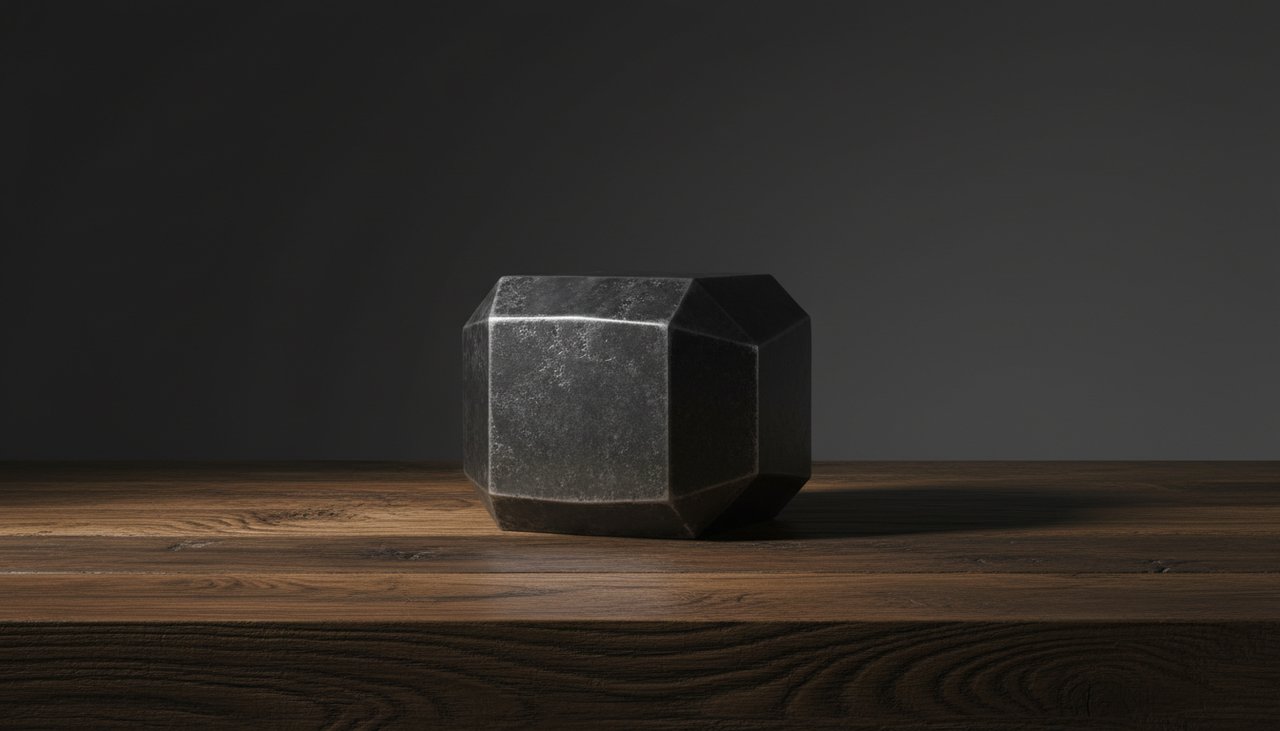
A heavy brass paperweight or a piece of density-rich natural stone can also serve as an effective anchor. Its density and the way it absorbs heat provide immediate, high-quality feedback to the body. This physical sensation acts as a silent point of focus, strong enough to interrupt a cycle of mental overload and allowing your mind to reset.
Pact With Time
A good workspace should change alongside you. True minimalism values a material’s ability to age without looking broken. When a surface can record the history of its use, it shifts from a temporary utility to a long-term partner.
Take the aging process of North American Black Walnut. Over years of sunlight and natural oils from human hands, it develops an amber-like patina. The grain becomes smoother, gaining a soft sheen that factory finishes cannot replicate.
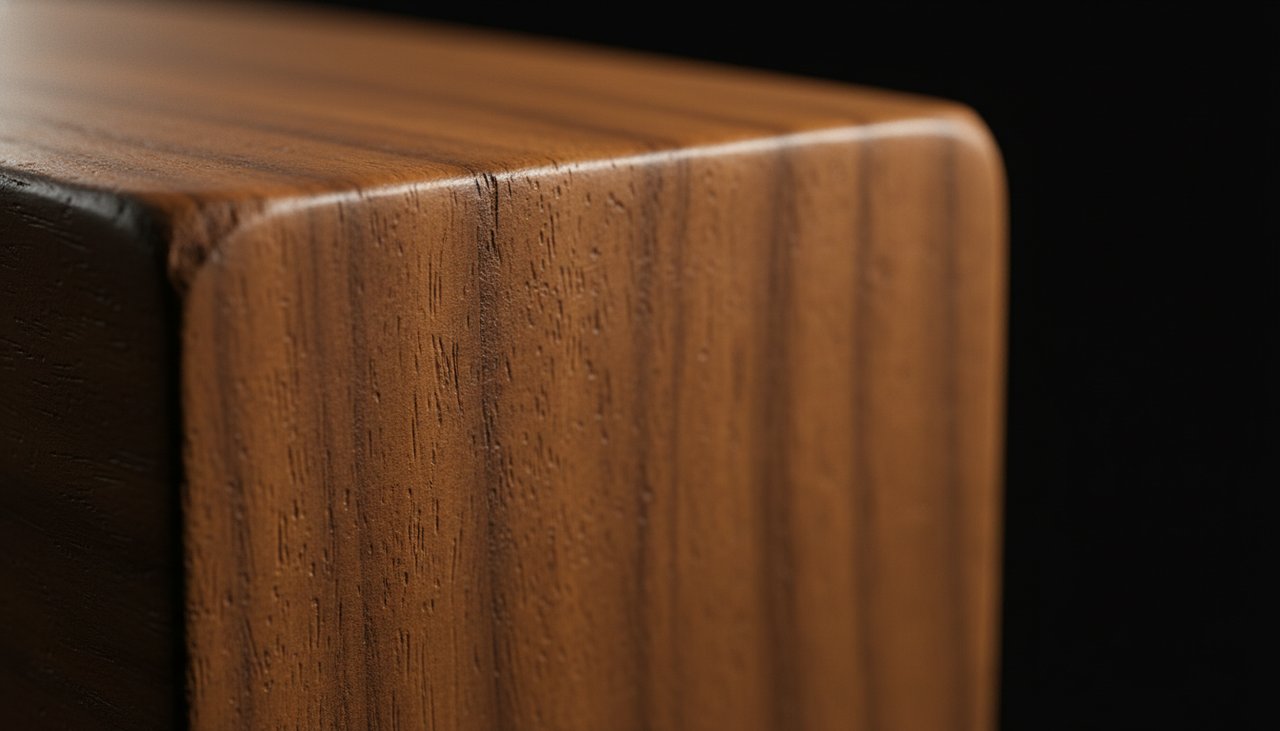
White Oak ages differently, developing a silk-like texture as its pores fill in and soften the hard grain lines over time. These gradual physical shifts create a deep psychological bond with the objects we use daily.
Furniture studies refer to this process as the confirmation of ownership. The marks accumulate slowly enough that you barely notice each one individually. A faint ring from a coffee cup left without a coaster one afternoon. A shallow score near the left corner where a key slid off the desk. Over months, these become landmarks rather than damage—a record of specific days, specific hours. Your attachment to the surface grows not despite these marks, but through them. This reduces the desire to replace your tools and fosters a lasting loyalty to the environment where you think.
Honesty of Structure
Stability relies on more than a desk that refuses to wobble. We have an innate ability to sense the inherent structural integrity of the objects that support us. When furniture relies on hidden cam locks and cheap screws, we unconsciously recognize its fragility—the same fragility that allows monitor mounts to pull compressed board apart over time.
- Mortise and Tenon Joint
- A traditional wood joint in which a projecting tenon, cut from one piece, fits precisely into a mortise cavity cut in another. The connection relies entirely on the geometry of the wood and the compression of the fit, without adhesive or metal fasteners. Under load, the joint tightens rather than loosens.
Visible joinery like this is more than an aesthetic choice. It is a physical signal of reliability, allowing you to see how the wood supports itself and carries weight. This transparency in construction creates a sense of absolute security.
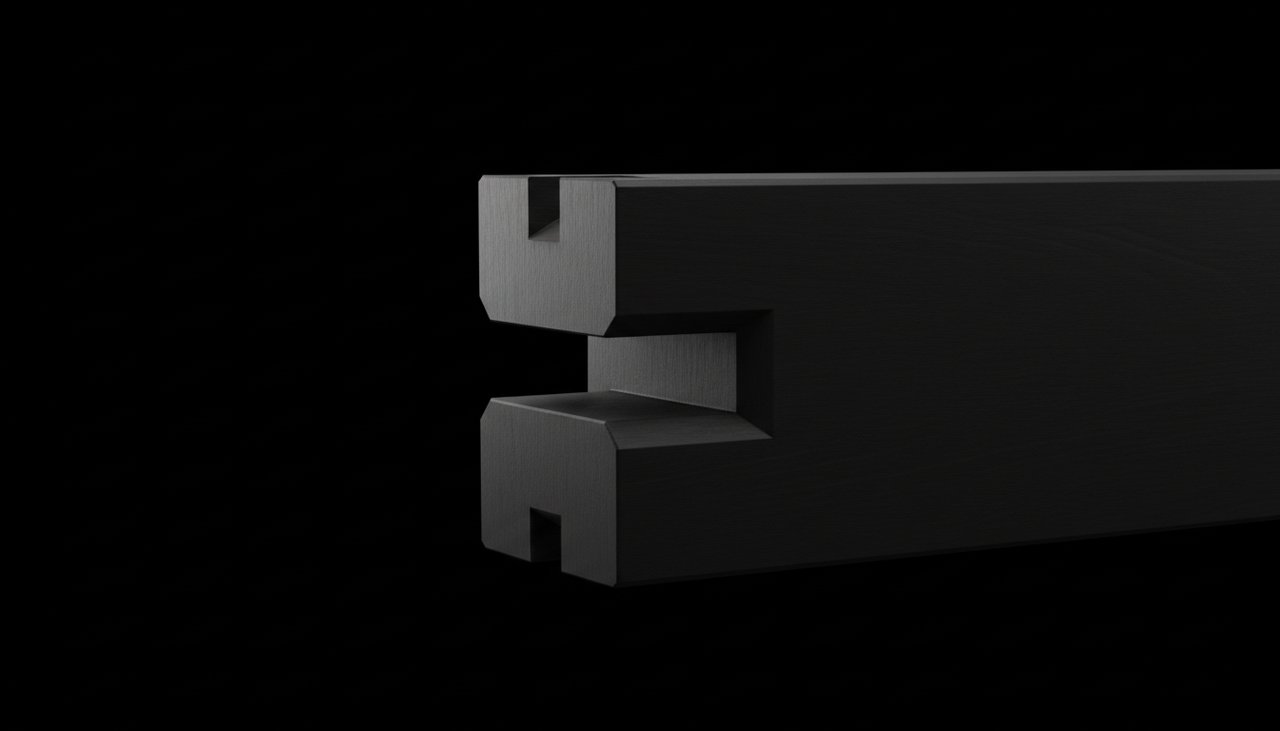
Traditional wood joinery is physically stronger, offering significantly more resistance to bending than basic screw assembly. When you lean on the desk, it responds with absolute rigidity. This unyielding presence feeds directly into our sense of control.
A structurally honest desk does not flex, and in turn, it affords the mind the luxury of leaning into the work without hesitation.
When our environment is structurally sound and predictable, we spend less energy managing physical anxiety. The desk becomes an invisible, supportive foundation for your thoughts. Minimalism is not just about what you remove, but the lasting quality of what you choose to keep.
I run my hand across the edge of the wood, feeling the warmth where my wrist has rested. There is no hollow echo, no slight wobble, no surface yielding under the weight of a monitor arm. There is only the quiet, dense reality of the material—a tactile anchor that holds the body still while the mind explores.
Frequently Asked Questions
It addresses physical distractions like hollow sounds or cold surfaces, not just visual clutter. These small sensory interruptions accumulate, subtly draining focus from your work environment.
Materials like stone or synthetic laminates have high thermal conductivity (2.0-3.5 W/m·K). They quickly draw heat away from your skin, creating a jarring, cold sensation to the touch.
A tactile anchor is a physical object that provides grounding feedback, pulling a wandering mind back to the present. Its density and heat absorption offer immediate, high-quality sensory input to aid focus.
The materials in your immediate physical orbit directly influence your mental state. Low conductivity materials like solid wood create a welcoming environment, aiding concentration, while jarring surfaces can disrupt it.
Over years, materials like North American Black Walnut develop an amber-like patina from sunlight and natural oils. White Oak can develop a silk-like texture as its pores soften, recording its history of use.
It refers to visible joinery, like a traditional mortise and tenon joint, signaling inherent structural integrity. This transparency in construction creates a sense of absolute security and reliability in the object.
Objects that record their history shift from temporary utilities to long-term partners. This process fosters a deep psychological bond and confirms ownership, reducing the desire to replace them.
Absolutely. A stable, high-quality environment reduces physical anxiety, allowing your mind to lean into work without hesitation. The quiet, dense reality of well-chosen materials acts as a supportive foundation for thoughts.