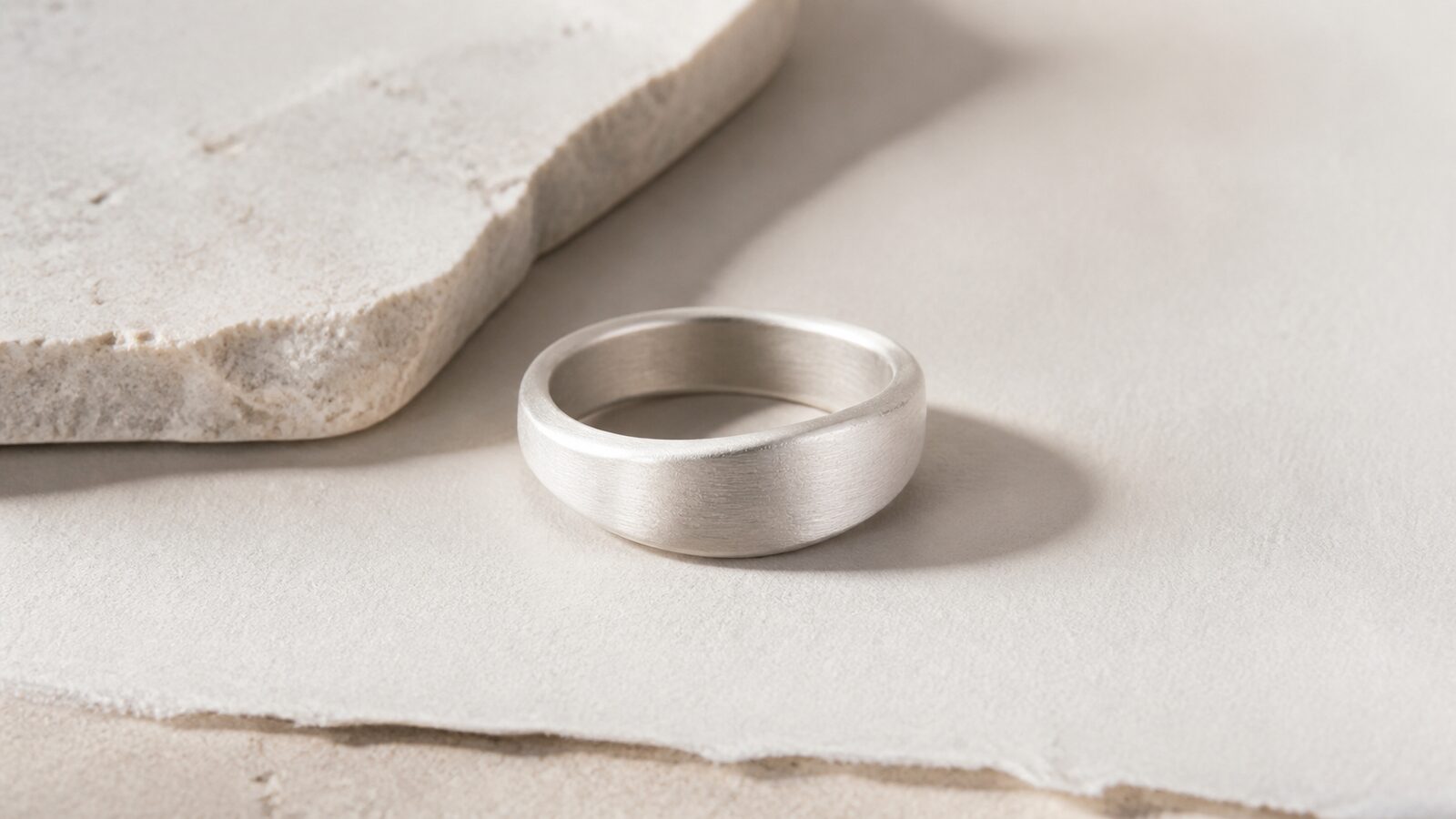
Matte silver is not simply polished silver with less shine. Its surface has been intentionally textured so that light breaks across it instead of returning as a clear reflection. The result puts the outline, weight, and small details of a piece ahead of its glare.
What a matte finish changes
A bright-polished surface behaves like a small mirror: reflections are crisp, and fingerprints or small marks can stand out quickly. A matte or satin surface diffuses light. It can make a substantial ring or pendant feel quieter and make the shape easier to read from a distance.
“Matte” is a family of looks, not one fixed finish. A soft satin finish can feel smooth and silken; a more pronounced texture may look dry, granular, or directional. Two pieces described with the same word can therefore wear differently. The useful question is not whether a finish is matte, but how it was made and how much texture the maker intended to preserve.
How jewellers create texture
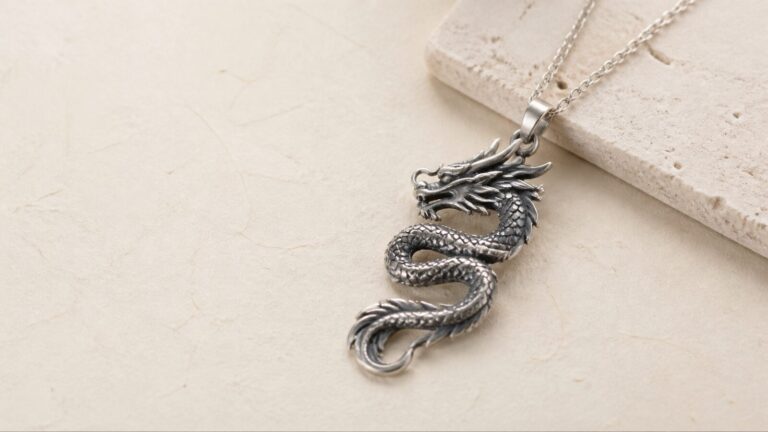
Finishes can be produced by hand brushing, abrasive media, controlled polishing, or combinations of these methods. Brushing leaves a directional grain that catches the light in one path. A bead-blasted surface scatters light more evenly. A maker may also leave high points brighter while keeping recesses darker, which gives a form more depth without relying on a mirror polish.
These choices are visual as well as practical. A broad, even texture suits a spare geometric form; a directional finish can follow the curve of a band or pendant. Neither treatment makes silver inherently stronger or weaker. What changes is the surface character—and the way later wear becomes visible.
What wear looks like on matte silver
Daily contact gradually burnishes the places that touch skin, fabric, a desk, or another ring. On a matte surface, those areas may become a little smoother or brighter while less-touched areas retain their original texture. This contrast is normal, but it is not identical to tarnish. Tarnish is a chemical change at the surface; wear is a physical change in the finish. Silver also tarnishes when it encounters sulfur-containing gases in the air, so storage conditions matter as much as how often a piece is worn.
Neither change has to be treated as damage. Gentle softening can give a well-worn piece more variation. But if an even surface is important to you, a jeweller can usually refresh a finish more reliably than a household polishing product can.
Caring for a matte finish
- After wear, wipe the piece with a clean, soft cloth to remove skin oils and moisture.
- Keep it away from chlorine, household cleaners, perfume, and other chemicals that may affect silver or its finish.
- Store it separately in a dry pouch or closed container to limit unnecessary rubbing and slow tarnish.
- Avoid aggressive polishing cloths and abrasive pads unless the maker has specifically recommended them; they can create bright patches or change the original texture.
- For deep scratches, uneven brightening, or a finish you want renewed, ask a qualified jeweller to match the original treatment.
A finish chosen for form
Matte silver works best when it is allowed to be what it is: a surface with a restrained response to light, not a permanently frozen one. With ordinary wear, the texture becomes more individual while the underlying form remains the point of the piece.
References
- Smithsonian National Museum of Asian Art: Art’s Tiny Habitats — background on silver tarnishing in the presence of sulfur-containing gases.
- Smithsonian Museum Conservation Institute: A comparative study of silver cleaning abrasives — why abrasion and surface preservation should be considered together.
Frequently Asked Questions
Matte silver has a deliberately textured surface that diffuses light instead of producing a clear mirror reflection. The exact look depends on the finishing method.
Yes. Contact points may become smoother or brighter over time, and silver can tarnish in response to its environment. Those are different surface changes.
Use a soft cloth for routine care and avoid aggressive abrasives or polishing products unless the maker recommends them. A jeweller can refresh an uneven finish.