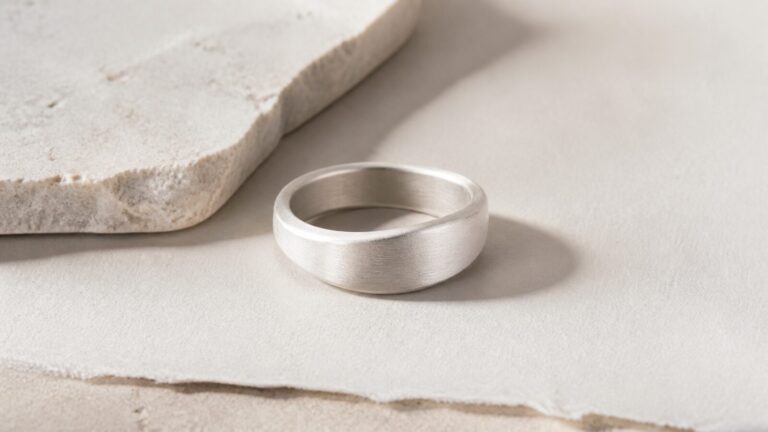
Liver of sulfur is a common patination compound used to darken silver quickly and deliberately. When a piece is submerged in a diluted solution, the metal’s surface reacts to form silver sulfide — the same compound responsible for ordinary tarnish, only produced in seconds instead of developing slowly over years. The reaction itself is silent: no bubbling, no fumes beyond the mild sulfur smell of the solution, just a bright surface clouding over into a flat, matte black.
An Even, Total Coating
Liver of sulfur does not distinguish between the raised and recessed parts of a surface. A textured piece — one with engraved lines, hammered facets, or filed detail — disappears entirely under the coating. High points and deep grooves are treated identically by the chemical reaction, which covers everything with the same dark layer. This uniform blackening is not the finished look; it is a starting point, a temporary erasure that sets up the contrast to come.
Why Timing Matters
Once the piece is pulled from the solution and rinsed in cold water to stop the reaction, the oxidized layer only stays workable for a short window. While it is still fresh, it can be selectively removed from raised surfaces with abrasion; left too long, it bonds more firmly to the metal and becomes harder to lift cleanly. That window is typically measured in minutes rather than hours, which is why patina work is usually done in short, deliberate stages rather than all at once.
This constraint isn’t about ritual or aesthetics — it’s a simple property of how the sulfide layer sets on the metal over time.
Selective Brushing
A stiff-bristled brass or steel brush is used to remove the black coating from the areas meant to read as bright or matte silver again. The motion is usually kept in one direction, following the natural lines of the piece, rather than circular scrubbing that could scratch unevenly. Under running water, the loosened black residue clears away as it’s worked loose, and streaks of silver begin to cut through the dark surface.
Because a brush only reaches what it can physically contact, the raised areas get cleaned while the recessed lines and grooves are left largely untouched. The oxidized coating survives in the low points simply because the bristles can’t reach them effectively — not through any special technique, but through basic physical access.
Reading the Finished Contrast
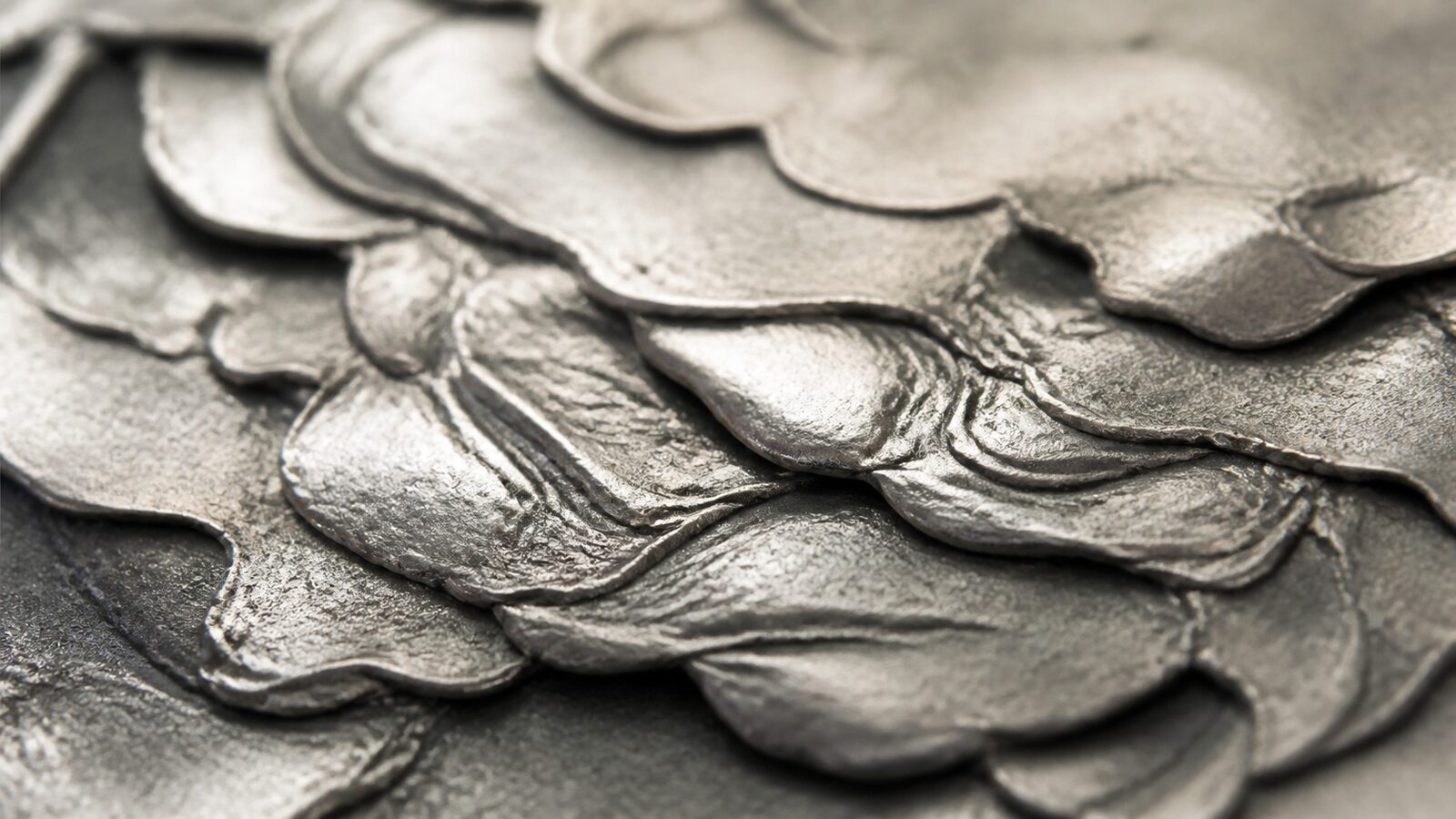
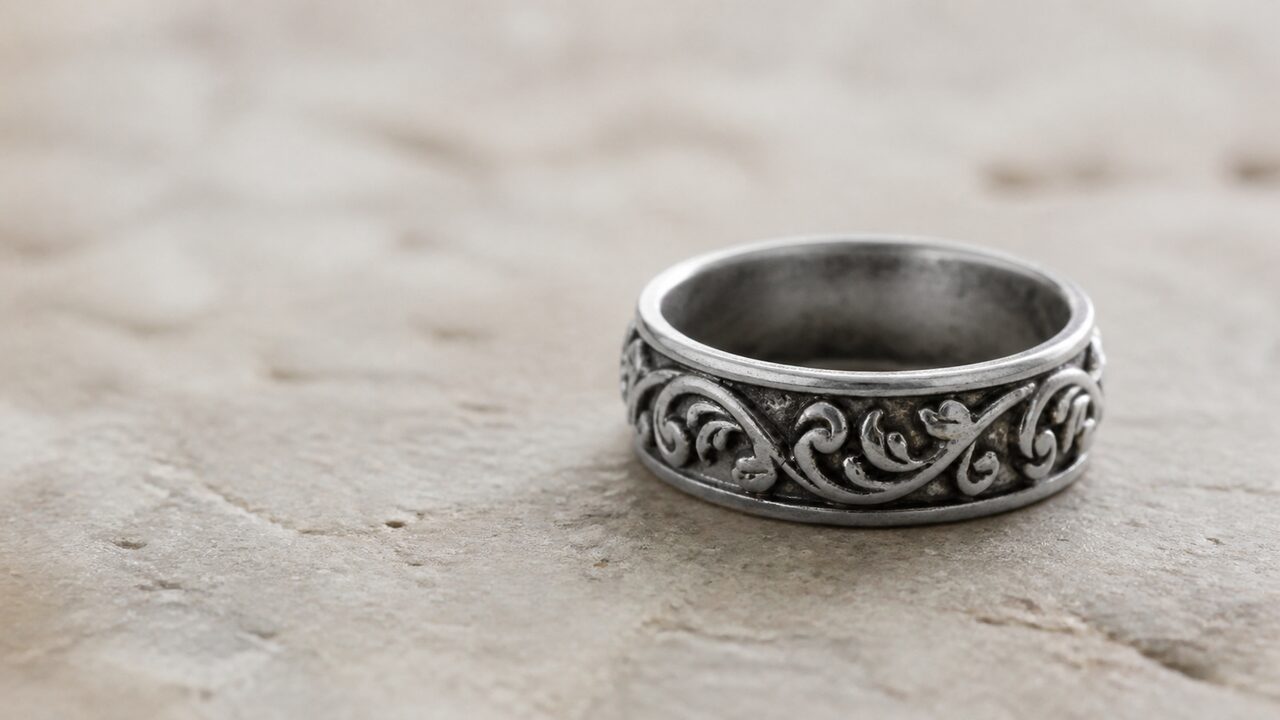
Once the brushing is done and the piece is dried, the result is a clear division: matte or polished silver on the raised surfaces, and dark, shadowed lines in the recesses. Held under angled light, the high points catch a soft gleam while the valleys stay dark — a sharp boundary rather than a smooth gradient. That boundary is the visible record of where the brush made contact and where it didn’t.
Caring for an Oxidized Finish
An oxidized piece needs less maintenance than a fully polished one, since the recessed black areas are meant to stay dark. Occasional wiping with a soft, dry cloth removes surface dust and skin oils. Harsh polishing compounds or aggressive cleaning should be avoided in the recessed areas, since they can strip the intentional contrast along with any unwanted tarnish. Over time, gentle handling and light wear will burnish the raised surfaces further while the shadowed lines remain, keeping the original contrast intact.